Learning
Flask is a micro web framework written in Python. It is classified as a microframework because it does not require particular tools or libraries.[3] It has no database abstraction layer, form validation, or any other components where pre-existing third-party libraries provide common functions. However, Flask supports extensions that can add application features as if they were implemented in Flask itself. Extensions exist for object-relational mappers, form validation, upload handling, various open authentication technologies and several common framework related tools. Extensions are updated far more regularly than the core Flask program.
#FlaskDeepLearningModelDeployment
github url: https://github.com/krishnaik06..../Deployment-Deep-Lea
You can buy my book where I have provided a detailed explanation of how we can use Machine Learning, Deep Learning in Finance using python
url: https://www.amazon.in/Hands-Python-Finance-implementing-strategies/dp/1789346371/ref=sr_1_1?keywords=krish+naik&qid=1560675332&s=gateway&sr=8-1

Artist Refik Anadol doesn't work with paintbrushes or clay. Instead, he uses large collections of data and machine learning algorithms to create mesmerizing and dynamic installations.
Machine Hallucination at Artechouse NYC: https://www.artechouse.com/nyc
WDCH Dreams: https://www.laphil.com/visit/w....hen-youre-here/wdchd
Winds of Boston: http://refikanadol.com/works/w....ind-of-boston-data-p
Melting Memories: http://refikanadol.com/works/melting-memories/
Still haven’t subscribed to WIRED on YouTube? ►► http://wrd.cm/15fP7B7
Listen to the Get WIRED podcast ►► https://link.chtbl.com/wired-ytc-desc
Want more WIRED? Get the magazine ►► https://subscribe.wired.com/su....bscribe/splits/wired
Get more incredible stories on science and tech with our daily newsletter: https://wrd.cm/DailyYT
Also, check out the free WIRED channel on Roku, Apple TV, Amazon Fire TV, and Android TV. Here you can find your favorite WIRED shows and new episodes of our latest hit series Tradecraft.
ABOUT WIRED
WIRED is where tomorrow is realized. Through thought-provoking stories and videos, WIRED explores the future of business, innovation, and culture.
How This Guy Uses A.I. to Create Art | Obsessed | WIRED

This video talks about what you need to know when sourcing parts to build your own deep learning machine similar Lambda Labs Workstation. What type of CPU do you need? or What GPU is good for your use case. How much RAM? This video breaks it all down.
Outline:
00:01:30 - GPU
00:03:59 - CPU
00:05:38 - RAM
00:06:21 - Motherboard
00:06:55 - Storage
00:07:44 - Power Supply
00:08:19 - Cooling
00:08:51- Case
00:09:15 - Parts Compatibility
00:10:01 - Training on Cloud vs Your Own Machine
Reference:
https://l7.curtisnorthcutt.com..../build-pro-deep-lear
parts list: https://pcpartpicker.com/user/....learnedvector/saved/
Audo Studio | Automagically Make Audio Recordings Studio Quality
https://www.audostudio.com/
Magic Mic | Join waitlist and get it FREE forever when launched! 🎙️
https://magicmic.ai/
Audo AI | Audio Background Noise Removal Developer API and SDK
https://audo.ai/
Lambda Labs
https://lambdalabs.com/
Discord Server: Join a community of A.I. Hackers
https://discord.gg/9wSTT4F
Subscribe to my email newsletter for updated Content. No spam 🙅♂️ only gold 🥇.
https://bit.ly/320hUdx
👉 Find out more and enroll in the Deep Learning Fundamentals course:
🔗 https://deeplizard.com/course/dlcpailzrd
💥🦎 DEEPLIZARD COMMUNITY RESOURCES 🦎💥
👋 Hey, we're Chris and Mandy, the creators of deeplizard!
👉 Check out the website for more learning material:
🔗 https://deeplizard.com
💻 ENROLL TO GET DOWNLOAD ACCESS TO CODE FILES
🔗 https://deeplizard.com/resources
🧠 Support collective intelligence, join the deeplizard hivemind:
🔗 https://deeplizard.com/hivemind
🧠 Use code DEEPLIZARD at checkout to receive 15% off your first Neurohacker order
👉 Use your receipt from Neurohacker to get a discount on deeplizard courses
🔗 https://neurohacker.com/shop?rfsn=6488344.d171c6
👀 CHECK OUT OUR VLOG:
🔗 https://youtube.com/deeplizardvlog
❤️🦎 Special thanks to the following polymaths of the deeplizard hivemind:
Tammy
Mano Prime
Ling Li
🚀 Boost collective intelligence by sharing this video on social media!
👀 Follow deeplizard:
Our vlog: https://youtube.com/deeplizardvlog
Facebook: https://facebook.com/deeplizard
Instagram: https://instagram.com/deeplizard
Twitter: https://twitter.com/deeplizard
Patreon: https://patreon.com/deeplizard
YouTube: https://youtube.com/deeplizard
🎓 Deep Learning with deeplizard:
Deep Learning Dictionary - https://deeplizard.com/course/ddcpailzrd
Deep Learning Fundamentals - https://deeplizard.com/course/dlcpailzrd
Learn TensorFlow - https://deeplizard.com/course/tfcpailzrd
Learn PyTorch - https://deeplizard.com/course/ptcpailzrd
Natural Language Processing - https://deeplizard.com/course/txtcpailzrd
Reinforcement Learning - https://deeplizard.com/course/rlcpailzrd
Generative Adversarial Networks - https://deeplizard.com/course/gacpailzrd
🎓 Other Courses:
DL Fundamentals Classic - https://deeplizard.com/learn/video/gZmobeGL0Yg
Deep Learning Deployment - https://deeplizard.com/learn/video/SI1hVGvbbZ4
Data Science - https://deeplizard.com/learn/video/d11chG7Z-xk
Trading - https://deeplizard.com/learn/video/ZpfCK_uHL9Y
🛒 Check out products deeplizard recommends on Amazon:
🔗 https://amazon.com/shop/deeplizard
🎵 deeplizard uses music by Kevin MacLeod
🔗 https://youtube.com/channel/UC....SZXFhRIx6b0dFX3xS8L1
❤️ Please use the knowledge gained from deeplizard content for good, not evil.

Time series forecasting has a wide range of applications: finance, retail, healthcare, IoT, etc. Recently deep learning models such as ESRNN or N-BEATS have proven to have state-of-the-art performance in these tasks. Nixtlats is a python library that we have developed to facilitate the use of these state-of-the-art models to data scientists and developers, so that they can use them in productive environments. Written in pytorch, its design is focused on usability and reproducibility of experiments. For this purpose, nixtlats has several modules:
Data: contains datasets of various time series competencies.
Models: includes state-of-the-art models.
Evaluation: has various loss functions and evaluation metrics.
Objective:
- To introduce attendees to the challenges of time series forecasting with deep learning.
- Commercial applications of time series forecasting.
- Describe nixtlats, their components and best practices for training and deploying state-of-the-art models in production.
- Reproduction of state-of-the-art results using nixtlats from the winning model of the M4 time series competition (ESRNN).
Project repository: https://github.com/Nixtla/nixtlats.
Connect with us:
Website: https://databricks.com
Facebook: https://www.facebook.com/databricksinc
Twitter: https://twitter.com/databricks
LinkedIn: https://www.linkedin.com/company/data...
Instagram: https://www.instagram.com/databricksinc/

Welcome! Join us for a live workshop where you can follow along with the creator of FastAPI Sebastián Ramírez to build your very own AI image generation web application! He will outline the core components of the FastAPI web framework, and his application will leverage the newly-released Stable Diffusion text-to-image deep learning model.
We will be taking questions during the event. Please submit your question or upvote others' here:
https://app.sli.do/event/cgvyaL8y7m12zZLb1c6sP8
Speakers
Sebastián Ramírez, Creator of FastAPI, Senior Staff Software Engineer at Forethought
https://www.linkedin.com/in/tiangolo/
Dr. Greg Loughnane, Head of Product & Curriculum at FourthBrain
https://www.linkedin.com/in/gregloughnane/
Let us know how we're doing? We will be giving out discount codes for a selected number of people who fill out the survey:
https://forms.gle/LzhBLhXJe4VTdNwe7
Looking to connect with your peer learners, share projects, and swap advice? Join our AI community:
https://community.deeplearning.....ai/invites/ddzDLVa2
To learn more about us and signup for future events:
DeepLearning.AI: https://www.deeplearning.ai/
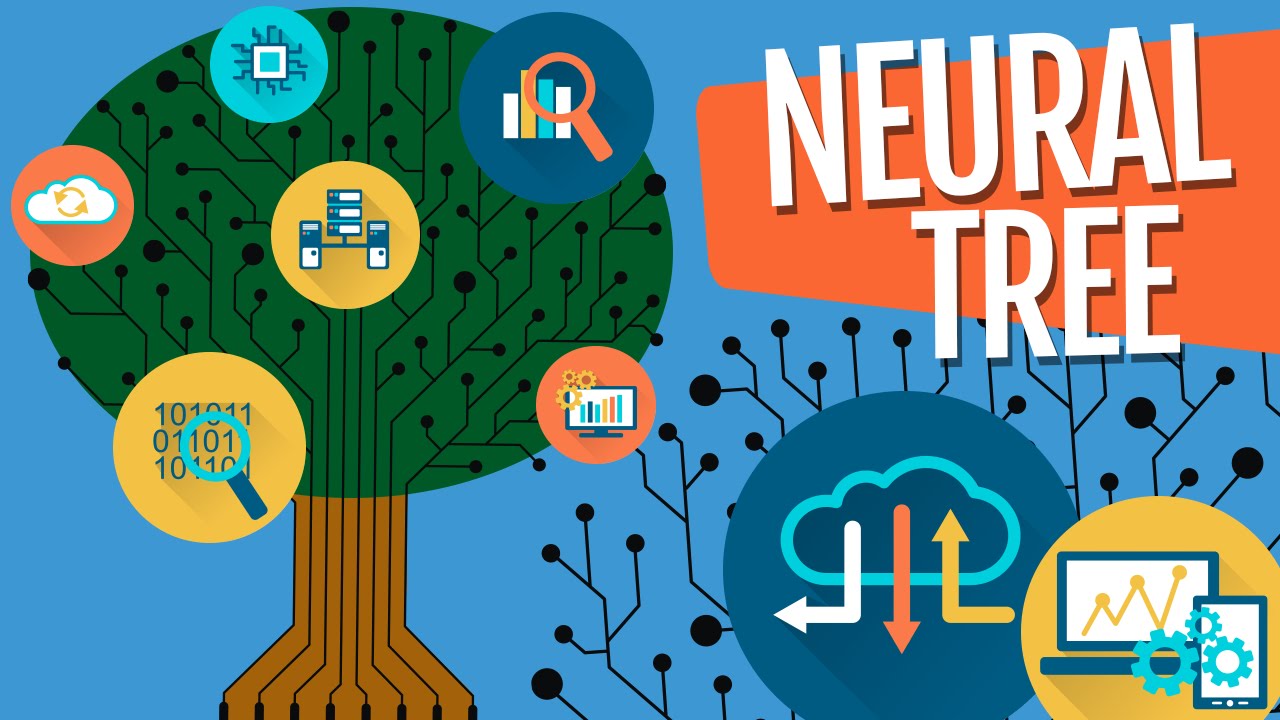
Certain patterns are innately hierarchical, like the underlying parse tree of a natural language sentence. A Recursive Neural Tensor Network (RNTN) is a powerful tool for deciphering and labelling these types of patterns.
Deep Learning TV on
Facebook: https://www.facebook.com/DeepLearningTV/
Twitter: https://twitter.com/deeplearningtv
The RNTN was conceived by Richard Socher in order to address a key problem of current sentiment analysis techniques – double negatives being treated as negatives. Structurally, an RNTN is a binary tree with three nodes: a root and two leaves. The root and leaf nodes are not neurons, but instead they are groups of neurons – the more complicated the input data the more neurons are required. As expected, the root group connects to each leaf group, but the leaf groups do not share a connection with each other. Despite the simple structure of the net, an RNTN is capable of extracting deep, complex patterns out of a set of data.
An RNTN detects patterns through a recursive process. In a sentence-parsing application where the objective is to identify the grammatical elements in a sentence (like a noun phrase or a verb phrase, for example), the first and second words are initially converted into an ordered set of numbers known as a vector. The conversion method is highly technical, but the numerical values in the vector indicate how closely related the words are to each other compared to other words in the vocabulary.
Once the vectors for the first and second word are formed, they are fed into the left and right leaf groups respectively. The root group outputs, among other things, a vector representation of the current parse. The net then feeds this vector back into one of the leaf groups and, recursively, feeds different combinations of the remaining words into the other leaf group. It is through this process that the net is able to analyze every possible syntactic parse. If during the recursion the net runs out of input, the current parse is scored and compared to the previously discovered parses. The one with the highest score is considered to be the optimal parse or grammatical structure, and it is delivered as the final output.
After determining the optimal parse, the net backtracks to figure out the appropriate labels to apply to each substructure; in this case, substructures could be noun phrases, verb phrases, prepositional phrases, and so on.
RNTNs are used in Natural Language Processing for both sentiment analysis and syntactic parsing. They can also be used in scene parsing to identify different parts of an image.
Have you ever worked with data where the underlying patterns were hierarchical? Please comment and let us know what you learned.
Credits
Nickey Pickorita (YouTube art) -
https://www.upwork.com/freelan....cers/~0147b8991909b2
Isabel Descutner (Voice) -
https://www.youtube.com/user/IsabelDescutner
Dan Partynski (Copy Editing) -
https://www.linkedin.com/in/danielpartynski
Jagannath Rajagopal (Creator, Producer and Director) -
https://ca.linkedin.com/in/jagannathrajagopal
Hello and welcome to a deep learning with Python and Pytorch tutorial series, starting from the basics.
Text-based tutorials and sample code: https://pythonprogramming.net/....introduction-deep-le
Playlist link: https://www.youtube.com/playli....st?list=PLQVvvaa0QuD
Linode Cloud GPUs $20 credit: https://linode.com/sentdex
Channel membership: https://www.youtube.com/channe....l/UCfzlCWGWYyIQ0aLC5
Discord: https://discord.gg/sentdex
Support the content: https://pythonprogramming.net/support-donate/
Twitter: https://twitter.com/sentdex
Instagram: https://instagram.com/sentdex
Facebook: https://www.facebook.com/pythonprogramming.net/
Twitch: https://www.twitch.tv/sentdex
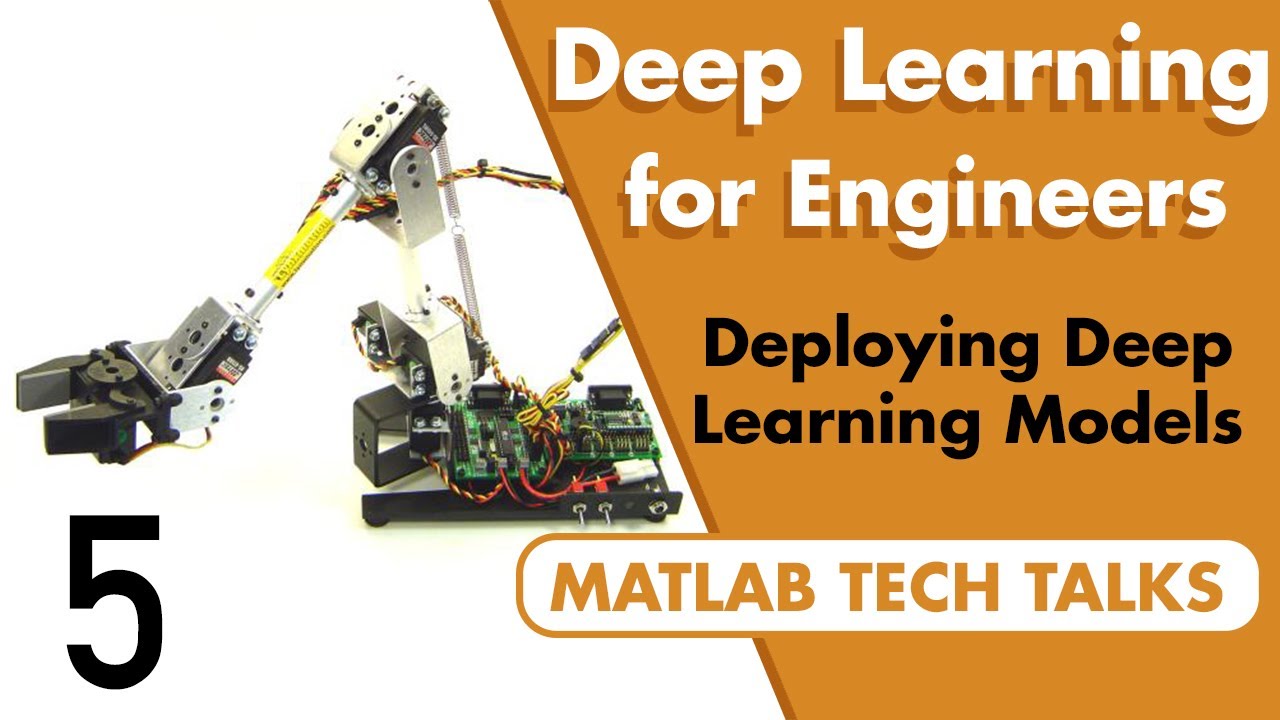
This video covers the additional work and considerations you need to think about once you have a deep neural network that can classify your data. We need to consider that the trained network is usually part of a larger system and it needs to be incorporated into that design. We also want to have some amount of confidence that the model will work on unseen data and that it’s going to interact as expected with the other system components. Ultimately, we also want to deploy it onto a target device which requires certain performance characteristics.
Check out these other links:
• MATLAB Deep learning examples: https://bit.ly/3deCj40
• 5 Reasons to use MATLAB for deep learning: https://bit.ly/2QlbNNc
• Getting Started with Deep Network Designer: https://bit.ly/2Qof12l
• Quantization of Deep Neural Networks: https://bit.ly/3daOj6u
• Multi-Loop PI Control of a Robotic Arm: https://bit.ly/3sevqDS
• Deploying Deep Neural Networks to GPUs and CPUs using MATLAB Coder and GPU Coder: https://bit.ly/3tfhEST
• Deep Learning HDL Toolbox: https://bit.ly/3tl88xF
--------------------------------------------------------------------------------------------------------
Get a free product trial: https://goo.gl/ZHFb5u
Learn more about MATLAB: https://goo.gl/8QV7ZZ
Learn more about Simulink: https://goo.gl/nqnbLe
See what's new in MATLAB and Simulink: https://goo.gl/pgGtod
© 2021 The MathWorks, Inc. MATLAB and Simulink are registered trademarks of The MathWorks, Inc.
See www.mathworks.com/trademarks for a list of additional trademarks. Other product or brand names may be trademarks or registered trademarks of their respective holders.
Blog: https://lambdalabs.com/blog/de....ep-learning-is-the-f
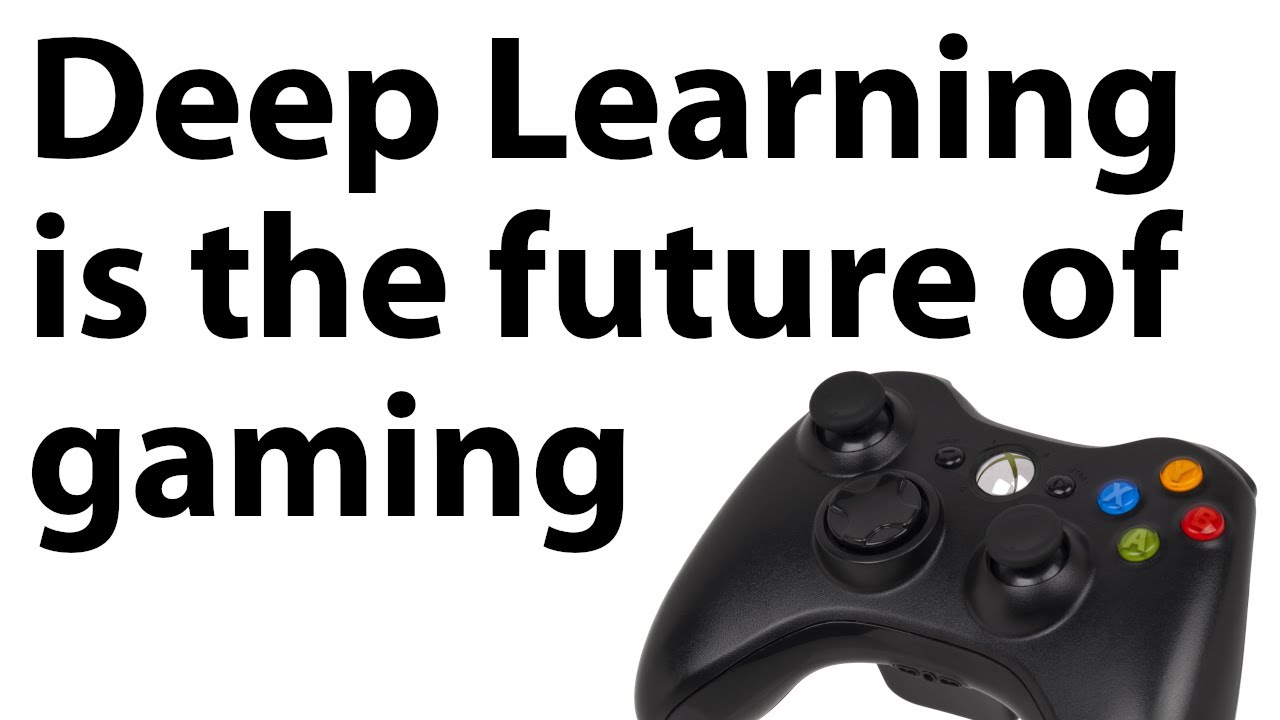
An overview of how deep learning is completely transforming the video game industry. We go over: photorealistic neural rendering, deepfakes for gaming, GAN theft auto and dreaming up game engines with neural networks, large language models for building realistic NPCs, and using OpenAI Codex to automatically program games.
It's really clear to us at Lambda that deep learning is the most important technology to impact gaming since the advent of 3D graphics.

A unique dual chipset makes AXIS P3255-LVE the perfect platform for analytics based on deep learning. Ideal for various surveillance situations, this outdoor-ready dome camera features granular object classification and all the high-quality AXIS P32 Series features.
Discover more at https://www.axis.com/products/axis-p3255-lve
At Axis Communications we offer scalable network video surveillance solutions, including intelligent analytics, for businesses of any size. We can provide you with a complete A-Z network video solution. Or you can integrate exactly what you need right now into your existing solution and add more products from Axis at your own pace. Our solutions protect your premises – and your bottom line.
Follow us to find out more:
Website: https://www.axis.com
Facebook: https://www.facebook.com/axiscommunications
LinkedIn: https://www.linkedin.com/compa....ny/axis-communicatio
Secure Insights Blog: https://www.axis.com/blog/secure-insights/
The video is copyright protected and belongs to Axis Communications AB (Axis). Axis does not authorize reproduction of any copyright protected material for commercial purposes. Nor do we permit local hosting of Axis materials on third-party webpages or social media accounts. Instead, we encourage and specifically authorize you to “deep link” to relevant Axis videos available e.g. on our official YouTube channel.

In this 2018 GDC session, Valve's John McDonald discusses how Valve has utilized Deep Learning to combat cheating in Counter-Strike: Global Offensive.
Join the GDC mailing list: http://www.gdconf.com/subscribe
Follow GDC on Twitter: https://twitter.com/Official_GDC
GDC talks cover a range of developmental topics including game design, programming, audio, visual arts, business management, production, online games, and much more. We post a fresh GDC video every day. Subscribe to the channel to stay on top of regular updates, and check out GDC Vault for thousands of more in-depth talks from our archives.

Dawn Song is well-known for her research on the intersection of deep learning and security. Aside from her research, Song is also a Professor in the Department of Electrical Engineering and Computer Science at UC Berkeley and CEO of Oasis Labs, a blockchain startup that is creating a privacy-first cloud computing platform no blockchain. She has received several awards for her work including the MacArthur Fellowship, the Guggenheim Fellowship, and Best Paper awards from top conferences.
Andrew sits down with Song to chat about her unconventional career path and her current research projects.
Here’s what you’ll learn in the interview:
00:34: How Song first got started in deep learning and security
4:00: How Song self-designed a reading program structured around representational learning
13:22: How computer security can help deep learning
17:03: Song’s research on how to build resilient machine learning systems
21:55 How a “consistency check” approach can defend against attacks
25:31: Song’s work in AI and data privacy
27:49: How deep learning can help computer security
30:16: How Song’s startup, Oasis Labs, is creating privacy-preserving smart contracts
34:42: Song’s advice for learners breaking into a new field
Want to build your own career in deep learning? Get started by taking the Deep Learning Specialization.

H2O.ai is a software platform that offers a host of machine learning algorithms, as well as one deep net model. It also provides sophisticated data munging, an intuitive UI, and several built-in enhancements for handling data. However, the tools must be run on your own hardware.
Deep Learning TV on
Facebook: https://www.facebook.com/DeepLearningTV/
Twitter: https://twitter.com/deeplearningtv
H2O.ai was founded by SriSatish Ambati, Cliff Click, and Arno Candel. In addition to its only deep net – a vanilla MLP – the platform offers a variety of models like GLM, Distributed Random Forest, Naive Bayes, a K-Means clustering model, and a few others. H2O.ai can be linked to multiple data sources in order to train data loads.
The UI is highly intuitive, but you can also work with the tools through other apps like Tableau or Excel. These interfaces allow you to set up a deep net by configuring its hyper-parameters.
H2O.ai needs to be deployed and maintained on your own hardware, which may be a limiting factor. However, the platform comes with many performance enhancements like in-memory map-reduce, columnar compression, and distributed parallel processing. Depending on your hardware’s capabilities, training on big data sets could be completed in a reasonable amount of time. As an added note, it’s unclear whether or not GPU support is a built-in feature at this point in time.
Do you have any experience with the H2O.ai platform? Please comment and share your thoughts.
Credits
Nickey Pickorita (YouTube art) -
https://www.upwork.com/freelan....cers/~0147b8991909b2
Isabel Descutner (Voice) -
https://www.youtube.com/user/IsabelDescutner
Dan Partynski (Copy Editing) -
https://www.linkedin.com/in/danielpartynski
Marek Scibior (Prezi creator, Illustrator) -
http://brawuroweprezentacje.pl/
Jagannath Rajagopal (Creator, Producer and Director) -
https://ca.linkedin.com/in/jagannathrajagopal