Top videos

Neural Storyteller is a project created by Jamie Ryan Kiros, a PhD student at the University of Toronto’s Machine Learning Group. As a high-level description, Neural Storyteller enables a machine to see an image, and then attempt to “imagine” the story behind it. Neural Storyteller has been implemented in the Somatic Model Marketplace, and this video will feature a demo by Somatic’s Jason Toy.
Deep Learning TV on
Facebook: https://www.facebook.com/DeepLearningTV/
Twitter: https://twitter.com/deeplearningtv
Relevant URLs
Neural Storyteller model on Somatic - http://somatic.io/neural-storyteller
Somatic Blog post - http://www.somatic.io/blog/how....-neural-storyteller-
Neural Storyteller - https://github.com/ryankiros/neural-storyteller
MSCOCO Database - http://mscoco.org/
BookCorpus URL - http://www.cs.toronto.edu/~mbweb/
Jamie Ryan Kiros - http://www.cs.toronto.edu/~rkiros/
Credits
Nickey Pickorita (YouTube art) -
https://www.upwork.com/freelan....cers/~0147b8991909b2
Isabel Descutner (Voice) -
https://www.youtube.com/user/IsabelDescutner
Dan Partynski (Copy Editing) -
https://www.linkedin.com/in/danielpartynski
Marek Scibior (Prezi creator, Illustrator) -
http://brawuroweprezentacje.pl/
Jagannath Rajagopal (Creator, Producer and Director) -
https://ca.linkedin.com/in/jagannathrajagopal
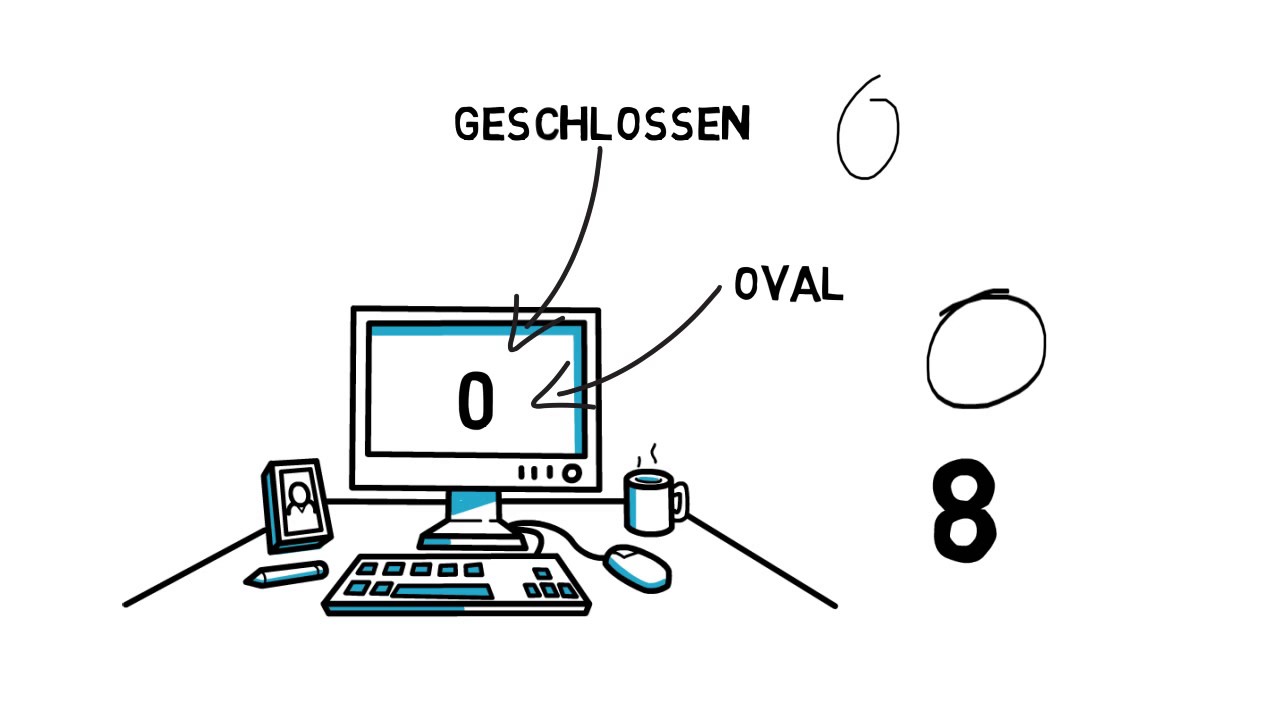

Question answering is one of the most advanced tasks in Deep Learning. Let's see how to achieve it using a Deep Learning model from Hugging Face in just 4 lines of code.
▬▬▬▬▬▬▬▬▬▬▬▬ CONNECT ▬▬▬▬▬▬▬▬▬▬▬▬
🖥️ Website: https://www.assemblyai.com
🐦 Twitter: https://twitter.com/AssemblyAI
🦾 Discord: https://discord.gg/Cd8MyVJAXd
▶️ Subscribe: https://www.youtube.com/c/Asse....mblyAI?sub_confirmat
🔥 We're hiring! Check our open roles: https://www.assemblyai.com/careers
▬▬▬▬▬▬▬▬▬▬▬▬▬▬▬▬▬▬▬▬▬▬▬▬▬▬▬▬▬▬▬▬▬
#machinelearning #DeepLearning

From the MaRS Discovery District, to ventureLAB, to the Durham College AI/HUB, the support you need to grow your AI business is here.
https://torontoglobal.ca/ai

What is Transfer Learning? It is a way to transfer knowledge and learning from one neural network to nets in other domains. indico a group of Deep Learning innovators from Boston, MA has used Transfer Learning to build a demo on fashion-matching. This video is in two parts - Part 1 showcases Transfer Learning.
Online clothing stores typically recommend products by simply analyzing the past purchasing behaviors of their customers. Deep learning is currently revolutionizing this paradigm by using algorithms to determine which fashion items are likely to match from a human’s point of view. The demo as you'll see in Part 2 of this video, is built using their Custom Collections API. The API works on the concept of Transfer Learning which allows deep nets trained on one task, to be tweaked to work for other tasks using about 100x data than starting from scratch.
Deep Learning TV on
Facebook: https://www.facebook.com/DeepLearningTV/
Twitter: https://twitter.com/deeplearningtv
Indico Links
Post on Transfer Learning - https://indico.io/blog/deep-le....arning-fashion-trans
Tutorial - Site - https://indico.io/blog/fashion-matching-tutorial/
Fashion Matching Demo - https://indico.io/demos/clothing-matching
Blog (the blog has great content) - https://indico.io/blog/
Site - https://indico.io/
Credits
Nickey Pickorita (YouTube art) -
https://www.upwork.com/freelan....cers/~0147b8991909b2
Isabel Descutner (Voice) -
https://www.youtube.com/user/IsabelDescutner
Dan Partynski (Copy Editing) -
https://www.linkedin.com/in/danielpartynski
Marek Scibior (Prezi creator, Illustrator) -
http://brawuroweprezentacje.pl/
Jagannath Rajagopal (Creator, Producer and Director) -
https://ca.linkedin.com/in/jagannathrajagopal

Torsten Hoefler presents an overview of sparsity in deep learning. Check the markers for various parts of the talk.
arXiv: https://arxiv.org/abs/2102.00554
Chapters:
0:00 Introduction to deep learning
7:29 Introduction to hardware scaling and locality
11:25 Overview of model compression and optimization
12:47 Introduction to sparsification
18:17 Overparameterization, SGD dynamics, and Occam's hill and generalization
26:00 Sparse storage formats and representational overheads
31:10 Overview of sparsification techniques - model and ephemeral sparsity
35:13 Sparsification schedules - when to sparsify
41:36 Fully sparse training
47:53 Retraining example
50:35 How to sparsify - picking elements for removal
54:50 Data-free pruning - magnitude
56:52 Data-driven pruning - sensitivity, activity, and correlation
59:42 Training-aware pruning - Taylor expansions of the loss and regularization
1:09:19 Learnable gating functions (approximations)
1:12:49 Structured sparsification
1:15:34 Variational removal methods
1:18:08 Parameter budgets between layers and literature statistics
1:22:10 Re-growing elements in fully-sparse training
1:24:53 Ephemeral sparsity - activations, gradients, dynamic networks
1:33:07 Putting everything together - case studies with CNNs
1:36:39 Parameter efficiency and slack
1:41:03 Compute efficiency and sparse transformers
1:43:41 Acceleration for sparse deep learning
1:50:04 Lottery tickets and sparse subnetworks
1:53:37 Best practices for sparse deep learning
1:56:06 Open research questions and summary
Abstract: The growing energy and performance costs of deep learning have driven the community to reduce the size of neural networks by selectively pruning components. Similarly to their biological counterparts, sparse networks generalize just as well, if not better than, the original dense networks. Sparsity can reduce the memory footprint of regular networks to fit mobile devices, as well as shorten training time for ever growing networks. In this paper, we survey prior work on sparsity in deep learning and provide an extensive tutorial of sparsification for both inference and training. We describe approaches to remove and add elements of neural networks, different training strategies to achieve model sparsity, and mechanisms to exploit sparsity in practice. Our work distills ideas from more than 300 research papers and provides guidance to practitioners who wish to utilize sparsity today, as well as to researchers whose goal is to push the frontier forward. We include the necessary background on mathematical methods in sparsification, describe phenomena such as early structure adaptation, the intricate relations between sparsity and the training process, and show techniques for achieving acceleration on real hardware. We also define a metric of pruned parameter efficiency that could serve as a baseline for comparison of different sparse networks. We close by speculating on how sparsity can improve future workloads and outline major open problems in the field.

H2O.ai is a software platform that offers a host of machine learning algorithms, as well as one deep net model. It also provides sophisticated data munging, an intuitive UI, and several built-in enhancements for handling data. However, the tools must be run on your own hardware.
Deep Learning TV on
Facebook: https://www.facebook.com/DeepLearningTV/
Twitter: https://twitter.com/deeplearningtv
H2O.ai was founded by SriSatish Ambati, Cliff Click, and Arno Candel. In addition to its only deep net – a vanilla MLP – the platform offers a variety of models like GLM, Distributed Random Forest, Naive Bayes, a K-Means clustering model, and a few others. H2O.ai can be linked to multiple data sources in order to train data loads.
The UI is highly intuitive, but you can also work with the tools through other apps like Tableau or Excel. These interfaces allow you to set up a deep net by configuring its hyper-parameters.
H2O.ai needs to be deployed and maintained on your own hardware, which may be a limiting factor. However, the platform comes with many performance enhancements like in-memory map-reduce, columnar compression, and distributed parallel processing. Depending on your hardware’s capabilities, training on big data sets could be completed in a reasonable amount of time. As an added note, it’s unclear whether or not GPU support is a built-in feature at this point in time.
Do you have any experience with the H2O.ai platform? Please comment and share your thoughts.
Credits
Nickey Pickorita (YouTube art) -
https://www.upwork.com/freelan....cers/~0147b8991909b2
Isabel Descutner (Voice) -
https://www.youtube.com/user/IsabelDescutner
Dan Partynski (Copy Editing) -
https://www.linkedin.com/in/danielpartynski
Marek Scibior (Prezi creator, Illustrator) -
http://brawuroweprezentacje.pl/
Jagannath Rajagopal (Creator, Producer and Director) -
https://ca.linkedin.com/in/jagannathrajagopal

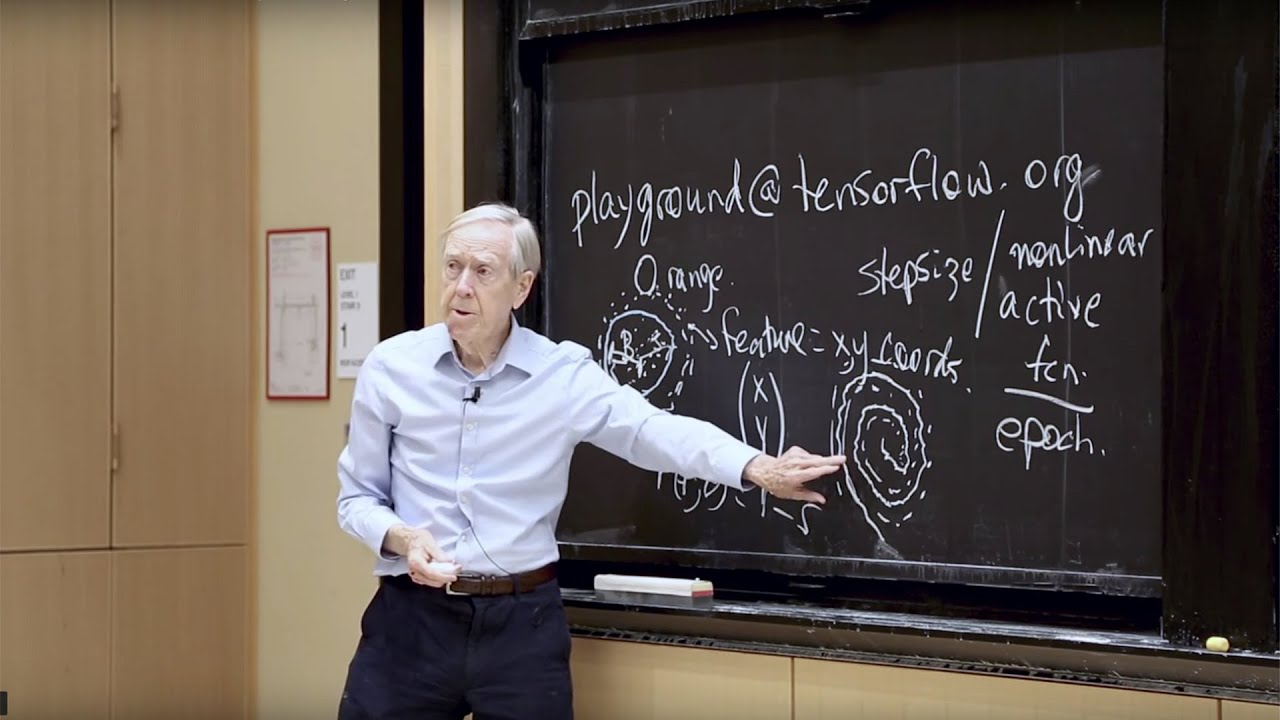


Artificial intelligence (AI) is a branch of engineering that has traditionally ignored brains, but recent advances in biologically-inspired deep learning have dramatically changed AI and made it possible to solve difficult problems in vision, planning and natural language. If you talk to Alexa or use Google Translate, you have experienced deep learning in action. This new technology opens a Pandora's box of problems that we must confront regarding privacy, bias and jobs. Terry Sejnowski, PhD, explains how his research strives to understand the computational resources of brains and to build linking principles from brain to behavior using computational models. [6/2020] [Show ID: 35462]
More from: Exploring Ethics
(https://www.uctv.tv/exploring-ethics)
UCTV is the broadcast and online media platform of the University of California, featuring programming from its ten campuses, three national labs and affiliated research institutions. UCTV explores a broad spectrum of subjects for a general audience, including science, health and medicine, public affairs, humanities, arts and music, business, education, and agriculture. Launched in January 2000, UCTV embraces the core missions of the University of California -- teaching, research, and public service – by providing quality, in-depth television far beyond the campus borders to inquisitive viewers around the world.
(https://www.uctv.tv)

#RanjanSharma
Explained Gradient Descent in Machine Learning and in Deep Learning in Hindi || Ranjan Sharma
Join Whatsapp Group for AI https://chat.whatsapp.com/L3Zmt9XBa3U...
Easiest Explanation Ever.
Python Playlist: https://www.youtube.com/playlist?list...
AI PlayList: https://www.youtube.com/playlist?list...
Join Whatsapp Group for AI https://chat.whatsapp.com/IB6fQBEcZAd8JSuAU4h9Fe
Telegram Group : http://www.t.me/@MachineLearningIndia
Subscribe my Channel https://www.youtube.com/c/RanjanSharma
Google Drive: https://drive.google.com/drive..../folders/1_4Il9iDLCm
Github : https://github.com/iamranjan/youtube-tutorials
**** Connect with me on below Channels ****
LinkedIn: https://www.linkedin.com/in/iamranjan/
Medium : https://medium.com/@iamranjansharma
Instagram : https://www.instagram.com/iamranjan.sharma
Email : [email protected]
Keep Practicing :-)
Happy Learning !!
#GradientDescent #GradientDescentMachineLearning,
gradient descent in hindi,
gradient descent algorithm in hindi,
gradient descent algorithm,
gradient descent python,
gradient descent machine learning,
gradient descent explained,
gradient descent example,
gradient descent for linear regression,