Top videos

The Caribbean is one of the world's most beautiful regions. Enjoy this 4k Scenic Relaxation Film featuring over 25 Caribbean islands and countries. From the beautiful coast of Barbados, to the jagged Pitons of St. Lucia, the Caribbean is home to some of the world's most beautiful places. Where is your favorite Caribbean destination?
Our other Relaxation films:
Europe 4K - https://youtu.be/0xhzwDXfLds
Fiji 4K - https://youtu.be/zleIaEIBs2M
French Polynesia 4K - https://youtu.be/YbUkAJHCgd0
Switzerland 4K - https://youtu.be/fyOVKyaKJq4
Norway 4K - https://youtu.be/Bxo2JkiqG_o
Ireland 4K - https://youtu.be/dR-BW-alOF4
Portugal 4K - https://youtu.be/AJV6uXGu70Y
France 4K - https://youtu.be/tHztN9inrOw
Italy 4K - https://youtu.be/H4tyzzP33Cw
Scotland 4K - https://youtu.be/gGCwgCe3WtQ
Germany 4K - https://youtu.be/6K0sajMdAnk
Croatia 4K - https://youtu.be/l8vnE91bV0U
The Alps 4K - https://youtu.be/BTMjD7_evjE
Mediterranean 4K - https://youtu.be/fTn-XfauCPI
Follow us on instagram @scenicrelaxationfilms
Where we get our music - https://fm.pxf.io/gbYAm9
Great Place for Stock footage - https://bit.ly/38b1EJH
Great Place for Music - https://bit.ly/3GptQHd
Great Place for Assets - https://bit.ly/3K59ZPK
Free stock footage, guides & luts - https://sellfy.com/ryanshirley
Timestamps:
0:00 - Flying over the Caribbean
7:00 - Martinique
10:01 - St. Lucia
13:03 - Guadeloupe
16:00 - Dominican Republic
18:45 - Puerto Rico
20:38 - Barbados
22:18 - Virgin Islands
23:06 - St. Kitts & Antigua
25:01 - Jamaica
26:54 - Bahamas
28:57 - Venezuela
30:35 - Colombia
32:08 - Mexico
34:05 - Belize
34:42 - Honduras & Panama
35:41 - Curaçao
37:00 - Trinidad & Tobago
38:41 - Animals of the Caribbean
41:32 - Florida Keys & Grand Cayman
42:55 - Cuba
43:26 - Caribbean Landscapes
Thanks for watching :)


Diabetic Retinopathy Kaggle Competition Solution!
Kaggle: https://www.kaggle.com/c/diabe....tic-retinopathy-dete
Code on GitHub (go to ML, Kaggle directory): https://github.com/aladdinpers....son/Machine-Learning
Timestamps:
0:00 - Introduction
2:45 - Overview of DR and how to detect
9:11 - A look at the data
12:15 - Creating a baseline solution
24:22 - Result from baseline
26:25 - Idea #1: Preprocessing
34:07 - Result #1
35:19 - Idea #2: Loss Function
39:03 - Result #2
39:59 - Idea #3: Balanced Loader (skipped)
41:30 - Idea #4: Augmentation
42:52 - Result #4
43:44 - Idea #5: Using left and right information
51:03 - Result #5
51:50 - Idea #6: Increase image resolution
55:00 - Result #6 from various resolutions
55:10 - Final Result and Ending


Explanation of how to solve the weighted interval scheduling problem using Dynamic Programming! In the video I explain the algorithm and give an example. In the next video we code this algorithm from scratch in Python.
Link to implementation in Python:
https://youtu.be/dU-coYsd7zw


#shorts #machinelearning #deeplearning #gnn #graphs
New video:
https://youtu.be/IZtv9s_Wx9I
GAN Playlist:
https://www.youtube.com/playli....st?list=PLhhyoLH6Ijf
Reason for update:
I felt the video explanations could be clearer and better video quality. What I've done now is expand it into a new GAN playlist where DCGAN is one of those! Do check out the links above.
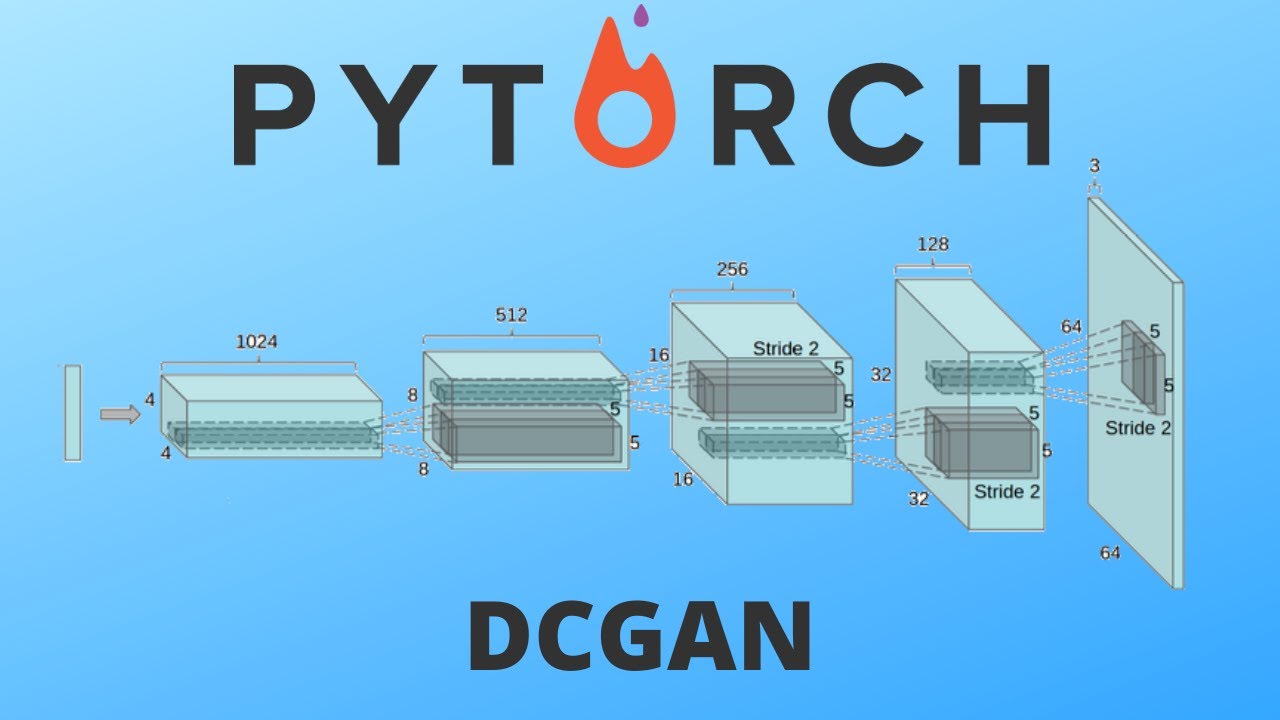
In this video we implement a generative adversarial network (GAN) in Pytorch. Specifically we're implementing a DCGAN (Deep Convolutional Generative Adversarial Network) trained on the MNIST-dataset to generate new digits.
✅ Support My Channel Through Patreon:
https://www.patreon.com/aladdinpersson
PyTorch Playlist:
https://www.youtube.com/playli....st?list=PLhhyoLH6Ijf
Github Repository:
https://github.com/aladdinpers....son/Machine-Learning
Papers to gain better understanding of GANs:
https://arxiv.org/abs/1406.2661 (Original GAN paper)
https://arxiv.org/abs/1511.06434 (DCGAN paper)
https://arxiv.org/abs/1606.03498 (Techniques for training GANs)
OUTLINE:
0:00 - Introduction
0:46 - Overview of the idea behind GANs
1:42 - Original GAN paper overview
4:27 - DCGAN paper overview
7:13 - Implementation of the Discriminator
12:43 - Implementation of the Generator
17:21 - Initialization of the network, dataset and hyperparameters
24:00 - Setting up the training phase
38:10 - Training the Network and visualizing results


Imagine an AI where, all in the same model you could Translate languages, Write code, solve crossword puzzles, Be a chatbot and do a whole bunch of other crazy things.
In this video, we check out the BLOOM large language model. A free and totally open source 176B parameter LLM.
BLOOM model: https://huggingface.co/bigscience/bloom
Quick examples of running BLOOM locally and/or via API: https://github.com/Sentdex/BLOOM_Examples
Neural Networks from Scratch book: https://nnfs.io
Channel membership: https://www.youtube.com/channe....l/UCfzlCWGWYyIQ0aLC5
Discord: https://discord.gg/sentdex
Reddit: https://www.reddit.com/r/sentdex/
Support the content: https://pythonprogramming.net/support-donate/
Twitter: https://twitter.com/sentdex
Instagram: https://instagram.com/sentdex
Facebook: https://www.facebook.com/pythonprogramming.net/
Twitch: https://www.twitch.tv/sentdex
Contents:
0:00 - BLOOM model basics
3:05 - What's a Large Language Model (LLM)?
4:06 - What's Prompting?
6:40 - BLOOM Training Data & Model Behavior
9:09 - Tokens & Tokenization
12:03 - Using your $5M AI (How to prompt)
16:49 - Advanced Prompt examples
21:16 - What's Next?
#deeplearning #artificialintelligence

In the previous tutorial, we covered how to use channels to send and receive values with goroutines. That said, it was just a basic example. In reality, we're likely to have questions of synchronization and iterating through known, or unknown, numbers of channel returns.
Text tutorials and sample code: https://pythonprogramming.net/go/
https://twitter.com/sentdex
https://www.facebook.com/pythonprogramming.net/
https://plus.google.com/+sentdex

F9 (alternatively known as Fast & Furious 9) is an upcoming American action film directed by Justin Lin and written by Daniel Casey. A sequel to 2017's The Fate of the Furious, it will be the ninth main installment in the Fast & Furious franchise and the tenth full-length film released overall. It is the first film in the series since 2013's Fast & Furious 6 to be directed by Lin, and the first since 2003's 2 Fast 2 Furious not to be written or co-written by Chris Morgan. The film will star Vin Diesel, John Cena, Michelle Rodriguez, Tyrese Gibson, Chris "Ludacris" Bridges, Jordana Brewster, Nathalie Emmanuel, Sung Kang, Helen Mirren, and Charlize Theron.


Do you think that 8k movies will become the norm in the very near future?...well i don't and heres why! But be fore you go; Don't forget to Like, Comment & Subscribe!!
Music: Street Knowledge - Bosnow - Uppbeat
Music from Uppbeat (free for Creators!):
https://uppbeat.io/t/bosnow/street-knowledge
License code: 6YDJKEQOW0RPGCYR
Follow me on instagram:
https://www.instagram.com/Cinavisuals/
Facebook:
https://www.facebook.com/Cinavisuals
TIKTOK:
https://www.tiktok.com/@bourbinboiric?lang=en
Donate to the Cause! The Arraignment series fundraiser!
https://gofund.me/3010e3f3
LIST OF EQUIPMENT:
CANON EOS R
GVM 800D
AMARAN 100D
RODE VIDEO MIC NTG


![5 หนังน่าดูใน HBO GO [ #หนอนหนัง ]](https://i.ytimg.com/vi/ezWdHWVEI6g/mqdefault.jpg)

Patreon: https://www.patreon.com/mlst
Discord: https://discord.gg/ESrGqhf5CB
"Symmetry, as wide or narrow as you may define its meaning, is one idea by which man through the ages has tried to comprehend and create order, beauty, and perfection." and that was a quote from Hermann Weyl, a German mathematician who was born in the late 19th century.
The last decade has witnessed an experimental revolution in data science and machine learning, epitomised by deep learning methods. Many high-dimensional learning tasks previously thought to be beyond reach -- such as computer vision, playing Go, or protein folding -- are in fact tractable given enough computational horsepower. Remarkably, the essence of deep learning is built from two simple algorithmic principles: first, the notion of representation or feature learning and second, learning by local gradient-descent type methods, typically implemented as backpropagation.
While learning generic functions in high dimensions is a cursed estimation problem, many tasks are not uniform and have strong repeating patterns as a result of the low-dimensionality and structure of the physical world.
Geometric Deep Learning unifies a broad class of ML problems from the perspectives of symmetry and invariance. These principles not only underlie the breakthrough performance of convolutional neural networks and the recent success of graph neural networks but also provide a principled way to construct new types of problem-specific inductive biases.
This week we spoke with Professor Michael Bronstein (head of graph ML at Twitter) and Dr.
Petar Veličković (Senior Research Scientist at DeepMind), and Dr. Taco Cohen and Prof. Joan Bruna about their new proto-book Geometric Deep Learning: Grids, Groups, Graphs, Geodesics, and Gauges.
Enjoy the show!
Geometric Deep Learning: Grids, Groups, Graphs, Geodesics, and Gauges
https://arxiv.org/abs/2104.13478
[00:00:00] Tim Intro
[00:01:55] Fabian Fuchs article
[00:04:05] High dimensional learning and curse
[00:05:33] Inductive priors
[00:07:55] The proto book
[00:09:37] The domains of geometric deep learning
[00:10:03] Symmetries
[00:12:03] The blueprint
[00:13:30] NNs don't deal with network structure (TedX)
[00:14:26] Penrose - standing edition
[00:15:29] Past decade revolution (ICLR)
[00:16:34] Talking about the blueprint
[00:17:11] Interpolated nature of DL / intelligence
[00:21:29] Going tack to Euclid
[00:22:42] Erlangen program
[00:24:56] “How is geometric deep learning going to have an impact”
[00:26:36] Introduce Michael and Petar
[00:28:35] Petar Intro
[00:32:52] Algorithmic reasoning
[00:36:16] Thinking fast and slow (Petar)
[00:38:12] Taco Intro
[00:46:52] Deep learning is the craze now (Petar)
[00:48:38] On convolutions (Taco)
[00:53:17] Joan Bruna's voyage into geometric deep learning
[00:56:51] What is your most passionately held belief about machine learning? (Bronstein)
[00:57:57] Is the function approximation theorem still useful? (Bruna)
[01:11:52] Could an NN learn a sorting algorithm efficiently (Bruna)
[01:17:08] Curse of dimensionality / manifold hypothesis (Bronstein)
[01:25:17] Will we ever understand approximation of deep neural networks (Bruna)
[01:29:01] Can NNs extrapolate outside of the training data? (Bruna)
[01:31:21] What areas of math are needed for geometric deep learning? (Bruna)
[01:32:18] Graphs are really useful for representing most natural data (Petar)
[01:35:09] What was your biggest aha moment early (Bronstein)
[01:39:04] What gets you most excited? (Bronstein)
[01:39:46] Main show kick off + Conservation laws
[01:49:10] Graphs are king
[01:52:44] Vector spaces vs discrete
[02:00:08] Does language have a geometry? Which domains can geometry not be applied? +Category theory
[02:04:21] Abstract categories in language from graph learning
[02:07:10] Reasoning and extrapolation in knowledge graphs
[02:15:36] Transformers are graph neural networks?
[02:21:31] Tim never liked positional embeddings
[02:24:13] Is the case for invariance overblown? Could they actually be harmful?
[02:31:24] Why is geometry a good prior?
[02:34:28] Augmentations vs architecture and on learning approximate invariance
[02:37:04] Data augmentation vs symmetries (Taco)
[02:40:37] Could symmetries be harmful (Taco)
[02:47:43] Discovering group structure (from Yannic)
[02:49:36] Are fractals a good analogy for physical reality?
[02:52:50] Is physical reality high dimensional or not?
[02:54:30] Heuristics which deal with permutation blowups in GNNs
[02:59:46] Practical blueprint of building a geometric network architecture
[03:01:50] Symmetry discovering procedures
[03:04:05] How could real world data scientists benefit from geometric DL?
[03:07:17] Most important problem to solve in message passing in GNNs
[03:09:09] Better RL sample efficiency as a result of geometric DL (XLVIN paper)
[03:14:02] Geometric DL helping latent graph learning
[03:17:07] On intelligence
[03:23:52] Convolutions on irregular objects (Taco)