Top videos





A video on how to undervolt which is especially useful for deep learning with multiple gpu setup/gaming/mining. Although since it's going to lower temps substantially I recommend it in general just for card longevity.
MSI Afterburner:
https://www.msi.com/page/afterburner
Unigine benchmark:
https://benchmark.unigine.com/
GitHub Repository:
https://github.com/aladdinpers....son/Machine-Learning
✅ Equipment I use and recommend:
https://www.amazon.com/shop/aladdinpersson
❤️ Become a Channel Member:
https://www.youtube.com/channe....l/UCkzW5JSFwvKRjXABI
✅ One-Time Donations:
Paypal: https://bit.ly/3buoRYH
Ethereum: 0xc84008f43d2E0bC01d925CC35915CdE92c2e99dc
▶️ You Can Connect with me on:
Twitter - https://twitter.com/aladdinpersson
LinkedIn - https://www.linkedin.com/in/al....addin-persson-a95384
Github - https://github.com/aladdinpersson
Timestamps:
0:00 - Introduction
0:15 - Why you should undervolt
1:57 - Undervolt vs Underclock
3:03 - Undervolting Guide
12:00 - Comparison & Improvements
12:38 - Ending

Devil may cry 3 all cutscenes full game movie.
devil may cry 3: Dante's Awakening, released in Japan as Devil May Cry 3 (Japanese: デビル メイ クライ 3 Hepburn: Debiru Mei Kurai Surī), is an action-adventure hack and slash video game directed by Hideaki Itsuno, developed and published by Capcom, released in 2005 for the PlayStation 2 and ported to Microsoft Windows in 2006. The game is a prequel to the original Devil May Cry, with a younger Dante.[3] It introduces new combat mechanics with an emphasis on combos and fast paced action. The story is told primarily in cutscenes using the game's engine, with several pre-rendered full motion videos.
Set a decade before the events of the first Devil May Cry in an enchanted tower, Temen-ni-gru, the story centers on the dysfunctional relationship between Dante and his brother Vergil.
Devil May Cry 3 was widely praised by critics, hailing it as a return to form for the series, yet did receive some criticisms for its high level of difficulty in the North American version. This was later addressed by the release of the rebalanced Special Edition of the game.[4][5]. The game was re‐released in 2006 as Devil May Cry 3: Dante’s Awakening, Special Edition (デビル メイ クライ 3 Special Edition) with retooled difficulty levels, the addition of mid-mission checkpoints, "GOLD mode", and Vergil as a playable character. Combined sales of both versions were over 2.3 million and garnering a review aggregate score of 88% on Gamerankings. It has been cited as one of the greatest video games of all time.
A 2005 manga prequel to Devil May Cry 3's storyline was published in Japan and later the United States.
Prologue Vergil - 00:00
Prologue Vergil - 2 01:36
Prologue - 04:05
Mission 1 Opening - 06:09
Mission 1 Break out - 10:25
Mission 2 Temen-ni-gru - 11:25
Mission 2 Chance Meeting - 12:08
Mission 3 Arkham & Vergil - 13:04
Mission 3 The Lady - 14:50
Mission 3 Cerberus - 15:20
Mission 3 Ice-chucks -16:36
Mission 3 First Contact - 17:31
Mission 4 The Uninvited - 18:43
Reddit - https://www.reddit.com/user/LeedStrife/
Twitter - https://twitter.com/LeedStrife
Facebook - https://www.facebook.com/LeedStrife
Donate for max motivation
https://www.youtube.com/channe....l/UCRsasd-Kcwz88ZbvQ

Our previous discussions of deep net applications were limited to static patterns, but how can a net decipher and label patterns that change with time? For example, could a net be used to scan traffic footage and immediately flag a collision? Through the use of a recurrent net, these real-time interactions are now possible.
Deep Learning TV on
Facebook: https://www.facebook.com/DeepLearningTV/
Twitter: https://twitter.com/deeplearningtv
The Recurrent Neural Net (RNN) is the brainchild of Juergen Schmidhuber and Sepp Hochreiter. The three deep nets we’ve seen thus far – MLP, DBN, and CNN – are known as feedforward networks since a signal moves in only one direction across the layers. In contrast, RNNs have a feedback loop where the net’s output is fed back into the net along with the next input. Since RNNs have just one layer of neurons, they are structurally one of the simplest types of nets.
Like other nets, RNNs receive an input and produce an output. Unlike other nets, the inputs and outputs can come in a sequence. Here are some sample applications for different input-output scenarios:
- Single input, sequence of outputs: image captioning
- Sequence of inputs, single output: document classification
- Sequence of inputs, sequence of outputs: video processing by frame, statistical forecasting of demand in Supply Chain Planning
Have you ever used an RNN in one of your projects before? If so, please comment and tell us about your experience.
RNNs are trained using backpropagation through time, which reintroduces the vanishing gradient problem. In fact, the problem is worse with an RNN because each time step is the equivalent of a layer in a feedforward net. Thus if the net is trained for 1000 time steps, the gradient will vanish exponentially as it would in a 1000-layer MLP.
There are different approaches to address this problem, the most popular of which is gating. Gating takes the output of any time step and the next input, and performs a transformation before feeding the result back into the RNN. There are several types of gates, the LSTM being the most popular. Other approaches to address this problem include gradient clipping, steeper gates, and better optimizers.
GPUs are an essential tool for training an RNN. A team at Indico compared the speed boost from using a GPU over a CPU, and found a 250-fold increase. That’s the difference between 1 day and over 8 months!
A recurrent net has one additional capability – it can predict the next item in a sequence, essentially acting as a forecasting engine.
Credits
Nickey Pickorita (YouTube art) -
https://www.upwork.com/freelan....cers/~0147b8991909b2
Isabel Descutner (Voice) -
https://www.youtube.com/user/IsabelDescutner
Dan Partynski (Copy Editing) -
https://www.linkedin.com/in/danielpartynski
Marek Scibior (Prezi creator, Illustrator) -
http://brawuroweprezentacje.pl/
Jagannath Rajagopal (Creator, Producer and Director) -
https://ca.linkedin.com/in/jagannathrajagopal

この動画では、ニューラルネットワークの歴史を追いながらDeep Learningの基礎についてやさしく解説します。
前回の動画(今Deep Learningに取り組むべき理由)はこちらです。
https://www.youtube.com/watch?v=-Dl8s4iufxI
再生リスト「Deep Learning入門」
https://www.youtube.com/playli....st?list=PLg1wtJlhfh2
Neural Network Console
https://dl.sony.com/ja/
Neural Network Libraries
https://nnabla.org/ja/
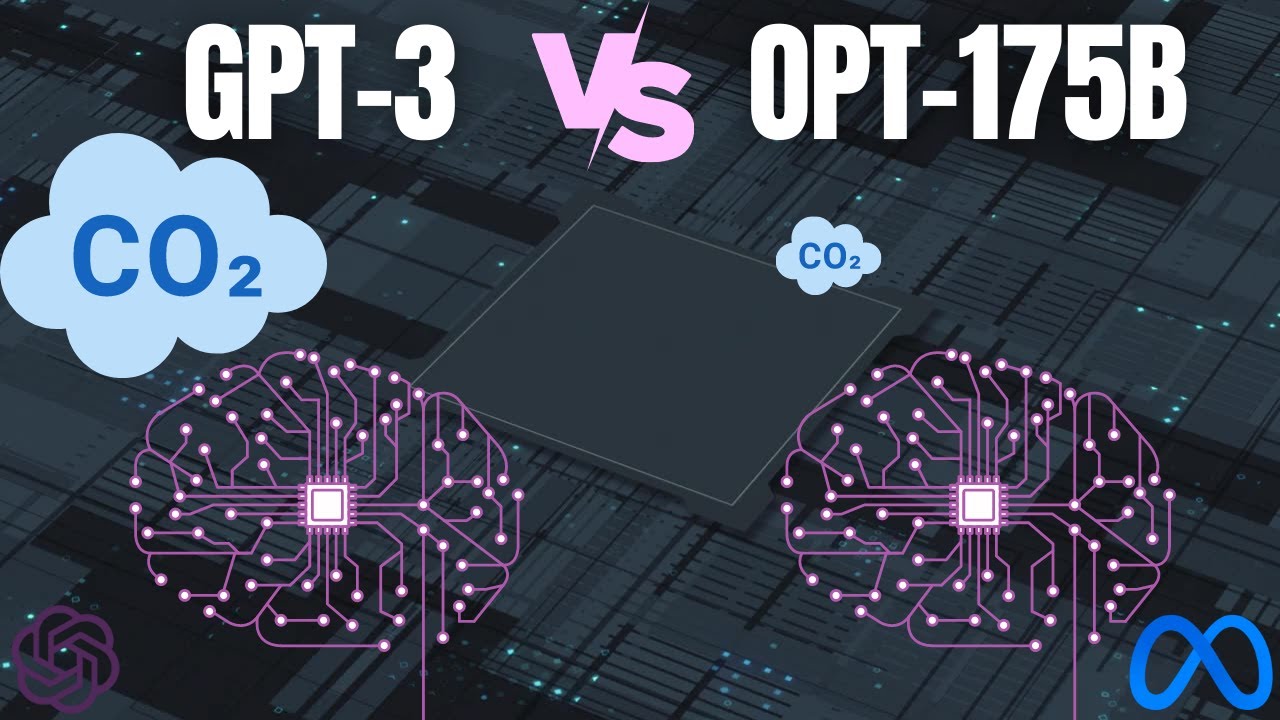
Sponsor of the video: http://wandb.me/whats-ai
References:
►Read the full article: https://www.louisbouchard.ai/opt-meta/
►Zhang, Susan et al. “OPT: Open Pre-trained Transformer Language Models.” https://arxiv.org/abs/2205.01068
►My GPT-3's video for large language models: https://youtu.be/gDDnTZchKec
►Meta's post: https://ai.facebook.com/blog/d....emocratizing-access-
►Code: https://github.com/facebookresearch/metaseq
https://github.com/facebookresearch/metaseq/tree/main/projects/OPT
►My Newsletter (A new AI application explained weekly to your emails!): https://www.louisbouchard.ai/newsletter/
Join Our Discord channel, Learn AI Together:
►https://discord.gg/learnaitogether
Chapters:
0:00 Hey! Tap the Thumbs Up button and Subscribe. You'll learn a lot of cool stuff, I promise.
1:34 Sponsor: w&b
2:28 OPT-175B
#GPT3 #OPT #Meta

Facebook →http://bit.ly/FacebookGladysMunoz
Spotify → http://bit.ly/GladysMunoz
Web → http://www.gladysmunoz.com
Alabanza "Job" interpretada por Gladys Muñoz, perteneciente al sencillo "Job".
Autor y Compositor : Delino Marçal
Traducción al español: Gladys Muñoz
Producción Musical y Arreglos: Esteban Alvarado
Batería: Jimmy Zambrano
Bajo: Antonio Mondaca
Guitarras Eléctricas: Carlos Cabrera
Guitarras Acústicas: Esteban Alvarado
Teclados y Programing: Esteban Alvarado
Arreglos y Grabación de Coros: Cristian Morales
Producción General, Grabación y Mezcla : Rodrigo Carrasco
Mastering: Chalo Gonzalez en Estudios GMasters
Realización Audiovisual: Roy Vargas
Peinados y Asistencia : Isabel Orrego Toloza
℗ Solo por Gracia Producciones
#Job. #GladysMuñoz
