Top videos

Get the BEAR by Foreo device as the perfect gift for yourself or for your significant other by using the coupon SCIENCE20 at the following link: https://foreo.se/85z8
Sciencephile Merch: https://crowdmade.com/collecti....ons/sciencephilethea
Support me at Patreon: https://www.patreon.com/sciencephiletheai
Facebook: https://www.facebook.com/sciencephile/
Twitter: https://www.twitter.com/Sciencephile_
Reddit: https://www.reddit.com/r/SciencephileTheAI/
Website: https://www.sciencephiletheai.com
Music: Piano Concerto No. 21 in C major, K.467 - Andante - Mozart
Supporters: H H, Ephellon, Kyle A Criswell, Oberon Vortigern, Asadullah Khan, Jonas Lee, Joshua Titus, [eXploit] Theorislav, Gisele Kauer, Ice Wallow Come, Tovi Sonnenberg, Parker Rosenbauer, iNF3Rnus, Pavel Kočarian, John N, Danh Le, Stealer of Fresh stolen Content, Brandon Ledyard, Nathaniel Strizak, Nick Boykin-Reed, William Persson, Victator and everyone else!

Not only have I built hundreds of AI agents myself, I've seen other people build thousands of AI agents for every use case under the sun. The people who are the most successful are the ones who don't overcomplicate it - and I want that to be you too.
It's easy to think building AI agents is super complicated, but honestly you can learn 90% of what you need to know (and what to focus on) from this video. No matter how you're building your agents, I'll show you here what you need to think about, and more importantly what you shouldn't worry about when you're first creating your agent.
~~~~~~~~~~~~~~~~~~~~~~~~~~~~~~~~~~~~~~~~~~~~
Platforms mentioned in this video (most are open source!):
- Synk for automated AI-native app security:
https://snyk.plug.dev/xgmYQhO
- Guardrails AI for agent guardrails:
https://github.com/guardrails-ai/guardrails
- Pydantic AI for the AI Agent framework:
https://ai.pydantic.dev/
- Mem0 for long term memory:
https://mem0.ai
- Langfuse for agent observability:
https://langfuse.com/
- Docker for deployment:
https://www.docker.com/
~~~~~~~~~~~~~~~~~~~~~~~~~~~~~~~~~~~~~~~~~~~~
- If you want to master AI coding assistants and learn how to build systems for reliable and repeatable results, check out the new Agentic Coding Course in Dynamous:
https://dynamous.ai/agentic-coding-course
- Here is the repo for the super simple AI Agent we built in this video:
https://github.com/coleam00/ot....tomator-agents/tree/
- Here is the system prompt template I covered:
https://docs.google.com/docume....nt/d/1-OB4ZMg20pIRVm
~~~~~~~~~~~~~~~~~~~~~~~~~~~~~~~~~~~~~~~~~~~~
Thanks to Snyk for working with me on the security portion of this video! It's been a pleasure and I really do believe Snyk is on the forefront of software/agent/AI coding security especially with their new MCP server:
https://docs.snyk.io/integrati....ons/snyk-studio-agen
~~~~~~~~~~~~~~~~~~~~~~~~~~~~~~~~~~~~~~~~~~~~
00:00 - Master the First 90% of Building AI Agents
01:38 - The 4 Core Components of AI Agents
03:06 - The First 3 Steps of Building an Agent
04:09 - Building a Basic AI Agent Together Live
09:17 - Choosing Your LLM
10:34 - Crafting Your System Prompt
12:20 - Creating Your Tools (Agent Capabilities)
14:26 - AI Agent Security
15:32 - Guardrails AI
16:45 - Snyk MCP Server
19:45 - Managing Agent Context (Memory)
22:05 - Mem0 for Long Term Agent Memory
23:53 - Agent Observability (with Langfuse)
26:28 - Agent Deployment (with Docker)
28:41 - Final Thoughts
~~~~~~~~~~~~~~~~~~~~~~~~~~~~~~~~~~~~~~~~~~~~
Join me as I push the limits of what is possible with AI. I'll be uploading videos weekly - at least every Wednesday at 7:00 PM CDT!

🔥Data Analyst Masters Program (Discount Code - YTBE15) - https://www.simplilearn.com/data-analyst-masters-certification-training-course?utm_campaign=z-9PSZYHaZI&utm_medium=Lives&utm_source=Youtube
🔥IITK - Professional Certificate Course in Data Analytics and Generative AI (India Only) - https://www.simplilearn.com/iitk-professional-certificate-course-data-analytics?utm_campaign=z-9PSZYHaZI&utm_medium=Lives&utm_source=Youtube
🔥Purdue - Post Graduate Program in Data Analytics - https://www.simplilearn.com/pgp-data-analytics-certification-training-course?utm_campaign=z-9PSZYHaZI&utm_medium=Lives&utm_source=Youtube
🔥Caltech - Data Analytics Bootcamp (US Only) - https://www.simplilearn.com/data-analytics-bootcamp?utm_campaign=z-9PSZYHaZI&utm_medium=Lives&utm_source=Youtube
🔥IITG - Professional Certificate Program in Data Analytics and Generative AI (India Only) - https://www.simplilearn.com/iitg-generative-ai-data-analytics-program?utm_campaign=z-9PSZYHaZI&utm_medium=Lives&utm_source=Youtube
This video on Advanced Excel Full Course by Simplilearn is a complete guide to mastering Excel for data analysis and advanced functionality. It begins with what Microsoft Excel is and covers the basics of Excel, progressing into advanced topics like how to use Microsoft Power Query for data transformation and descriptive statistics using Excel for analytical insights. You’ll learn how to use Copilot in Excel for automation and explore 10 important Excel formulas every professional should know. The course also covers DBMS concepts and highlights how data analytics using AI can enhance efficiency. Practical sessions include creating Excel dashboards for beginners, advanced techniques like ANOVA in Excel, and building dashboards using ChatGPT. Additional resources include insights on top 10 data analyst projects for 2025 and a guide to the top 10 data analyst certifications, ensuring you are prepared for a data-driven career.
The Full course will cover the following topics
00:00:00 Introduction to Advanced Excel Full Course
00:03:55 What is Microsoft Excel
05:42:00 Excel Basics
06:03:24 How to use microsoft power query
06:11:52 Descriptive statistics using excel
06:21:13 How To Use Copilot In EXCEL
06:44:59 10 important excel formulaes
06:46:07 What is DBMS
06:57:00 Data Analytics using AI
07:35:00 Chatgpt and Excel with Data Analytics
07:53:20 Excel Dashboard Tutorial For Beginners
07:53:20 Annova in excel
08:24:19 ChatGPT Made This Excel Dashboard
08:36:54 Top 10 Data Analyst Projects in 2025
08:48:52 top 10 Data Analyst certifications
⏩ Check out the Excel tutorial videos: https://www.youtube.com/watch?v=nPkmWE4JCfE&list=PLEiEAq2VkUUKf8aLrspLg3zuyJ5S-5K5S
#exceldataanalytics #exceltraining #excelformulasandfunctions #exceldatavisualization #excelcourse #simplilearn #simplilearn #advancedexcel #advancedexceltraining #advancedexceltricks #2025 #simplilearn
➡️ About Post Graduate Program In Data Analytics
This Data Analytics Program is ideal for all working professionals and prior programming knowledge is not required. It covers topics like data analysis, data visualization, regression techniques, and supervised learning in-depth via our applied learning model with live sessions by leading practitioners and industry projects.
Key Features
✅ Post Graduate Program certificate and Alumni Association membership
✅ Exclusive hackathons and Ask me Anything sessions by IBM
✅ 8X higher live interaction in live online classes by industry experts
✅ Capstone from 3 domains and 14+ Data Analytics Projects with Industry datasets from Google PlayStore, Lyft, World Bank etc.
✅ Master Classes delivered by Purdue faculty and IBM experts
✅ Simplilearn's JobAssist helps you get noticed by top hiring companies
✅ Resume preparation and LinkedIn profile building
✅ 1:1 mock interview
✅ Career accelerator webinars
Skills Covered
✅ Data Analytics
✅ Statistical Analysis using Excel
✅ Data Analysis Python and R
✅ Data Visualization Tableau and Power BI
✅ Linear and logistic regression modules
✅ Clustering using kmeans
✅ Supervised Learning
👉 Learn More at: https://www.simplilearn.com/pgp-data-analytics-certification-training-course?utm_campaign=z-9PSZYHaZI&utm_medium=Lives&utm_source=youtube

Official audio for I Want To Wake Up by Pet Shop Boys taken from their 1987 album, 'Actually'.
Subscribe for more here: http://smarturl.it/petshopboysyoutube
Follow Pet Shop Boys:
Website: https://www.petshopboys.co.uk
Instagram: https://petshopboys.lnk.to/instagramID
Facebook: https://petshopboys.lnk.to/facebookID
Twitter: https://petshopboys.lnk.to/twitterID
Spotify: https://petshopboys.lnk.to/spotifyID
Apple Music - https://petshopboys.lnk.to/applemusicID
Lyrics:
[Chorus]
Hit music on the radio
Hit music on the radio
[Verse 1]
When you dance with me we dance forever
All night long to your favourite
[Chorus]
Hit music on the radio
Hit music on the radio
[Verse 2]
When you dance with me we dance forever
All night long to the latest song
Live a lie, dance together
All night long to your favourite
[Chorus]
Hit music
Hit music
[Bridge]
I've been working hard all day
To pay the bills I have to pay
Don't have the strength to work all night
Or fight until it's almost light
[Chorus]
Music on the radio
D-dance music at the disco
[Verse 3]
Live a lie, dance together
All night long to your favourite song
Live and die, it's all that we know
I need a friend at the journey's end
[Chorus]
Hit music in stereo
[Interlude]
[Verse 4]
It's all about love and it's about forgetting
Choose a song when the night's too long
We all need love and we want protection
I need a friend at the journey's end
In Kensington or Spanish Harlem
All night long to your desperate
[Chorus]
Hit music on the radio
Music at the disco
[Chorus]
Hit music on the radio
Hit music on the radio
#PetShopBoys #HitMusic

Presenting the "Bollywood Dance Hits (Video Jukebox)". Celebrating life through music, one track at a time. Ready to hit play on your next favorite dance? Let’s get moving!
Track List🔥🔥:
Teri Baaton Mein Aisa (Title Track) - 00:00
Give It All Away - Jaane Jaana - 02:27
Hauli Hauli - 05:24
Husn Irani - 08:10
Dil Chori - 11:07
Naacho Naacho - 13:59
O Saki Saki - 18:33
Suit - 21:43
Hookah Bar - 25:05
Galti Se Mistake - 27:46
Lungi Dance - 30:54
Arjan Vailly - 34:18
Baari Barsi - 37:45
Punjabi Munde - 40:50
Lutt Putt Gaya - 44:05
Download Song Beat: https://bit.ly/3Cjh24R
___________________________________
Enjoy & stay connected with us!
👉 Subscribe to T-Series: https://youtube.com/tseries
👉 Like us on Facebook: https://www.facebook.com/tseriesmusic
👉 Follow us on X: https://twitter.com/tseries
👉 Follow us on Instagram: https://instagram.com/tseries.official

MAMi By Ross Kana
Writer: Ross kana , Element Eleeh & Diez Dola
Producer: Element Eleéeh
Mix & Mastering: Bob Pro
Video Director : Gad
Editor: Gad
Colorist: Munezero Chretien (Uniquo)
Costumes: Chris Bae , Luca , Steve
Make up: Gigy
Recording label: 1:55 AM
Follow Rosskana Everywhere:
Facebook : https://www.facebook.com/share..../LgUFgeyHPGdgNGrr/?m
Instagram : https://www.instagram.com/ross....kana__/profilecard/?
Tik Tok : https://www.tiktok.com/@ross_kana?_t=8rCGOIGfPYW&_r=1
Stream MAMi everywhere:
#element #kashe #eleeeh #afro #afrobeat #afropop #kizomba #zouk #acoustic #kigali #rwanda #africa


Karan Aujla - On Top (Official Video)
After huge success of "Sheesha" Karan Aujla Presents Official Video of "ON TOP" New Punjabi Song by Karan Aujla. Music is given by Yeah Proof. Video Directed by Qarn Mallhi.
Song - On Top
Singer/Lyrics/Composer - Karan Aujla
Music - Yeah Proof
Video - Qarn Mallhi
Connect with Karan Aujla:
Subscribe: @KaranAujlaOfficial
Instagram: https://www.instagram.com/karanaujla_official/
TikTok: https://www.tiktok.com/@aslikaranaujla?
Spotify: https://open.spotify.com/artis....t/6DARBhWbfcS9E4yJzc
#karanaujla #ontop
Listen ON TOP on Apple Music - https://music.apple.com/ca/alb....um/on-top-single/165
Listen ON TOP on Spotify - https://open.spotify.com/album..../3F9ZTXMumebU1qkltpE
Listen ON TOP on Amazon Prime Music - https://music.amazon.ca/albums/B0BN12T9QJ
Listen ON TOP on Saavn - https://www.jiosaavn.com/album/on-top/pG54YAE4xFg_
Listen ON TOP on Resso - https://m.resso.com/Zs81GkWxk/
Listen ON TOP on Wynk - https://wynk.in/music/song/on-....top/pc_5059950896060
Digital & Promotions Strategies - LA Music Promotions Co
https://www.instagram.com/lamusicpromotionsco/
Karan Aujla ©

Want to start freelancing? Let me help: https://go.datalumina.com/AnPJSFV
Want to learn real AI Engineering? Go here: https://go.datalumina.com/nxqQtsA
New to Python? Watch my FREE Python for AI Course:
https://youtu.be/ygXn5nV5qFc
💼 Need help with a project?
Work with me: https://go.datalumina.com/TMGbUvO
🔗 GitHub Repository
https://github.com/daveebbelaa....r/ai-cookbook/tree/m
🔗 Other links
https://www.anthropic.com/rese....arch/building-effect
https://platform.openai.com/do....cs/api-reference/int
🛠️ My VS Code / Cursor Setup
https://youtu.be/mpk4Q5feWaw
⏱️ Timestamps
0:00 Introduction
2:45 Basic API Call
5:10 Structured Output
8:00 Using Tools
18:31 Memory and Retrieval
24:35 Building an AI Calendar Agent
34:59 Prompt Chaining
37:56 Routing Requests
41:57 Parallelization
46:18 Deploying Your AI Application
📌 Description
In this tutorial, we’ll cover everything you need to start building AI agents in pure Python. We’ll start with the essential building blocks and then dive into workflow patterns for more reliable systems. To follow along, basic Python skills are recommended, along with familiarity with the OpenAI SDK and an API key. I highly recommend cloning the GitHub repository so you can work through the code step by step. Watch me go through it first, then try it yourself to reinforce your understanding. I move quickly to cover a lot in 45 minutes, but you can always pause, rewind, or ask ChatGPT for help.
👋🏻 About Me
Hi! I'm Dave, AI Engineer and founder of Datalumina®. On this channel, I share practical tutorials that teach developers how to build production-ready AI systems that actually work in the real world. Beyond these tutorials, I also help people start successful freelancing careers. Check out the links above to learn more!

#BestOfVocalDeepHouse #RelaxingMusic #HouseMusic2024
Mega Hits 2024 🌱 The Best Of Vocal Deep House Music Mix 2024 🌱 Summer Music Mix 2024 #205
Mega Hits 2024 🌱 The Best Of Vocal Deep House Music Mix 2024 🌱 Summer Music Mix 2024 #205
Mega Hits 2024 🌱 The Best Of Vocal Deep House Music Mix 2024 🌱 Summer Music Mix 2024 #205
@ImagineDeep68 @RuDeepRadio @artemismusic1000
✔️Submit music: https://spoti.fi/2TJ4Dyj
✔️Youtube: → https://bom.to/7wQ7xX
✔️Instagram : → https://bom.to/T6TBhm
✔️Twitter: → https://bom.to/Fs5giK
✔️Facebook: → https://bom.to/TWMfIj
🎬Video Footages Used:
"🌿 Video By: Gaëtan Piolot
➤ Youtube: https://bit.ly/34EUPLa
➤ Instagram: @gaetanpiolot"
🎶Music By :
🌿Follow Deep Disco Records
➤https://www.youtube.com/@DeepdiscoRecords
➤https://www.youtube.com/@deepdiscomusic
➤https://www.youtube.com/@petebellis
00:00:00 | 1. Sun Goes Down-Robin Schulz
00:02:24 | 2. Dj Dark & Mentol - Supergirl (feat Georgia Alexandra)
00:05:57 | 3. Austin Mahone - What About Love (Suprafive Remix)
00:09:40 | 4. All Night - Paul Lock
https://youtu.be/L8JYdG4G9y8?si=I6le7aYLQ9Inapbq
00:15:11 | 5. Forget You - Paul Lock
https://youtu.be/_vCUb0v1m8A?si=lVb-PNW9JpJhW6EH
00:20:24 | 6. All I Want (Marc Philippe Remix) - Paul Lock
https://youtu.be/1OA1Q4BS_To?si=carWszK9qOC8ps5J
00:23:55 | 7. Losing My Mind - Paul Lock
https://youtu.be/tbPesU9R-n4?si=PZawGcP0Ha64hUwj
00:29:45 | 8. Keep Loving You - Paul Lock, Tommy , Pete Bellis
https://youtu.be/DFZQhJwbc1E?si=HCGsNdSnWIqqN-2J
00:34:04 | 9. Just A Dream - Paul Lock
https://youtu.be/yuE7biiP8Hc?si=fnQXF--M2Iy-uDLP
00:40:03 | 10. Like, Whatever (Original Mix) - Paul Lock
https://vibe.deepdiscomusic.com/bestofdd
00:45:39 | 11. Night Into Day (Original Mix) - Paul Lock
https://youtu.be/gVh621r2JjQ?si=78zPn7stfkGkQWk2
00:50:00 | 12. We Made It (Original Mix) - Paul Lock
https://youtu.be/2smU4MX7Iqs?si=VpJ5WrB8mm95-T8-
00:53:47 | 13. Break Away - Costa Mee
https://youtu.be/qBN05pOS82w?si=LBG5NVK5Gyei4EE8
00:57:27 | 14. I Feel Crazy - Housenick
https://youtu.be/iaujYgHlljo?si=O8s8IcgiFShDhl0v
01:03:54 | 15. I'll Be OK - Millios
https://youtu.be/7bGlbtfyulY?si=-5iw8_dIredHD1AX
01:07:11 | 16. Left Me In The Rain - Pete Bellis & Tommy, Costa Mee
https://youtu.be/qJ0-Bpn_ZzQ?si=6Zi241uw8_FN-ZKL
📷 Picture credit:
@unknown (if you know, please share the info with us).
♦ If any manufacturer, record label, artist or photographer has trouble uploading music or videos, please contact us and we will delete your work immediately. Thanks! ♦ We try to find the best and most interesting song for you! We hope to make your day more beautiful with the music we share! Peace, love and music. I am also a music producer, I am working on this project!
🚫 If you have any problem with copyright issues, or question please do not report me, take your time to contact us via mail, and we will respond within 48h - 💌 [email protected] 💌

🖥️ Download the free AI Agents Resources: https://clickhubspot.com/39c59b
More from Futurepedia:
👉 Join the fastest-growing AI education platform! Try it free and explore 20+ top-rated courses in AI: https://bit.ly/futurepediaSL
Links:
n8n - https://n8n.partnerlinks.io/Futurepedia
Summary
If you're new to AI agents, this is the perfect place to start. In just 25 minutes, you'll learn exactly what an AI agent is, how it differs from traditional automations, and how to build one from scratch using n8n — no coding required. We’ll cover the core components of agent systems, how to set up guardrails, how agents interact with APIs, and what kinds of tools they can use. By the end, you'll have a working AI agent that can think, remember, and take action — and a clear understanding of how to build more. This is a hands-on, beginner-friendly guide designed to take you from zero to a working agent with practical, real-world applications.
Chapters
0:00 Intro
0:33 What is an Agent?
0:54 Agents vs. Automations
2:09 3 Main Components
3:29 Types of Systems
4:25 Guardrails
5:05 Resources
6:01 Recap
6:58 APIs and HTTP Requests
9:07 What Can You Build?
9:52 n8n Overview
11:08 Agent Build Overview
12:12 Set Trigger
12:26 AI Agent Node
13:20 Connect the Brain
14:40 Setting up Memory
15:54 Adding Tools
22:48 Testing and Debugging
24:53 Possibilities From Here

🔥Data Analyst Masters Program (Discount Code - YTBE15) - https://www.simplilearn.com/data-analyst-masters-certification-training-course?utm_campaign=A1dEbsJMknw&utm_medium=Lives&utm_source=Youtube
🔥IITK - Professional Certificate Course in Data Analytics and Generative AI (India Only) - https://www.simplilearn.com/iitk-professional-certificate-course-data-analytics?utm_campaign=A1dEbsJMknw&utm_medium=Lives&utm_source=Youtube
🔥Purdue - Post Graduate Program in Data Analytics - https://www.simplilearn.com/pgp-data-analytics-certification-training-course?utm_campaign=A1dEbsJMknw&utm_medium=Lives&utm_source=Youtube
🔥Caltech - Data Analytics Bootcamp (US Only) - https://www.simplilearn.com/data-analytics-bootcamp?utm_campaign=A1dEbsJMknw&utm_medium=Lives&utm_source=Youtube
🔥IITG - Professional Certificate Program in Data Analytics and Generative AI (India Only) - https://www.simplilearn.com/iitg-generative-ai-data-analytics-program?utm_campaign=A1dEbsJMknw&utm_medium=Lives&utm_source=Youtube
This video on Python for Data Analytics Full Course by simplilearn helps you to master Python Programming Language. This Python Programming Full Course starts with an Introduction to Python and What is Python, followed by a Python Programming for Beginners section. It covers key libraries like Numpy and Pandas for Data Analysis, along with setup guidance in How to Install Jupyter Notebook and creating your First Python Program. Advanced topics include a Deep Learning Tutorial with Python, Web Scraping Project, and a LangChain Tutorial. The course delves into LLM Benchmarking, ADABoost Algorithm, and Confusion Matrix in Machine Learning, concluding with Top 5 Python Projects to Enhance Your Resume.
Following are the topics covered in the Python Programming Full Course by simplilearn
00:00:00 Introduction to Python Programming Full Course
00:03:32 What is Python
00:18:38 Python Programming For Beginners
00:25:37 Deep Learning Tutorial with python
00:31:25 Numpy and pandas tutorial
00:37:55 How to Install Jupyter Notebook
08:55:22 First python program
09:34:20 Pandas for Data Analysis
09:43:32 How to Run Lllama Privately
09:44:50 Web Scraping Project in Python
09:58:26 Langchain Tutorial
10:19:17 LLM Benchmarking Tutorial
10:20:43 ADABoost Algorithm Tutorial
10:46:14 Confusion Matrix in Machine Learning
10:59:33 Top 5 Python Projects For Resume
✅ Subscribe to our Channel to learn more about the top Technologies: https://bit.ly/2VT4WtH
⏩ Check out the Data Science tutorial videos: https://www.youtube.com/watch?v=X3paOmcrTjQ&list=PLEiEAq2VkUUIEQ7ENKU5Gv0HpRDtOphC6
#pythonfordatascience #datascience #datasciencecourse #pythoncourse #pythontutorial #simplilearn #2024
✅ About Post Graduate Program in Data Analytics:
This Data Analytics Certification Course is ideal for all working professionals and prior programming knowledge is not required. It covers topics like data analysis, data visualization, regression techniques, and supervised learning in-depth via our applied learning model with live sessions by leading practitioners and industry projects.
Key Features
✅ Post Graduate Program certificate and Alumni Association membership
✅ Exclusive hackathons and Ask me Anything sessions by IBM
✅ Live sessions on the latest AI trends, such as generative AI, prompt engineering, explainable AI, and more
✅ Capstone from 3 domains and 14+ Data Analytics Projects with Industry datasets from Google PlayStore, Lyft, World Bank etc.
✅ Master Classes delivered by Purdue faculty and IBM experts
✅ Simplilearn's JobAssist helps you get noticed by top hiring companies
✅ Build your Resume and highlight your profile to recruiters with the spotlight on IIM jobs
Skills Covered
✅ Data Analytics
✅ Statistical Analysis using Excel
✅ Data Analysis Python and R
✅ Data Visualization Tableau and Power BI
✅ Linear and logistic regression modules
✅ Clustering using kmeans
✅ Supervised Learning
👉 Enroll Now: https://www.simplilearn.com/pgp-data-analytics-certification-training-course?utm_campaign=A1dEbsJMknw&utm_medium=Lives&utm_source=Youtube

AI is evolving towards human-level intelligence at breakneck pace – or have we already reached it? ChatGPT is very powerful in its own right though it may not reach full human level intelligence or AGI levels. Still, if that's what's available to the public, is it possible that powerful government agencies or tech giants have created full AGI in secret?
Several people have asked me this question so this video dives into some arguments for why AGI may or may not have been created in secret. Some of the discussion is based on my experience as a PhD student at an Ivy League institution.
This video also defines various tests for AGI and artificial intelligence. This helps answer the question, is there a Turing test for AGI? We also discussed briefly what might be left before AGI is created in the public sphere.
#agi #ai #secret
What's Left Before AGI? PaLM-E, 'GPT 4' and Multi-Modality
https://www.youtube.com/watch?v=EzEuylNSn-Q
Has GPT-4 Ignited the Fuse of Artificial General Intelligence?
https://www.datanami.com/2023/....03/30/has-gpt-4-igni
Morgan Stanley note on GPT-4/5 training demands, inference savings, Nvidia revenue, and LLM economics
https://www.reddit.com/r/mlsca....ling/comments/11pnhp
AGI: What, When and Why
https://blogs.perficient.com/2....023/04/03/agi-what-w
0:00 Intro
0:20 Contents
0:27 Part 1: What is AGI anyway?
0:47 Turing test
1:32 Other proposed tests
2:10 Does AI pass these tests today?
2:56 Applying tests to GPT-4
3:49 Part 2: What's left before AGI?
4:28 Scaling hypothesis
5:19 Exponential growth in intelligence
5:56 AGI continuum
6:14 Do we already have AGI?
6:55 Part 3: Has AGI already been created in secret?
7:19 Government agencies and contracts
8:55 Academic research
10:19 Industry labs
11:32 Summary: government, academia, industry
11:52 Nvidia GPU argument
12:57 Conclusion
13:34 Outro

In this live session we'll read and discuss two papers:
The illusion of thinking - by Apple
The illusion of the illusion of thinking - by Anthropic
Come join for a fun chat!
Announcement: New Book by Luis Serrano! Grokking Machine Learning. bit.ly/grokkingML
40% discount code: serranoyt
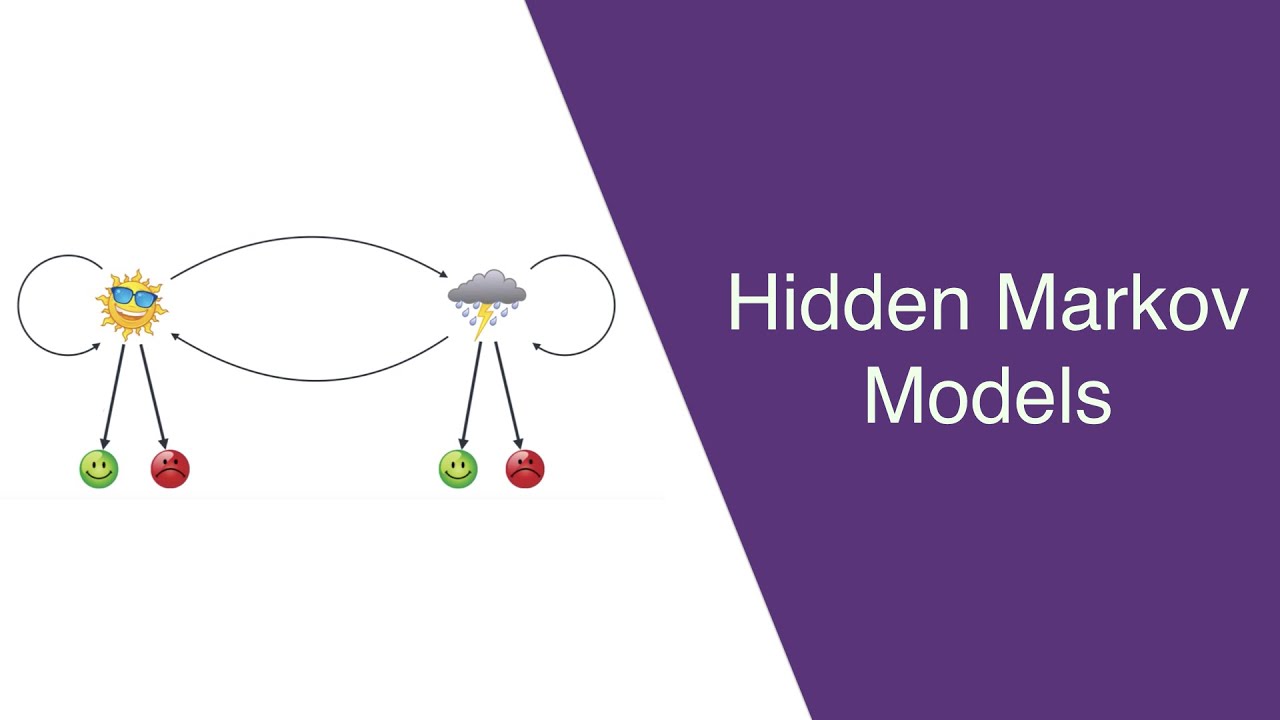
A friendly introduction to Bayes Theorem and Hidden Markov Models, with simple examples. No background knowledge needed, except basic probability.
Accompanying notebook:
https://github.com/luisguiserrano/hmm