Top videos

Learn about the best AI Business models here - https://www.youtube.com/watch?v=Ta5g-OxjPO4
Boost your productivity with Vectal: https://[a]www.vectal.ai%2F[/a]
DEVELOPERS, I'M HIRING! Apply here: https://forms.gle/NbLaQNwAE6d9kkWs7
Wanna start a business with AI Agents? Go here: https://www.skool.com/new-society
n8n: https://n8n.partnerlinks.io/80qtp72nd4eh
Docs: https://docs.n8n.io/integrations/
Follow me on Instagram - https://www.instagram.com/davidondrej1/
Follow me on Twitter - https://x.com/DavidOndrej1
Subscribe if you're serious about AI.
here's how to automate anything with n8n - the make.com killer
www.vectal.ai
This video contains affiliate links. If you buy through these links, I may earn a commission at no extra cost to you.
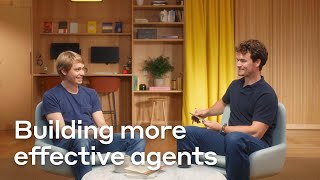
Anthropic’s Alex Albert (Claude Relations) sits down with Erik Schluntz (Multi-Agent Research and co-author of our blog post, Building Effective Agents) for a discussion on the evolution of agents over the past six months, including tips for building multi-agent systems, common multi-agent patterns, and best practices for using skills, MCP servers, and tools.
00:00 - Introductions
00:35 - Training Claude to tackle agentic tasks
1:30 - Making Claude more autonomous with code
3:20 - Using the Claude Agent SDK to build agents
5:00 - Tips for using Agent Skills
6:40 - The evolution of workflows and agents (workflows of agents)
8:30 - The value of simple agent architectures
9:30 - Building multi-agent systems: orchestrators, subagents, and tool calling
11:40 - Training Claude to use subagents
12:25 - Multi-agent use design patterns: parallelization, MapReduce, and test-time compute
13:20 - Coordinating problem solving with tools and subagents
14:15 - Common agent failure modes
15:00 - Best practices for getting started with building agents (context engineering, MCPs, and tools)
17:15 - The future of agents: coding, computer use, and beyond
Read the original blog post: https://www.anthropic.com/engi....neering/building-eff
Learn more about Agent Skills: https://www.anthropic.com/engi....neering/equipping-ag

Build Your First AI Agent In 15 Minutes (No Coding). Join our FREE community with all our prompts: https://www.skool.com/ai-launchpad/about
Chatling (FREE Trial): https://chatling.ai/
Chapters:
0:00 - Intro
1:47 - Setup Chatling
2:45 - Configure your agent
5:00 - Add knowledge base + data sources
6:49 - Configure actions
11:28 - Testing in playground
13:40 - Deploy to website
15:55 - Deploy to instagram
17:16 - Outro
For business inquiries including sponsorships and collaborations, please email:
[email protected]

Check out Kimi here! https://www.kimi.com/?utm_campaign=TR_grOjaW6m&utm_content=&utm_medium=Youtube&utm_source=CH_kEMBez3l&utm_term=
Timestamps ⏰
00:00 AI agents course!
01:13 Basics of AI Agents - What is an AI Agent?
02:58 What tasks are agents good for?
05:47 Spectrum of Autonomy
06:45 Context Engineering
07:13 Task Decomposition
07:59 Demo: No-Code Agent System
09:22 Intermediate AI Agents - Measuring Performance
10:39 Memory
11:42 Guardrails
12:50 Reflection
13:56 Tool Use
15:51 Designing Good Tools
16:56 Planning
19:05 Multi-Agent Collaboration
20:38 Multi-Agent System Design - Roles
21:25 Multi-Agent System Design - Communication Patterns
23:09 Multi-Agent System Design - Communication Pitfalls
23:44 Multi-Agent System Design - Best Practices
25:02 Demo: Multi-Agent System in Python
26:14 Advanced AI Agents - Advanced Task Decomposition
29:02 Improving Performance
30:26 Reducing Latency
31:16 Reducing Cost
32:39 Observability and Monitoring
35:10 Security
37:17 Bonus Resource!
----------------------------------------
Agentic System Design:
https://gerred.github.io/build....ing-an-agentic-syste
The slides and examples were adapted from a few different courses, including:
https://www.deeplearning.ai/co....urses/design-develop
https://learn.deeplearning.ai/....courses/agentic-ai/i
----------------------------------------
Want to become an AI Engineer? Download my AI Engineering Skills Checklist here: https://www.gratitudedriven.co....m/c/ai-engineering-c
💬 Want to talk 1:1? Book time to chat with me here: https://topmate.io/marina_wyss
💀 Follow my second channel for more on mindset, productivity, and meaning: https://www.youtube.com/@GratitudeDriven
🩷 Join the channel membership community for priority comment replies and early access to videos! https://www.youtube.com/@MarinaWyssAI/join
☕ If you'd like to support my work, you can buy me a coffee (thank you!): https://ko-fi.com/marinawyss
----------------------------------------
🎥 Other videos you might like:
AI Engineering in 76 Minutes (Complete Course/Speedrun!)
https://www.youtube.com/watch?v=JV3pL1_mn2M&t=2s
AI Engineering: A *Realistic* Roadmap for Beginners
https://www.youtube.com/watch?v=dbUIjFXIpis
4 *Real* Machine Learning Projects That Get You Hired - No More Tutorials!
https://www.youtube.com/watch?v=MFSFcPsMsuE
----------------------------------------
🦫 About me
I am a Senior Applied Scientist (basically, a blend of Data Scientist/Machine Learning Engineer) at Twitch/Amazon. Outside of my full-time job I'm a 1:1 career coach for people looking to break into the field, with a focus on those from non-traditional backgrounds.
I’m also a Certified Personal Trainer, always busy with too many interests, and really, deeply happy with my life. I hope to be able to help others achieve these things, too.
----------------------------------------
✉️ Contact
Instagram: https://www.instagram.com/marina.wyss/
Twitter/X: https://x.com/iammarinawyss
TikTok: https://www.tiktok.com/@gratitudedriven
Leave me a comment here on YouTube!
Business email: [email protected]
----------------------------------------
⚖️ Disclaimer
The views and opinions expressed in this video are my own and do not reflect the official policy or position of Twitch/Amazon or any other company I have worked for. All advice and insights shared here are based on my personal experiences and should be considered as such.
Thank you to Kimi for sponsoring this video!
This description may contain affiliate links. If you make a purchase I may make a small commission at no cost to you.
#AI #AIEngineering #AIAgents
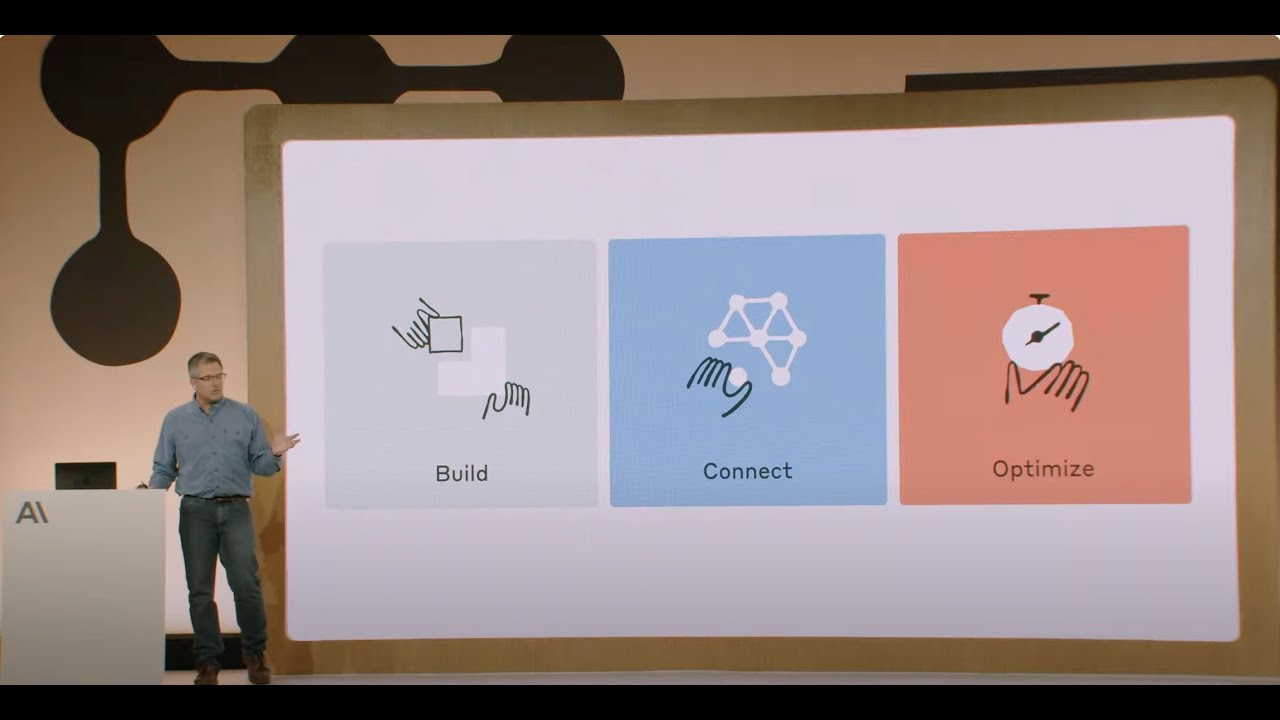
Battle-tested approaches for building agents with state-of-the-art AI capabilities

Check out HubSpot’s AI Agents Unleashed: Playbook for 2025 Success - https://clickhubspot.com/23bc50
🤖 Want to get ahead in your career using AI? Join the waitlist for my AI Agent Bootcamp: https://www.lonelyoctopus.com/ai-agent-bootcamp
I tested every no-code AI agent builder so you don’t have to.
From StackAI and Relevance AI to n8n, Flowise, Lindy, and Dify, this video breaks down the best platforms to create AI agents — without writing a single line of code.
You’ll learn:
⚙️ The core features and ideal use cases of each builder
🧩 How each platform handles automation, API integration, and LLM workflows
📈 When to use visual tools vs workflow orchestrators
💡 The difference between automations and dynamic agents — and why it matters
🚀 The easiest way to go from idea → AI agent → deployed product
We’ll explore:
StackAI for general-purpose agents and API publishing
Relevance AI for scalable workflows
n8n for powerful orchestration & branching logic
Flowise / Langflow for open-source prompt engineering
Dify and Lindy for hybrid and business automation
Botpress, Bubble, Make, MindStudio, and more
By the end, you’ll know exactly which no-code agent builder fits your workflow.
🤝 Business Inquiries: https://tally.so/r/mRDV99
🔗 Tools & Resources Mentioned
https://learn.deeplearning.ai/....courses/agentic-ai/l
https://learn.deeplearning.ai/....courses/agentic-ai/l
https://learn.deeplearning.ai/....courses/agentic-ai/l
https://learn.deeplearning.ai/....courses/agentic-ai/l
🔗Affiliates
========================
My SQL for data science interviews course (10 full interviews):
https://365datascience.com/lea....rn-sql-for-data-scie
365 Data Science:
https://365datascience.pxf.io/WD0za3 (link for 57% discount for their complete data science training)
Check out StrataScratch for data science interview prep:
https://stratascratch.com/?via=tina
🎥 My filming setup
========================
📷 camera: https://amzn.to/3LHbi7N
🎤 mic: https://amzn.to/3LqoFJb
🔭 tripod: https://amzn.to/3DkjGHe
💡 lights: https://amzn.to/3LmOhqk
📲Socials
========================
instagram: https://www.instagram.com/hellotinah/
linkedin: https://www.linkedin.com/in/tinaw-h/
tiktok: https://www.tiktok.com/@hellotinahuang
discord: https://discord.gg/5mMAtprshX
🎥Other videos you might be interested in
========================
How I consistently study with a full time job:
https://www.youtube.com/watch?v=INymz5VwLmk
How I would learn to code (if I could start over):
https://www.youtube.com/watch?v=MHPGeQD8TvI&t=84s
🐈⬛🐈⬛About me
========================
Hi, my name is Tina and I'm an ex-Meta data scientist turned internet person!
📧Contact
========================
youtube: youtube comments are by far the best way to get a response from me!
linkedin: https://www.linkedin.com/in/tinaw-h/
email for business inquiries only: [email protected]
========================
Some links are affiliate links and I may receive a small portion of sales price at no cost to you. I really appreciate your support in helping improve this channel! :)
Build your first AI agent without coding, check out Lindy: https://go.lindy.ai/ishan
In the past few months, the internet has been flooded with articles and videos about AI agents, highlighting how they simplify people's lives, maximize productivity, and even generate income.
I finally found a crazy AI tool that can help you build AI agents by just describing your idea through a simple text prompt. It has more than 1000 integrations, and it works with all your daily apps like Gmail, Google Calendar, Notion, Sheets, and even social media apps.
From email replier, meeting summariser, AI grammar assistant, to even writing social media posts for you, you can build agents for anything
It has lots of ready-to-use templates that you can try out and start building for free
The smartest people I know are already using AI agents like this to free up their time.
Watch the video till the end to learn about it in detail, and let me know in the comments what you are going to build with Lindy
📸 Instagram: https://bit.ly/ishansharma7390ig
Join MarkitUpX Discord Server: https://discord.gg/fwSpTje4rh
CHAPTERS:-
00:00 - Introduction
01:34 - Lindy interface
02:06 - Flow editor
09:51 - AI agent
11:38 - Examples of AI agents
15:49 - Conclusion
😁 About Me: https://bit.ly/aboutishansharma
📱 Twitter: https://bit.ly/ishansharma7390twt
📝 LinkedIn: https://bit.ly/ishansharma7390li
🌟 Please leave a LIKE ❤️ and SUBSCRIBE for more AMAZING content! 🌟
3 Books You Should Read
📈Psychology of Money: https://amzn.to/30wx4bW
👀Subtle Art of Not Giving a F: https://amzn.to/30zwWbP
💼Rework: https://amzn.to/3ALsAuz
Tech I use every day
💻MacBook Air M1: https://amzn.to/2YWKPjG
📺LG 29' Ultrawide Monitor: https://amzn.to/3aG0p5p
🎥Sony ZV1: https://amzn.to/3ANqgDb
🎙Blue Yeti Mic: https://amzn.to/2YYbiNN
⽴Tripod Stand: https://amzn.to/3mVUiQc
🔅Ring Light: https://amzn.to/2YQlzLJ
🎧Marshall Major II Headphone: https://amzn.to/3lLhTDQ
🖱Logitech mouse: https://amzn.to/3p8edOC
💺Green Soul Chair: https://amzn.to/3mWIxZP
✨ Tags ✨
ishan sharma,learn ai agents,ai agents fundamentals,ai agents for beginners,ai agents explained,ai agents basics,ai agents full tutorial,build your first ai agent,ai agent guide,ai agent tools,how to build ai agent,ai agents examples,ai agents workflows,ai agent to simplify life,personal ai assistant,ai agents for productivity,ai automations,get rich with ai,make money with ai tools,how to build personal ai assistant,build a business with ai agents
✨ Hashtags ✨
#ai #artificialintelligence #aiagents

🧪AI Agents Labs for Free: https://kode.wiki/3Wh4DZ6
Learn everything about AI agents from scratch in this comprehensive tutorial. No prior knowledge required. We'll take you from zero to building production-ready AI systems with hands-on labs.
🎯 What You'll Learn:
• AI Fundamentals - LLMs, tokens, embeddings, and context windows
• LangChain - Simplify AI development with pre-built components
• Prompt Engineering - Zero-shot, few-shot, and chain-of-thought techniques
• Vector Databases - Semantic search with ChromaDB and Pinecone
• RAG (Retrieval Augmented Generation) - Build intelligent document search
• LangGraph - Create multi-step AI workflows and agents
• MCP (Model Context Protocol) - Connect AI to external tools
🔧 Hands-On Labs Include:
✓ Making your first OpenAI API calls
✓ Building semantic search engines
✓ Creating RAG systems for document retrieval
✓ Developing multi-agent workflows
✓ Integrating external tools with MCP
Perfect for developers, data scientists, and anyone wanting to understand modern AI development. Follow along with free labs and build a real-world AI assistant that searches 500GB of documents in under 30 seconds.
🚨Start Your AI Journey with KodeKloud: https://kode.wiki/4qsrspX
⏰ TIMESTAMPS:
00:00 - Introduction to AI Agents
00:40 - How LLMs work in real time?
04:56 - Embeddings & Vector Representations
05:56 - How LangChain works?
10:12 - Practice Labs - Your First AI API Call
14:57 - Practice Labs - LangChain
17:57 - Prompt Engineering Techniques
21:21 - Practice Labs - Master Prompt Engineering
24:46 - Vector Databases Deep Dive
31:27 - Practice Labs - Build Semantic Search Engine
35:15 - RAG (Retrieval Augmented Generation)
38:14 - Practice Labs - RAG Implementation
42:14 - LangGraph for AI Workflows
45:51 - Practice Labs - Build Stateful AI Workflow
48:51 - Model Context Protocol (MCP)
51:56 - Practice Labs - Advanced MCP Concepts
55:21 - Conclusion
🔔 Subscribe to KodeKloud for more AI development tools and tutorials!
#AiAgents #AI #Aifundamentals #LangChain #MCP #LLMs #RAG #Langgraph #vectordb #promptengineering #VectorDatabases #Tutorial #kodekloud

Want to see Maya Murad explain more about AI Agents? Click here to register for a Virtual Agents Webinar → https://ibm.biz/BdaAVa
Want to play with the technology yourself? Explore our interactive demo → https://ibm.biz/BdKsEf
In this video, Maya Murad explores the evolution of AI agents and their pivotal role in revolutionizing AI systems. From monolithic models to compound AI systems, discover how AI agents integrate with databases and external tools to enhance problem-solving capabilities and adaptability.
AI news moves fast. Sign up for a monthly newsletter for AI updates from IBM → https://www.ibm.com/account/re....g/us-en/signup?formi
🤖 Confused about AI agents and agentic AI? This video clears it up! AI agents are specific applications solving multi-step problems independently, while agentic AI is the entire research field making these agents possible. Think of AI agents as specific medicines and agentic AI as pharmaceutical science. Today's AI agents aren't AGI yet—they're specialized tools for specific purposes. Understanding these developments is essential as increasingly sophisticated agents emerge to automate various tasks. 🔍💡
#AIAgents #AgenticAI #ArtificialIntelligence #FutureTech #BusinessTechnology #AGI #TechTrends

Want to make money and save time with AI? Get AI Coaching, Support & Courses 👉 https://www.skool.com/ai-profit-lab-7462/about
Get a FREE AI Course + 1000 NEW AI Agents + Video Notes 👉 https://www.skool.com/ai-seo-w....ith-julian-goldie-15
Want to know how I make videos like these? Join the AI Profit Boardroom → https://www.skool.com/ai-profit-lab-7462/about
Get a FREE AI SEO Strategy Session: https://go.juliangoldie.com/st....rategy-session?utm=j
Get the AI Client Acquisition Engine: https://www.skool.com/the-content-clone-9266/about
New Claude Code Update is INSANE! (AI Coding Revolution)
Anthropic just released a massive update to Claude Code Desktop that transforms your computer into an autonomous AI coding machine. Discover how it handles everything from live app previews to automated PR merges while streamlining your entire development workflow. Learn why this update is a game-changer for developers and how to start using it today.
00:00 - Intro: The Massive Claude Update
01:04 - Live App Previews & Auto-Fixing
02:07 - Automated Local Code Reviews
02:47 - CI Failure Handling & Auto-Fix
03:26 - PR Monitoring & Auto-Merge
04:21 - Session Mobility Explained
04:48 - The Future of AI Development
06:59 - How to Get Started with Claude Code
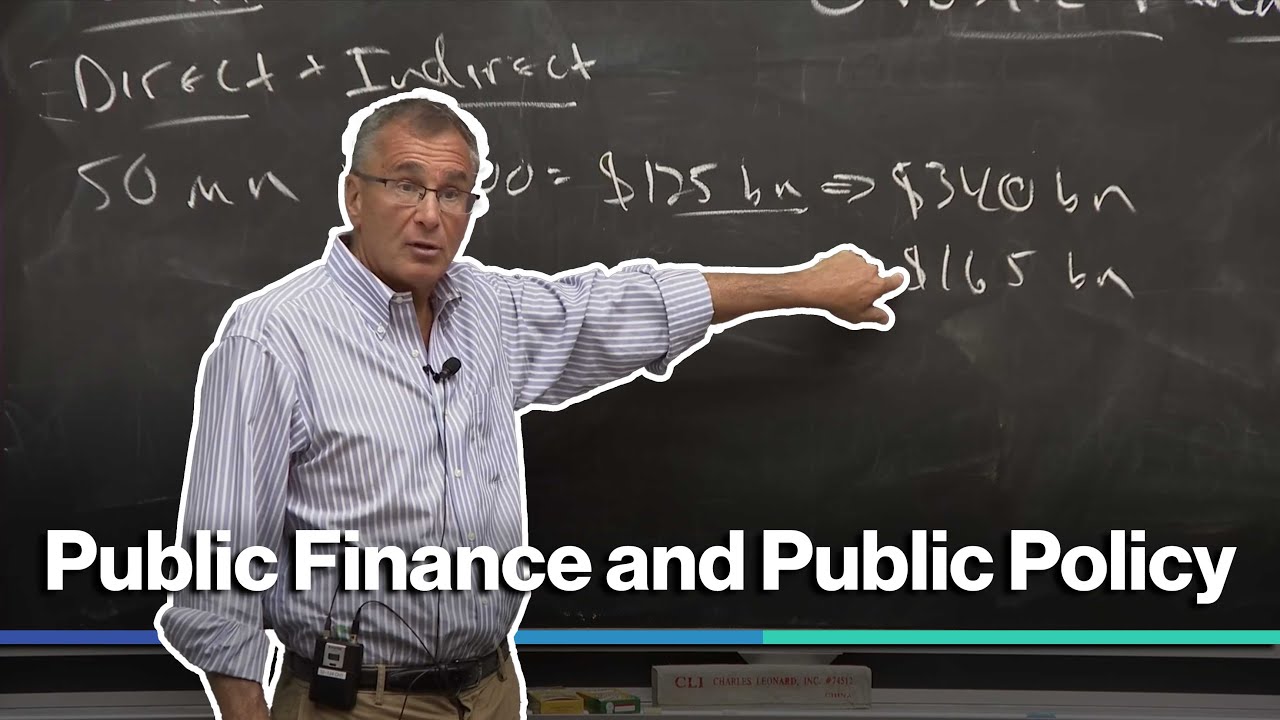
MIT 14.41, Public Finance and Public Policy, Fall 2024
Instructor: Prof. Jonathan Gruber
View the complete course: https://ocw.mit.edu/courses/14....-41-public-finance-a
YouTube Playlist: https://www.youtube.com/playli....st?list=PLUl4u3cNGP6
In this lecture Prof. Gruber discusses the importance of studying public finance, which is the role of the government in the economy. When should the government intervene? How should the government intervene? What is the effect of those interventions?
License: Creative Commons BY-NC-SA
More information at https://ocw.mit.edu/terms
More courses at https://ocw.mit.edu
Support OCW at http://ow.ly/a1If50zVRlQ
We encourage constructive comments and discussion on OCW’s YouTube and other social media channels. Personal attacks, hate speech, trolling, and inappropriate comments are not allowed and may be removed. More details at https://ocw.mit.edu/comments.

MIT 8.04 Quantum Physics I, Spring 2013
View the complete course: http://ocw.mit.edu/8-04S13
Instructor: Allan Adams
In this lecture, Prof. Adams gives a panoramic view on various experimental evidence that indicates the inadequacy of pre-quantum physics. He concludes the lecture with a short discussion on Bell's inequality.
License: Creative Commons BY-NC-SA
More information at http://ocw.mit.edu/terms
More courses at http://ocw.mit.edu

MIT 3.020 Thermodynamics of Materials, Spring 2021
Instructor: Rafael Jaramillo
View the complete course: https://ocw.mit.edu/courses/3-....020-thermodynamics-o
YouTube Playlist: https://www.youtube.com/playli....st?list=PLUl4u3cNGP6
This first class session introduces entropy and spontaneous processes, molecular interactions, and enthalpy, as well as the scope and use of thermodynamics.
License: Creative Commons BY-NC-SA
More information at https://ocw.mit.edu/terms
More courses at https://ocw.mit.edu
Support OCW at http://ow.ly/a1If50zVRlQ
We encourage constructive comments and discussion on OCW’s YouTube and other social media channels. Personal attacks, hate speech, trolling, and inappropriate comments are not allowed and may be removed. More details at https://ocw.mit.edu/comments.

MIT 7.016 Introductory Biology, Fall 2018
Instructor: Barbara Imperiali
View the complete course: https://ocw.mit.edu/7-016F18
YouTube Playlist: https://www.youtube.com/playli....st?list=PLUl4u3cNGP6
Professor Imperiali covers the basics of covalent and non-covalent chemical bonding. She then focuses on lipids, their structures and properties, and the formation of lipid bilayers.
License: Creative Commons BY-NC-SA
More information at https://ocw.mit.edu/terms
More courses at https://ocw.mit.edu

MIT 18.200 Principles of Discrete Applied Mathematics, Spring 2024
Instructor: Ankur Moitra
View the complete course: https://ocw.mit.edu/courses/18....-200-principles-of-d
YouTube Playlist: https://www.youtube.com/playli....st?list=PLUl4u3cNGP6
We first describe the mechanics of the course. We then discuss the pigeonhole principle, explaining what it is and giving several surprising applications of it. The we briefly discuss foundations of probability and sample spaces.
License: Creative Commons BY-NC-SA
More information at https://ocw.mit.edu/terms
More courses at https://ocw.mit.edu
Support OCW at http://ow.ly/a1If50zVRlQ
We encourage constructive comments and discussion on OCW’s YouTube and other social media channels. Personal attacks, hate speech, trolling, and inappropriate comments are not allowed and may be removed. More details at https://ocw.mit.edu/comments.