Top videos

Watch the sample class recording: http://www.edureka.co/mahout?utm_source=youtube&utm_medium=referral&utm_campaign=mahout-machine-learning
Machine learning is a subfield of computer science (CS) and artificial intelligence (AI) that deals with the construction and study of systems that can learn from data, rather than follow only explicitly programmed instructions.
Topics covered in the video:
1. What is Machine Learning
2. Understanding Machine Learning with Mahout
3. Overview of Mahout
Related Blogs:
http://www.edureka.co/blog/supervised-learning-technique-in-mahout/?utm_source=youtube&utm_medium=referral&utm_campaign=mahout-machine-learning
Edureka is a New Age e-learning platform that provides Instructor-Led Live, Online classes for learners who would prefer a hassle free and self paced learning environment, accessible from any part of the world.
The topics related to ‘Mahout Machine Learning’ have been covered in our course ‘Machine Learning with Mahout’.
For more information, please write back to us at [email protected]

🔥 Python Certification Training: https://www.edureka.co/data-sc....ience-python-certifi
This Edureka Video on Machine Learning Algorithms will give you a basic understanding of the Machine Learning Algorithm with examples. In this video, you will also get to see a demo on ML using Python.
🔴To subscribe to our channel and hit the bell icon to never miss an update from us in the future: https://goo.gl/6ohpTV
---------------------Edureka Online Training and Certification--------------------
🔵 DevOps Online Training: https://bit.ly/2BPwXf0
🟣 Python Online Training: https://bit.ly/2CQYGN7
🔵 AWS Online Training: https://bit.ly/2ZnbW3s
🟣 RPA Online Training: https://bit.ly/2Zd0ac0
🔵 Data Science Online Training: https://bit.ly/2NCT239
🟣 Big Data Online Training: https://bit.ly/3g8zksu
🔵 Java Online Training: https://bit.ly/31rxJcY
🟣 Selenium Online Training: https://bit.ly/3dIrh43
🔵 PMP Online Training: https://bit.ly/3dJxMTW
🟣 Tableau Online Training: https://bit.ly/3g784KJ
---------------------------------Edureka Masters Programs------------------------------
🔵DevOps Engineer Masters Program: https://bit.ly/2B9tZCp
🟣Cloud Architect Masters Program: https://bit.ly/3i9z0eJ
🔵Data Scientist Masters Program: https://bit.ly/2YHaolS
🟣Big Data Architect Masters Program: https://bit.ly/31qrOVv
🔵Machine Learning Engineer Masters Program: https://bit.ly/388NXJi
🟣Business Intelligence Masters Program: https://bit.ly/2BPLtn2
🔵Python Developer Masters Program: https://bit.ly/2Vn7tgb
🟣RPA Developer Masters Program: https://bit.ly/3eHwPNf
-----------------------------Edureka PGP Courses----------------------------------------
🔵Artificial and Machine Learning PGP: https://bit.ly/2Ziy7b1
🟣CyberSecurity PGP: https://bit.ly/3eHvI0h
🔵Digital Marketing PGP: https://bit.ly/38cqdnz
🟣Big Data Engineering PGP: https://bit.ly/3eTSyBC
🔵Data Science PGP: https://bit.ly/3dIeYV9
🟣Cloud Computing PGP: https://bit.ly/2B9tHLP
---------------------------
Instagram: https://www.instagram.com/edureka_lea...
Facebook: https://www.facebook.com/edurekaIN/
Twitter: https://twitter.com/edurekain
LinkedIn: https://www.linkedin.com/company/edureka
Telegram: https://t.me/edurekaupdates
SlideShare: https://www.slideshare.net/EdurekaIN
Meetup: https://www.meetup.com/edureka/
#Edureka #PythonEdureka #LogisticRgression #LogisticRegressionusingPython #Python #PythonTraining #learnPython #withMe
------------------------------------------------------------------------------------------
How it Works?
1. This is a 5 Week Instructor led Online Course,40 hours of assignment and 20 hours of project work
2. We have a 24x7 One-on-One LIVE Technical Support to help you with any problems you might face or any clarifications you may require during the course.
3. At the end of the training you will be working on a real time project for which we will provide you a Grade and a Verifiable Certificate!
- - - - - - - - - - - - - - - - -
About the Course
Edureka's Python Online Certification Training will make you an expert in Python programming. It will also help you learn Python the Big data way with integration of Machine learning, Pig, Hive and Web Scraping through beautiful soup. During our Python Certification training, our instructors will help you:
1. Master the Basic and Advanced Concepts of Python
2. Understand Python Scripts on UNIX/Windows, Python Editors and IDEs
3. Master the Concepts of Sequences and File operations
4. Learn how to use and create functions, sorting different elements, Lambda function, error handling techniques and Regular expressions ans using modules in Python
5. Gain expertise in machine learning using Python and build a Real Life Machine Learning application
6. Understand the supervised and unsupervised learning and concepts of Scikit-Learn
7. Master the concepts of MapReduce in Hadoop
8. Learn to write Complex MapReduce programs
9. Understand what is PIG and HIVE, Streaming feature in Hadoop, MapReduce job running with Python
10. Implementing a PIG UDF in Python, Writing a HIVE UDF in Python, Pydoop and/Or MRjob Basics
11. Master the concepts of Web scraping in Python
12. Work on a Real Life Project on Big Data Analytics using Python and gain Hands on Project Experience
- - - - - - - - - - - - - - - - - - -
Why learn Python?
Programmers love Python because of how fast and easy it is to use. Python cuts development time in half with its simple to read syntax and easy compilation feature. Debugging your programs is a breeze in Python with its built in debugger. Using Python makes Programmers more productive and their programs ultimately better. Python continues to be a favorite option for data scientists who use it for building and using Machine learning applications and other scientific computations.
For more information, Please write back to us at [email protected] or call us at IND: +91-9606058418 / US: 18338555775 (toll-free).

( Python Training : https://www.edureka.co/python )
Python is one of the best languages for machine learning. It is enabled with an extensive array of libraries and tools. Different aspects of Machine Learning with Python have been described in this descriptive video.
Related Posts:
http://www.edureka.co/blog/pyt....hon-for-big-data-ana
http://www.edureka.co/blog/fre....e-webinar-on-python-
Edureka is a New Age e-learning platform that provides Instructor-Led Live Online classes for learners who would prefer a hassle free and self-paced learning environment, accessible from any part of the world.
The topics, related to Machine Learning and Python have been widely covered in our course ‘Python for Big Data Analytics’.
For more information, please write back to us at [email protected]
Call us at US: 1800 275 9730 (toll free) or India: +91-8880862004
To get better at system design, subscribe to our weekly newsletter: https://bit.ly/3tfAlYD
Checkout our bestselling System Design Interview books:
Volume 1: https://amzn.to/3Ou7gkd
Volume 2: https://amzn.to/3HqGozy
ABOUT US:
Covering topics and trends in large-scale system design, from the authors of the best-selling System Design Interview series.

🔥𝐄𝐝𝐮𝐫𝐞𝐤𝐚 𝐂𝐡𝐚𝐭𝐆𝐏𝐓 𝐂𝐨𝐮𝐫𝐬𝐞 - 𝐁𝐞𝐠𝐢𝐧𝐧𝐞𝐫𝐬 𝐭𝐨 𝐀𝐝𝐯𝐚𝐧𝐜𝐞𝐝: https://www.edureka.co/openai-....chatgpt-training-cou
This 𝐂𝐡𝐚𝐭𝐆𝐏𝐓 𝐓𝐮𝐭𝐨𝐫𝐢𝐚𝐥 is intended as a Crash Course on 𝐂𝐡𝐚𝐭𝐆𝐏𝐓 for Beginners. 𝐂𝐡𝐚𝐭𝐆𝐏𝐓 has been growing in popularity exponentially. But, 𝐂𝐡𝐚𝐭𝐆𝐏𝐓 is still not known to many people. In this video, I aim to show you the different ways in which you can use 𝐂𝐡𝐚𝐭𝐆𝐏𝐓 for yourself.
🔴 Subscribe to our channel to get video updates. Hit the subscribe button above: https://goo.gl/6ohpTV
📝Feel free to share your comments below.📝
🔴 𝐄𝐝𝐮𝐫𝐞𝐤𝐚 𝐎𝐧𝐥𝐢𝐧𝐞 𝐓𝐫𝐚𝐢𝐧𝐢𝐧𝐠 𝐚𝐧𝐝 𝐂𝐞𝐫𝐭𝐢𝐟𝐢𝐜𝐚𝐭𝐢𝐨𝐧𝐬
🔵 DevOps Online Training: http://bit.ly/3VkBRUT
🌕 AWS Online Training: http://bit.ly/3ADYwDY
🔵 React Online Training: http://bit.ly/3Vc4yDw
🌕 Tableau Online Training: http://bit.ly/3guTe6J
🔵 Power BI Online Training: http://bit.ly/3VntjMY
🌕 Selenium Online Training: http://bit.ly/3EVDtis
🔵 PMP Online Training: http://bit.ly/3XugO44
🌕 Salesforce Online Training: http://bit.ly/3OsAXDH
🔵 Cybersecurity Online Training: http://bit.ly/3tXgw8t
🌕 Java Online Training: http://bit.ly/3tRxghg
🔵 Big Data Online Training: http://bit.ly/3EvUqP5
🌕 RPA Online Training: http://bit.ly/3GFHKYB
🔵 Python Online Training: http://bit.ly/3Oubt8M
🌕 Azure Online Training: http://bit.ly/3i4P85F
🔵 GCP Online Training: http://bit.ly/3VkCzS3
🌕 Microservices Online Training: http://bit.ly/3gxYqqv
🔵 Data Science Online Training: http://bit.ly/3V3nLrc
🌕 CEHv12 Online Training: http://bit.ly/3Vhq8Hj
🔵 Angular Online Training: http://bit.ly/3EYcCTe
🔴 𝐄𝐝𝐮𝐫𝐞𝐤𝐚 𝐑𝐨𝐥𝐞-𝐁𝐚𝐬𝐞𝐝 𝐂𝐨𝐮𝐫𝐬𝐞𝐬
🔵 DevOps Engineer Masters Program: http://bit.ly/3Oud9PC
🌕 Cloud Architect Masters Program: http://bit.ly/3OvueZy
🔵 Data Scientist Masters Program: http://bit.ly/3tUAOiT
🌕 Big Data Architect Masters Program: http://bit.ly/3tTWT0V
🔵 Machine Learning Engineer Masters Program: http://bit.ly/3AEq4c4
🌕 Business Intelligence Masters Program: http://bit.ly/3UZPqJz
🔵 Python Developer Masters Program: http://bit.ly/3EV6kDv
🌕 RPA Developer Masters Program: http://bit.ly/3OteYfP
🔵 Web Development Masters Program: http://bit.ly/3U9R5va
🌕 Computer Science Bootcamp Program : http://bit.ly/3UZxPBy
🔵 Cyber Security Masters Program: http://bit.ly/3U25rNR
🌕 Full Stack Developer Masters Program : http://bit.ly/3tWCE2S
🔵 Automation Testing Engineer Masters Program : http://bit.ly/3AGXg2J
🌕 Python Developer Masters Program : https://bit.ly/3EV6kDv
🔵 Azure Cloud Engineer Masters Program: http://bit.ly/3AEBHzH
🔴 𝐄𝐝𝐮𝐫𝐞𝐤𝐚 𝐔𝐧𝐢𝐯𝐞𝐫𝐬𝐢𝐭𝐲 𝐏𝐫𝐨𝐠𝐫𝐚𝐦𝐬
🔵 Post Graduate Program in DevOps with Purdue University: https://bit.ly/3Ov52lT
🔵 Advanced Certificate Program in Data Science with E&ICT Academy, IIT Guwahati: http://bit.ly/3V7ffrh
🔵 Advanced Certificate Program in Cloud Computing with E&ICT Academy, IIT Guwahati: https://bit.ly/43vmME8
📌𝐓𝐞𝐥𝐞𝐠𝐫𝐚𝐦: https://t.me/edurekaupdates
📌𝐓𝐰𝐢𝐭𝐭𝐞𝐫: https://twitter.com/edurekain
📌𝐋𝐢𝐧𝐤𝐞𝐝𝐈𝐧: https://www.linkedin.com/company/edureka
📌𝐈𝐧𝐬𝐭𝐚𝐠𝐫𝐚𝐦: https://www.instagram.com/edureka_learning/
📌𝐅𝐚𝐜𝐞𝐛𝐨𝐨𝐤: https://www.facebook.com/edurekaIN/
📌𝐒𝐥𝐢𝐝𝐞𝐒𝐡𝐚𝐫𝐞: https://www.slideshare.net/EdurekaIN
📌𝐂𝐚𝐬𝐭𝐛𝐨𝐱: https://castbox.fm/networks/505?country=IN
📌𝐌𝐞𝐞𝐭𝐮𝐩: https://www.meetup.com/edureka/
📌𝐂𝐨𝐦𝐦𝐮𝐧𝐢𝐭𝐲: https://www.edureka.co/community/
Please write back to us at [email protected] or call us at IND: 9606058406 / US: 18338555775 (toll-free) for more information.

TensorFlow is a tool for machine learning capable of building deep neural networks with high-level Python code. It provides developer-friendly APIs that help software engineers train, analyze, and deploy ML models.
#programming #deeplearning #100secondsofcode
🔗 Resources
TensorFlow Docs https://www.tensorflow.org/
Fashion MNIST Tutorial https://www.tensorflow.org/tutorials/keras/classification
Neural Networks Overview for Data Scientists https://www.ibm.com/cloud/learn/neural-networks
Machine Learning in 100 Seconds https://youtu.be/PeMlggyqz0Y
🔥 Get More Content - Upgrade to PRO
Upgrade to Fireship PRO at https://fireship.io/pro
Use code lORhwXd2 for 25% off your first payment.
🎨 My Editor Settings
- Atom One Dark
- vscode-icons
- Fira Code Font
🔖 Topics Covered
- What is TensorFlow?
- How to build a neural network with TensorFlow
- What is TensorFlow used for?
- Who created TensorFlow?
- How neural networks work
- Easy neural network tutorial
- What is a mathematical Tensor?

Discover how startups can benefit from adopting or creating Small Language Models and the role they have in enabling agentic AI. Learn from world-class experts Julien Simon, Chief Evangelist at Arcee, and Nicolas David, Sr. Startup Architect at AWS
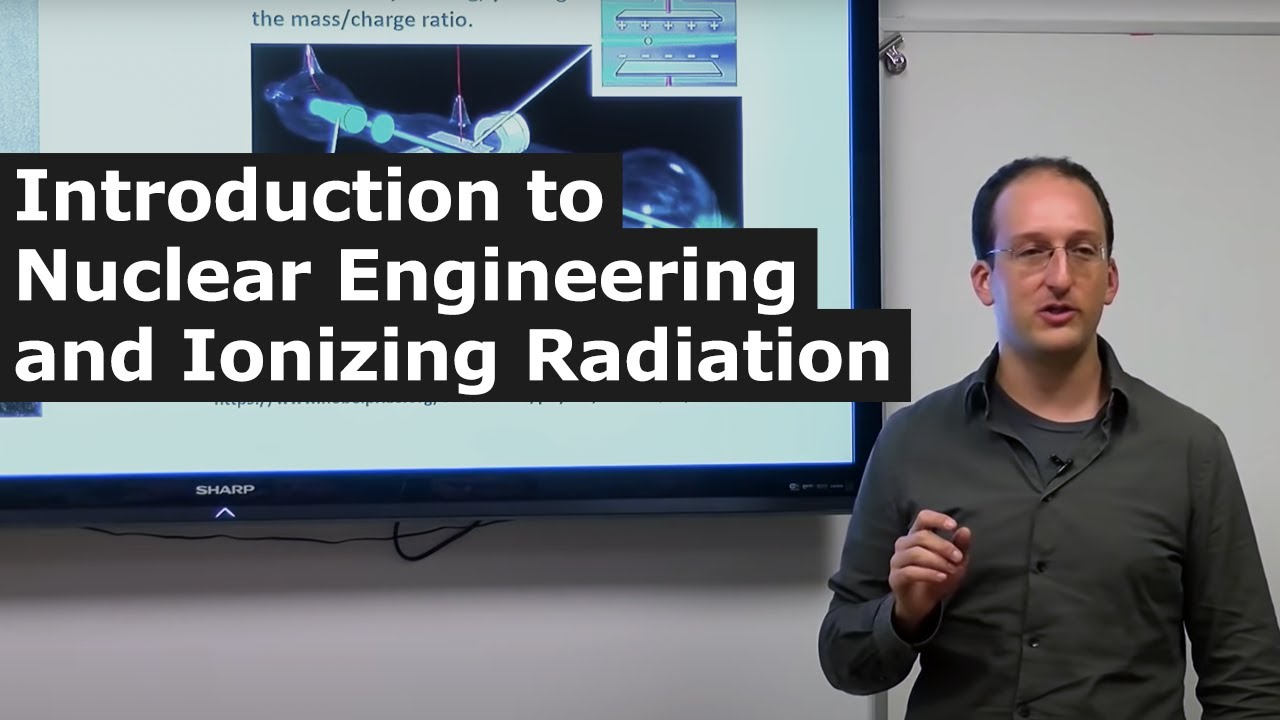
MIT 22.01 Introduction to Nuclear Engineering and Ionizing Radiation, Fall 2016
Instructor: Michael Short
View the complete course: https://ocw.mit.edu/22-01F16
YouTube Playlist: https://www.youtube.com/playli....st?list=PLUl4u3cNGP6
A brief summary of the discovery of forms of ionizing radiation up to the 1932 discovery of the neutron. We introduce mass-energy equivalence for the first time and explain how these cutting-edge experiments (for their time) conclusively proved the existence of high-energy, ionizing radiation.
License: Creative Commons BY-NC-SA
More information at https://ocw.mit.edu/terms
More courses at https://ocw.mit.edu

MIT 15.401 Finance Theory I, Fall 2008
View the complete course: http://ocw.mit.edu/15-401F08
Instructor: Andrew Lo
License: Creative Commons BY-NC-SA
More information at http://ocw.mit.edu/terms
More courses at http://ocw.mit.edu
AI can feel overwhelming, but this hands-on course makes it practical, approachable, and fun. You will start with AI fundamentals and model mechanics like transformers and tokens, before moving into the architecture of tools, workflows, and true agents. You will build and experiment with four distinct agents, seeing firsthand how single agents evolve into a multi-agent system. Finally, you will learn how OpenClaw woks to gain the confidence needed to design, build, test, and deploy real-world AI agents.
Course resources: https://kode.wiki/3SrN8GO
Course created by @KodeKloud
❤️ Support for this channel comes from our friends at Scrimba – the coding platform that's reinvented interactive learning: https://scrimba.com/freecodecamp
Chapters
Section 1 & 2: LLM & Core Concepts
- 00:00:00 Course Welcome & Architecture Fundamentals
- 00:07:54 Hallucinations, Model Evolution, & Competitors
- 00:15:23 Developer Fundamentals & Working with APIs
- 00:17:54 Token Economics & Managing Context Windows
- 00:31:13 API Message Roles & Prompt Engineering Nuances
Section 3 & 4: Code Setup & Tool Architecture
- 00:38:29 Hands-On Lab: Practice Labs & First API Call
- 00:45:01 Multi-Turn History, API Costs, & Trade-offs
- 00:51:08 Architecture Overview: Tool Schemas & Execution Loops
- 00:58:20 Predefined AI Workflows vs. Autonomous Agents
Section 5: Building Agents from Scratch
- 01:08:16 The Core Loop: Perceive, Reason, Act
- 01:13:15 Hands-On Lab: Engineering the Standard `While` Loop
- 01:21:13 Planning Limits, Brittle Logic, & Mitigation Guardrails
- 01:26:19 Memory Managers: Sliding Windows & Vector DBs
- 01:33:56 Multi-Agent Frameworks & Inter-Agent Communication
- 01:43:08 Deconstructing Production Failures & Error Handling
- 01:52:20 Grounding Data & Prepackaged Frameworks (LangChain, Mastra)
- 02:00:25 Hands-On Lab: Building a Production Personal Assistant
Section 6: Deep Case Study (OpenClaw)
- 02:09:25 OpenClaw Codebase Tour & File Architecture
- 02:14:39 Custom Layouts, Terminal Interfaces, & Concurrency Locks
- 02:30:44 Testing Non-Deterministic Agents & LLM-as-a-Judge Evals
- 02:39:30 Observability, Tracking Performance Metrics, & Optimization Levers
- 02:51:55 Agent Security, Advanced Prompt Assemblies, & Wrap-up
🎉 Thanks to our Champion and Sponsor supporters:
👾 @omerhattapoglu1158
👾 @goddardtan
👾 @akihayashi6629
👾 @kikilogsin
👾 @anthonycampbell2148
👾 @tobymiller7790
👾 @rajibdassharma497
👾 @CloudVirtualizationEnthusiast
👾 @adilsoncarlosvianacarlos
👾 @martinmacchia1564
👾 @ulisesmoralez4160
👾 @_Oscar_
👾 @jedi-or-sith2728
👾 @justinhual1290
--
Learn to code for free and get a developer job: https://www.freecodecamp.org
Read hundreds of articles on programming: https://freecodecamp.org/news

Welcome to this video course on LangGraph, the powerful Python library for building advanced conversational AI workflows. In this course, Vaibhav Mehra will teach you how to design, implement, and manage complex dialogue systems using a graph-based approach. By the end, you'll be equipped to build robust, scalable conversational applications that leverage the full potential of large language models.
Code: https://github.com/iamvaibhavm....ehra/LangGraph-Cours
Vaibhav Mehra on LinkedIn: https://www.linkedin.com/in/vaibhav-mehra-main/
Vaibhav on Instagram: https://www.instagram.com/iamvaibhavmehra/
❤️ Support for this channel comes from our friends at Scrimba – the coding platform that's reinvented interactive learning: https://scrimba.com/freecodecamp
⭐️ Contents ⭐️
0:00:00 Introduction
0:01:24 Type Annotations
0:08:35 Elements
0:18:39 Agent 1 Intro
0:21:08 Agent 1 Code
0:32:22 Agent 1 Exercise
0:33:07 Agent 2 Intro
0:34:02 Agent 2 Code
0:43:27 Agent 2 Exercise
0:44:29 Agent 3 Intro
0:45:18 Agent 3 Code
0:54:04 Agent 3 Exercise
0:55:36 Agent 4 Intro
0:56:37 Agent 4 Code
1:13:09 Agent 4 Exercise
1:14:14 Agent 5 Intro
1:15:45 Agent 5 Code
1:29:19 Agent 5 Exercise
1:31:01 AI Agent 1 Intro
1:32:49 AI Agent 1 Code
1:42:54 AI Agent 2 Intro
1:43:58 AI Agent 2 Code
2:03:20 AI Agent 3 Intro
2:05:00 AI Agent 3 Prerequisite
2:12:28 AI Agent 3 Code
2:28:46 AI Agent 4 Intro
2:30:59 AI Agent 4 Code
2:52:09 RAG Agent Intro
2:53:01 RAG Agent Code
3:06:15 RAG Agent Testing
3:09:04 Course Outro
🎉 Thanks to our Champion and Sponsor supporters:
👾 Drake Milly
👾 Ulises Moralez
👾 Goddard Tan
👾 David MG
👾 Matthew Springman
👾 Claudio
👾 Oscar R.
👾 jedi-or-sith
👾 Nattira Maneerat
👾 Justin Hual
--
Learn to code for free and get a developer job: https://www.freecodecamp.org
Read hundreds of articles on programming: https://freecodecamp.org/news
As AI agents become more capable, the skills needed for AI jobs are shifting. Bri Kopecki breaks down the 7 skills you need to move from prompt engineering to full agent engineering, including system design, retrieval, reliability, and security. Learn how to build AI agents that actually work in production 🚀.
AI news moves fast. Sign up for a monthly newsletter for AI updates from IBM → https://ibm.biz/Bdpm3C
#aiagents #aiengineering #aiskills

https://www.hostinger.com/makefirstmillion10
Coupon Code: MAKEFIRSTMILLION
🔗 Enroll in the AI Institute (Aaghaz):
🌐 https://www.aaghaz.ai
Timestamps:
00:00 Intro
00:03:21 Basics of AI Agents & Automations
00:08:24 Auto Email Reply System
00:40:32 Inventory Management System
01:25:20 Jarvis System-Voice Command
02:25:54 Website Downgrade or Upgrade Management
02:33:36 AI Voice Calling Agent
03:56:39 Selling Psychology
04:23:32 Outro
In this video, Badar Munir founder of Make First Million and creator of Aaghaz – Asia’s First AI Startup & AI Master Institute, shares how smart people are preparing for the AI era — and why mastering AI Agent is becoming essential for every professional.
This is not theory — you will learn the real AI-first mindset, how to create custom GPT assistants, and how students, freelancers, founders, and professionals are using AI as a growth weapon, not just a tool.
AI Full Crash Course for Beginners (Urdu-Hindi) | Learn AI & ML
📲 Follow on Instagram:
👉 Make First Million
https://www.instagram.com/make.first.million/
👉 Aaghaz AI
https://www.instagram.com/aaghaz_ai/
Music used in this video:
Track: Awaken
Artist: Alex-Productions (Aylex)
Music provided by: https://onsound.eu/
Watch: https://youtu.be/aqLUvpAdLNQ
License: Creative Commons Attribution 3.0 (CC BY 3.0)
Music: Awaken by Alex-Productions / alexproductionsmusic
License: Creative Commons — Attribution 3.0 Unported — CC BY 3.0
Free Download / Stream: https://audiolibrary.com.co/alex-prod...
Music promoted by Audio Library: • Ambient, Piano, Instrumental No Copyright ...
Music: Awaken by Alex-Productions / alexproductionsmusic
License: Creative Commons — Attribution 3.0 Unported — CC BY 3.0
Free Download / Stream: https://www.audiolibrary.com.co/alex-...
Music promoted by Audio Library: • Ambient · Piano · • Ambient, Piano, Instrumental No Copyright ...
––––––––––––––––––––––––––––––
Track: Odyssey
Artist: Savfk
Channel: www.youtube.com/@SavfkMusic
Music promoted by: https://www.free-stock-music.com
License: Creative Commons Attribution 4.0 International (CC BY 4.0)
🔥Enroll for Agentic AI Course: https://intellipaat.com/agenti....c-ai-systems-design-
🔥𝐁𝐨𝐨𝐤 𝐲𝐨𝐮𝐫 𝐅𝐫𝐞𝐞 𝐌𝐚𝐬𝐭𝐞𝐫𝐜𝐥𝐚𝐬𝐬: https://forms.gle/g5tExa7e54xpYZW97
Learn Agentic AI from scratch with this complete course covering the fundamentals, architecture, frameworks, and real-world concepts behind modern AI agents. Start by understanding the difference between Generative AI and Agentic AI, explore how Generative AI systems work, and learn the fundamentals of LangChain, AI Agents, and Agentic AI Design Patterns.
This course also covers Agentic Frameworks, Embeddings, Large Language Models (LLMs), and RAG Agents, helping you understand how AI systems can retrieve information, reason over context, and perform tasks autonomously. You’ll also learn about Model Context Protocol (MCP) and its role in connecting AI models with external tools and data sources.
Whether you’re a developer, AI/ML enthusiast, or someone looking to build the next generation of intelligent applications, this Agentic AI course gives you a structured foundation to understand and build AI agents. Follow the timestamps below to jump directly to the topic you want to learn.
📖 Below are the concepts covered in the video on "Agentic AI Full Course":
00:00:00 – Introduction to Agentic AI Course
00:00:37 – Generative AI vs Agentic AI
00:10:16 – What is a Generative AI System?
01:03:07 – What is LangChain
01:22:51 – AI Agents
01:41:09 – Agentic AI Design Patterns
02:32:56 – Agentic Frameworks & Basics
04:33:44 – Embeddings
05:05:12 – Large Language Model
06:53:23 – RAG Agent
07:51:25 – Model Context Protocol
#agenticai #learnagenticai #agenticaifullcourse #completeagenticaicourse #agenticai2026 #intellipaat #live
➡️ About the Course
The Agentic AI Systems & Design course by Intellipaat is an advanced program focused on building autonomous AI agents that can plan, reason, and execute tasks using tools like APIs, coding environments, and web search. Unlike traditional Generative AI courses, this program goes beyond prompt-based outputs and teaches you how to design production-grade AI systems capable of independent decision-making and complex problem-solving. It is ideal for professionals such as data scientists, AI/ML engineers, and developers who want to move from basic AI usage to creating intelligent, real-world applications powered by agentic workflows
📌 Do subscribe to Intellipaat channel & come across more relevant Tech content: https://goo.gl/hhsGWb
▶️ Intellipaat Achievers Channel: https://www.youtube.com/@intellipaatachievers
📚For more information, please write back to us at [email protected] or call us at IND: +91-7022374614 / US : 1-800-216-8930

Learn more about AI Code-Generation Software here → https://ibm.biz/BdpBwX
Is AI-assisted coding the future? 🤔 Cedric Clyburn explores spec-driven development, a game-changing approach that combines LLMs with software development best practices. Learn how it differs from vibe coding, integrates SDLC principles, and improves coding workflows with requirements-driven precision. 🚀
AI news moves fast. Sign up for a monthly newsletter for AI updates from IBM → https://ibm.biz/BdpBwH
#aicoding #llms #aiassisted

Complete Agentic AI Course - AI Agents, RAG, Embeddings, Architectures, Framework, VectorDB & Memory #aiagents #agenticai #aiforbeginners #learnai #ai #2026
Join Our Discord Server :- https://discord.gg/2abyjxr4v6
🤖 Learn Agentic AI — AI Agents Explained (A Complete Powerful Course to Master It)
This is the most comprehensive Agentic AI course you'll find — completely FREE. We go from the absolute ground up — AI basics, LLMs, the Agent loop — all the way to Vector Databases, RAG, MCP, Multi-Agent Systems, and real architectures being used in production RIGHT NOW in 2026.
Whether you're a total beginner or someone who's used AI tools but never truly understood them — this video is built for you.
📌 WHAT YOU'LL LEARN IN THIS VIDEO:
✅ What AI actually is — and the 3 eras that brought us here
✅ How Transformers & the Attention Mechanism changed everything (2017 → now)
✅ How LLMs generate text — tokens, temperature, and context windows explained
✅ The EXACT difference between a Chatbot and a true AI Agent
✅ The Core Agent Loop (Perceive → Think → Act → Observe) broken down simply
✅ The ReAct Pattern — how agents reason before every single action
✅ Tools & Function Calling — how agents interact with the real world
✅ Memory systems — Sensory, Working, Episodic, and Semantic memory
✅ RAG (Retrieval-Augmented Generation) — the most important AI dev concept right now
✅ Vector Databases — Pinecone, Weaviate, Qdrant, Chroma & when to use each
✅ Embeddings & Semantic Search — the math made simple
✅ MCP (Model Context Protocol) — the "USB port" for AI, explained clearly
✅ 6 Agentic Architectures — ReAct, Chain-of-Thought, Plan-and-Execute, Tree of Thoughts, Reflexion & LATS
✅ Multi-Agent Systems — Orchestrator-Worker, Parallel, Debate Pattern & more
✅ Frameworks — LangChain, LlamaIndex, AutoGen, CrewAI
✅ Advanced patterns — Self-Modifying Agents, Stochastic Consensus, Iceberg Technique, 60-30-10 Cost Rule
✅ Safety & Guardrails — Prompt Injection, Scope Creep, Human-in-the-Loop & more
✅ Real-world use cases across Enterprise, Healthcare, Finance, Education & Dev
✅ A step-by-step 10-week roadmap to go from zero to building production agents
💡 Key Insight:
A chatbot reacts. An AI Agent plans, decides, acts, and adapts — all on its own. Understanding that difference is worth everything in today's AI landscape.
Related Topics :-
Agentic AI, AI agents explained, how AI agents work, what is an AI agent, AI agents 2026, learn AI agents, build AI agents, agentic AI course for beginners, AI agents for beginners, master AI agents, complete agentic AI course, AI Fundamentals, LLMs explained, AI agent loops, AI memory systems, AI tools, RAG explained, vector databases explained, Embeddings explained, MCP explained, AI architecture patterns, agentic architecture, AI frameworks and advanced patterns, multi-agent systems, AI safety, AI guardrails, tejas ai, tejas_aiz, ai 2026, 2026 etc.
- Tejas AI