Top videos

A todos les gusta el flujo laminar pero el flujo turbulento es realmente fascinante.
🌪SUSCRÍBETE para ver todos nuestros videos:
http://bit.ly/Suscribirse_Veritasium_en_español
Un agradecimiento especial a:
La profesora Beverley McKeon y el equipo https://www.mckeon.caltech.edu
Destin de Smarter Every Day https://www.youtube.com/smartereveryday
Nicole Sharp de la FYFD https://ve42.co/fyfd
Simulaciones de turbulencias de Pavol Dobryakov: https://paveldogreat.github.io..../WebGL-Fluid-Simulat
Me introduje en el flujo turbulento a través del caos. La transición a la turbulencia a veces implica un período de duplicación. La turbulencia en sí misma es un movimiento caótico, es impredecible y sensiblemente dependiente de las condiciones iniciales. Lo que me sorprendió es todas las formas en que el flujo turbulento nos es útil. Es difusivo, lo que significa que favorece que las cosas se mezclen. Esto es útil en los motores a reacción o en las toberas de los cohetes (que estudia Destin) y es importante conseguirlo en los dispositivos microfluídicos, que son tan pequeños que el flujo turbulento es realmente difícil de conseguir. El flujo turbulento puede energizar una capa límite, lo que es importante para mantener el flujo sobre un ala, manteniendo la sustentación y retrasando la pérdida. De manera similar, una capa límite turbulenta sobre una pelota de golf reduce la resistencia a la presión permitiendo que las pelotas de golf vuelen más lejos. Esta es la razón de los hoyos en las pelotas de golf. Este hermoso fenómeno puede verse en la calle de vórtices de von Kàrmàn en las nubes vistas desde el espacio. La turbulencia está en todas partes, en las corrientes de aire de una habitación, en la aorta, en las respiraciones que exhalamos, en los oleoductos y tuberías de agua, en el flujo sobre coches, barcos y aviones. Los animales han evolucionado para ello (como los peces muertos nadando río arriba) y hemos diseñado nuestro entorno, nuestros aviones y bolas de golf para ello. El flujo laminar puede ser agradable de ver (por eso lo usamos en fuentes decorativas) pero el flujo turbulento da el verdadero impulso.
Animaciones de:
Jonny Hyman (Sol, Júpiter, Reynolds, aerodinámica, lapso de tiempo de la Tierra)
Investigación y escritura:
AJ Fillo y Derek Muller. AJ también creó los tiros de pelota de golf del túnel del viento
Filmado por:
Daniel Bydlowski y Derek Muller
Material adicional:
Imágenes de Júpiter cortesía de la NASA
Turbulencia en las corrientes de aire por la Chica de la Física, Dan Walsh, y Grant Sanderson https://youtu.be/N7d_RWyOv20
https://youtu.be/_UoTTq651dE
La música:
illBird "Shaffuru" https://youtu.be/5rkt53fNMgc
De EpidemicSound https://epidemicsound.com "Seaweed" "Colorful Animation 4”
Kevin MacLeod https://incompetech.com "Sneaky Adventure"
Video en Inglés del Canal @veritasium :https://youtu.be/5zI9sG3pjVU
------------------------------------------------------------------------
🕹 Este canal de Youtube es administrado por: https://www.unilingo.tv/
❓Comentarios o sugerencias de traducción: [email protected]
------------------------------------------------------------------------
#veritasiumenespañol
Помощь проекту: https://vertdider.tv/to-support-us/
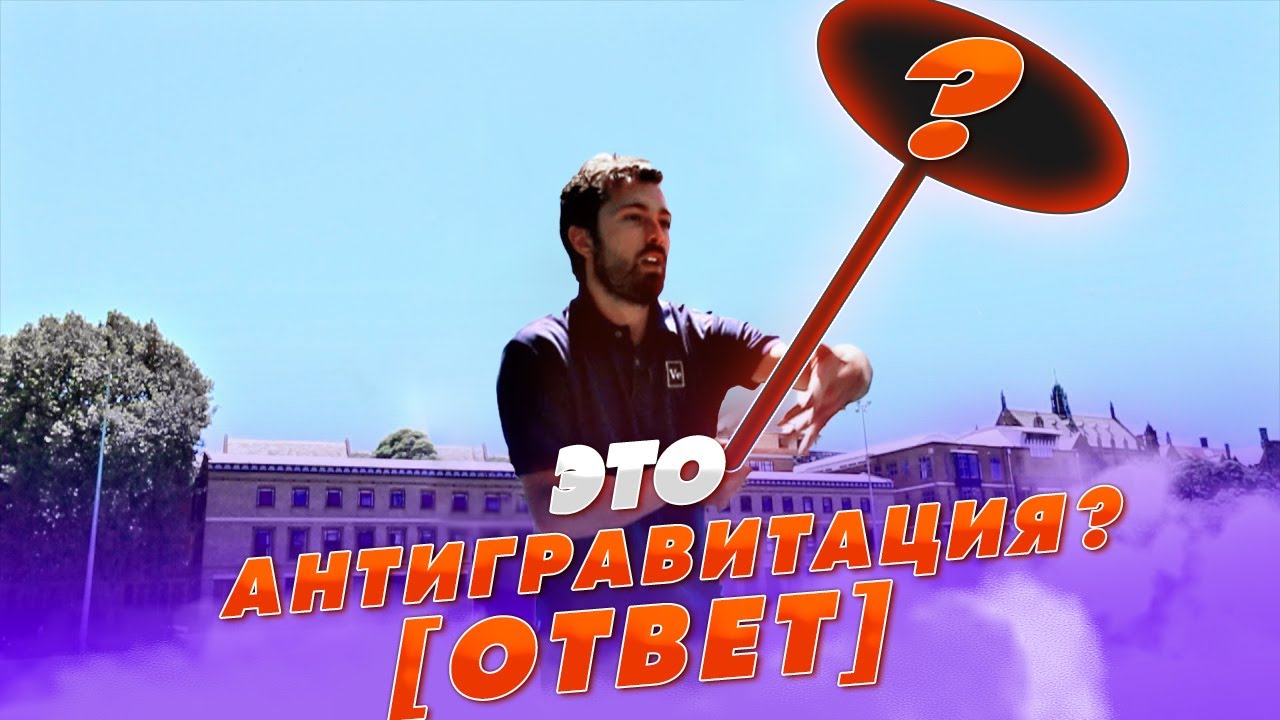
В предыдущем видео мы узнали, что поднять над головой гриф с тяжёлым диском на конце проще, если этот диск вращается. Но почему так? Неужели вращение как-то уменьшает массу объекта? Разбираемся вместе с Дереком с канала Veritasium.
Это антигравитация? #1 Задача: https://youtu.be/UCsqV-d_joA
Перевод: Алексей Лоскутов
Редактура: Алексей Малов
Научная редактура: Леонид Вокин
Озвучка: Дмитрий Чепусов, Юрий Катарманов
Монтаж звука: Андрей Фокин
Монтаж видео: Джон Исмаилов
Обложка: Андрей Гавриков
Спасибо за поддержку на https://www.patreon.com/VertDider.
Озвучки Vert Dider выходят с вашей помощью:
Pavel Dunaev, Nick Denizhenko, Oleksii, Yegor Barakovskiy, mrwiseguy351, Ігор Дорохов, Mikhail Stolpovskiy, Aleksandr, Maxim Syunikov, Oleg Zingilevskiy, Serega Beltser, Rashid Nasibulin, opperatius, Dina Kruchina, Alena, Vitaliy Vachynyuk, Ника Калмыкова, Nadia Kilgishova, Роман Чурин, Aiorraro, Евгений Сельменев, Alex Afalex, Anton Kudashov, Sergii Cherepanov, Владимир Кашутин, Pavel Parpura, Anton Bolotov, Yevhen, Sergei W, Kosoy, Данил Рягузов, Михаил Панькин, Anton Makiievskyi, Максим 'Sheridan' Горлов, Katoto Chan, F23D24, Alexey, Марина Малинкина, Dmitry Khlan, Галина Баринова, Yaroslav Kyrylchuk, Познающий, Ирина Анатольевна Чулкова, kotov.pr, Pavel Golovin, Stanislav K, Edward Ben Rafael, Юрий Медведев, Анна Троссман, Serj Skidan, Andrei Chitaev, L Marchenko, Sultan Ishankulov, Dim iONkinberg, Mike Sviblov, Andrey Rusanov, Inna Klymenko, Dima Chumakov, Dmitriy Lashtaba, Olesya Bolobova, Ilya Alexeevsky, Alexander Balynskiy, Максим Иванов, Ольга Канкулова, Alexander, Viktor Lova, Maria Tronina, Alexander Gorodok, Ivan Iakimov, Alexander Zimin, Евгений Миф, Виталий Пастушенко, Serj Kravchuk, Claudia Barzaeva, Pandaben, Monza UA, Lirin Alex, Pavel D, Dan Sotnikov, Konstantin Pesyakov, Denis Titusov, Viktoria, Alexandr Globov, Oleg Streltsov, Olga Podolskaya, Alexey Kukushkin, Пугачёв Пётр, Olga Shistareva, Kamerton_440, Alex Katkov, Irina Shakhverdova, Vladimir Grachev, Dmitriy Omelyansky, Aleksey Sazonov, Vladimir Goshev, Vladyslav Sokolenko, Anton Novozhenin, Spartak Kagramanyan, Evgeny Vrublevsky, Ihar Marozau, Александр Фалалеев
Сайт студии: http://vertdider.tv
Мы в социальных сетях:
— http://vk.com/studio_vd
— https://t.me/vertdider
— https://twitter.com/Vert_Dider
— http://coub.com/vertdider
Разрешение на публикацию: https://bit.ly/2SFhrHZ
© https://www.youtube.com/user/1veritasium
Источник: https://youtu.be/tLMpdBjA2SU
🔥Professional Certificate Program in Generative AI and Machine Learning - IITG (India Only) - https://www.simplilearn.com/iitg-generative-ai-machine-learning-program?utm_campaign=mX2roDgq8hM&utm_medium=DescriptionFirstFold&utm_source=Youtube
🔥Purdue - Ai And Machine Learning Post Graduate Certificate Program - https://www.simplilearn.com/applied-ai-course?utm_campaign=mX2roDgq8hM&utm_medium=DescriptionFirstFold&utm_source=Youtube
✅ Subscribe to our Channel to learn more about the top Technologies: https://bit.ly/2VT4WtH
⏩ Check out the Artificial Intelligence training videos: https://youtube.com/playlist?l....ist=PLEiEAq2VkUULa5a
#ChatGPTExpertCourse #ChatGPT Expert #ChatGPT #ChatGPTForBeginners #ChatGPT #Chat_GPT #ChatGPTTutorial #ChatGPTForBeginners #Simplilearn
➡️ About Caltech Post Graduate Program In AI And Machine Learning
Designed to boost your career as an AI and ML professional, this program showcases Caltech CTME's excellence and IBM's industry prowess. The artificial intelligence course covers key concepts like Statistics, Data Science with Python, Machine Learning, Deep Learning, NLP, and Reinforcement Learning through an interactive learning model with live sessions.
✅ Key Features
- Simplilearn's JobAssist helps you get noticed by top hiring companies
- PGP AI & ML completion certificate from Caltech CTME
- Masterclasses delivered by distinguished Caltech faculty and IBM experts
- Caltech CTME Circle Membership
- Earn up to 22 CEUs from Caltech CTME
- Online convocation by Caltech CTME Program Director
- IBM certificates for IBM courses
- Access to hackathons and Ask Me Anything sessions from IBM
- 25+ hands-on projects from the likes of Twitter, Mercedes Benz, Uber, and many more
- Seamless access to integrated labs
- Capstone projects in 3 domains
- 8X higher interaction in live online classes by industry experts
✅ Skills Covered
- Statistics
- Python
- Supervised Learning
- Unsupervised Learning
- Recommendation Systems
- NLP
- Neural Networks
- GANs
- Deep Learning
- Reinforcement Learning
- Speech Recognition
- Ensemble Learning
- Computer Vision
👉 Enroll Now: https://www.simplilearn.com/artificial-intelligence-masters-program-training-course?utm_campaign=mX2roDgq8hM&utm_medium=Description&utm_source=youtube
🔥🔥 *Interested in Attending Live Classes? Call Us:* IN - 18002127688 / US - +18445327688

🔥Data Analyst Masters Program (Discount Code - YTBE15) - https://www.simplilearn.com/data-analyst-masters-certification-training-course?utm_campaign=6uGEiBcUAmI&utm_medium=DescriptionFirstFold&utm_source=Youtube
🔥IITK - Professional Certificate Course in Data Analytics and Generative AI (India Only) - https://www.simplilearn.com/iitk-professional-certificate-course-data-analytics?utm_campaign=6uGEiBcUAmI&utm_medium=DescriptionFirstFold&utm_source=Youtube
🔥Purdue - Post Graduate Program in Data Analytics - https://www.simplilearn.com/pgp-data-analytics-certification-training-course?utm_campaign=6uGEiBcUAmI&utm_medium=DescriptionFirstFold&utm_source=Youtube
🔥Caltech - Data Analytics Bootcamp (US Only) - https://www.simplilearn.com/data-analytics-bootcamp?utm_campaign=6uGEiBcUAmI&utm_medium=DescriptionFirstFold&utm_source=Youtube
Welcome to our comprehensive Power BI Tutorial for Beginners!
Are you overwhelmed by complex data and unsure of how to interpret it? Do you want to enhance your data analysis skills? You've come to the right place! Our course is designed to teach you the essentials of Business Intelligence using Power BI.
Whether you're a student, a young professional, or a manager, this course is tailored for you. Led by expert instructor Pavan Lalwani, you'll learn everything from connecting to data sources to creating interactive dashboards and visualizations. You'll discover how to transform and clean data, and how to use advanced features like tooltips, animations, and bookmarks to make your data more engaging. Additionally, you'll learn to design effective dashboards.
By the end of this course, you'll be proficient in analyzing and visualizing data, empowering you to make informed, data-driven decisions. You'll be equipped to elevate your data analysis skills and advance your career.
Don't miss this chance to unlock the full potential of your data. Start learning today! This educational YouTube series is a full course on Power BI, covering all essential features and functions. It's perfect for business analysts, data analysts, and anyone interested in Business Intelligence and data analytics. Led by Mr. Pavan Lalwani, this tutorial will guide you from the basics to advanced usage, helping you effectively utilize Power BI for data analysis and visualization.
You'll learn how to enhance your visualizations with Power BI tooltips, animations, and bookmarks, and design impactful dashboards. This course will provide you with the knowledge and skills needed to confidently analyze and present data using Power BI.
➡️ About PL-300 Microsoft Power BI Certification Training
* Aligned with PL-300: Microsoft Power BI Data Analyst certification
* Topics include Power BI Desktop layouts, BI reports, dashboards, DAX commands, and functions
* Learn to experiment, refine, prepare, and present data with ease
* Explore comprehensive Power BI training for hands-on applied learning
* Learn through a practical approach to help you gain expertise
✅ Key Features
30+ hours of blended learning
Industry-based projects for experiential learning
Dedicated live sessions by faculty of industry experts
Curriculum aligned with PL-300: Microsoft Power BI Data Analyst certification
Lifetime access to self-paced learning content
Industry-recognized course completion certificate
✅ Skills Covered
- Data Modelling
-Dashboard Creation
- MobileSpecific Data Visualization
- Builtin Aggregations
- DAX Commands and Functions
- Data Visualization
- Data Model Performance Optimization
- Desktop Layout
- Reports and Dashboards
👉 Learn More at: https://www.simplilearn.com/power-bi-certification-training-course?utm_campaign=6uGEiBcUAmI&utm_medium=Description&utm_source=youtube
🔥🔥 Interested in Attending Live Classes? Call Us: IN - 18002127688 / US - +18445327688
#powerbi #powerbiforbeginners #dataanalytics #simplilearn

In this video, Dr. Raj Dandekar (MIT PhD) teaches you how to build a production level SLM entirely from scratch.
You will learn the following:
(1) Creating the dataset
(2) Tokenizing the dataset
(3) Creating input-target pairs
(4) Creating the entire SLM architecture
(5) Setup the SLM for pre-training
(6) Pre-training the SLM
(7) Inference
Google Colab Notebook: https://colab.research.google.....com/drive/1k4G3G5MxY

What are agentic AI and agentic operating systems? And what are their potential benefits, drawbacks and longer-term implications?
For further information, the websites and articles included in this video are as follows:
PROTOCOLS:
MCP website: https://modelcontextprotocol.i....o/docs/getting-start
Google announces the A2A protocol: https://developers.googleblog.....com/en/a2a-a-new-era
IBM’s ACP integrated into A2A: https://lfaidata.foundation/co....mmunityblog/2025/08/
A2A Protocol website: https://a2a-protocol.org/latest/
ORCHESTRATION PLATFORMS:
Microsoft AutoGen: https://www.microsoft.com/en-u....s/research/project/a
IBM WatsonX Orchestrate: https://www.ibm.com/products/watsonx-orchestrate
AWS Bedroom AgentCore: https://aws.amazon.com/bedrock/agentcore/
Google Vertex AI Agent Builder: https://cloud.google.com/products/agent-builder
Google Gemini Enterprise https://cloud.google.com/gemini-enterprise
AgentForce: https://www.salesforce.com/uk/agentforce/
Forethought: https://forethought.ai/
Origon AI: https://origon.ai/
AGENTIC OPERATING SYSTEMS:
“Making every Windows PC an AI PC”: https://blogs.windows.com/wind....owsexperience/2025/1
“Experimental Agentic Features” in Windows: https://support.microsoft.com/....en-us/windows/experi
Microsoft Agent 365: https://www.microsoft.com/en-u....s/microsoft-agent-36
MIT Sloan Management Review and BCG article on the agentic enterprise (inc survey): https://sloanreview.mit.edu/pr....ojects/the-emerging-
Apple working on MCP support for agentic AI: https://9to5mac.com/2025/09/22..../macos-tahoe-26-1-be
More videos on computing and related topics can be found at:
http://www.youtube.com/@ExplainingComputers
And more videos on film and other making, plus retro tech, can be found on my Christopher Barnatt channel: http://www.youtube.com/@ChristopherBarnatt
Chapters:
00:00 Titles & Intro
00:48 Agentic AI Basics
07:14 The Good
09:53 The Bad
11:48 The Ugly
13:22 The Future
#AgenticAI #agentic #Aiagent #agent #MCP #A2A #orchestration #ExplainingComputers





HD Kumaraswamy : Siddaramaiahಗೆ ಮತ್ತೆ ಟಾಂಗ್ ಕೊಟ್ಟ HDK | 2023 Election | @newsfirstkannada
--------------------------------------------------------------
News First is a Pioneering 24x7 Kannada News Channel.
Delivering high quality news content not seen before in Kannada Television News.
Promoted by the team which brought ‘Live' Kannada news to Karnataka’s doorsteps.
This daring, dependable and determined team brings credible news to you ‘at any cost’
Be the First to get:
Breaking Local, Regional, National and International news
Extensive Hyper Local News
In-depth Coverage of Karnataka’s Politics
Detailed National and Regional News
The Latest Sports Matches, Scores and more
The Widest Cinema Coverage and Biggest Star Stories
Interesting Stories from Across the World
NewsFirst Live TV | NewsFirst Kannada| Kannada News | Latest News | News1st Kannada| Breaking News| Clarity News | News 24x7 | TOP News | Kannada TV Channel |
News Channel | Fastest News | Best News| NewsFirst LIVE
--------------------------------------------------------------
Official website:
http://www.newsfirstlive.com
Subscribe to Youtube Channel:
https://youtube.com/newsfirstkannada
Like us on FaceBook:
https://www.facebook.com/newsfirstkannada
Follow us on Instagram:
https://www.Instagram.com/newsfirstkannadaa
Follow us on Twitter:
https://www.twitter.com/newsfirstkan
-----------------------------------------
#HDKumaraswamy, #JDSActivists, #2023Election, #JDS, #BJP, #Siddaramaiah #Congress, #KannadaNews, #KannadaLiveTV, #KannadaLiveNews, #KarnatakaliveNews, #Kannadalivetvnews, #Newsfirst, #Newsfirstkannada, #Newsfirstlive, #Kannadanewschannel, #Livenews, #Latestnews, #Karnatakanews, #KarnatakaLatestnews, #Kannadalatestnews, #Kannadanews,

In this video I show you how to code DCGAN in TensorFlow. Code reference for the video: https://keras.io/examples/gene....rative/dcgan_overrid although honestly I pretty much changed all of the code...
GitHub Repository:
https://github.com/aladdinpers....son/Machine-Learning
✅ Equipment I use and recommend:
https://www.amazon.com/shop/aladdinpersson
❤️ Become a Channel Member:
https://www.youtube.com/channe....l/UCkzW5JSFwvKRjXABI
✅ One-Time Donations:
Paypal: https://bit.ly/3buoRYH
Ethereum: 0xc84008f43d2E0bC01d925CC35915CdE92c2e99dc
▶️ You Can Connect with me on:
Twitter - https://twitter.com/aladdinpersson
LinkedIn - https://www.linkedin.com/in/al....addin-persson-a95384
GitHub - https://github.com/aladdinpersson
TensorFlow Playlist:
https://youtube.com/playlist?l....ist=PLhhyoLH6IjfxVOd

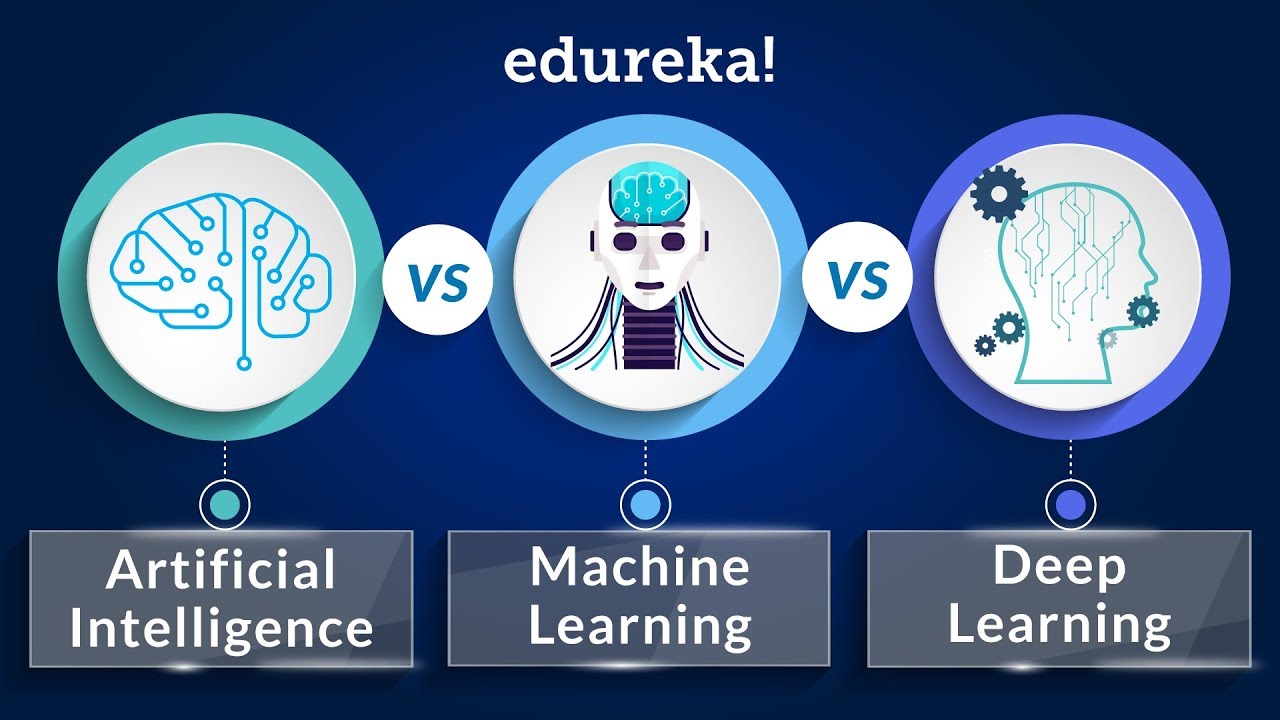
A good model follows the “Goldilocks” principle in terms of data fitting. Models that underfit data will have poor accuracy, while models that overfit data will fail to generalize. A model that is “just right” will avoid these important problems.
Deep Learning TV on
Facebook: https://www.facebook.com/DeepLearningTV/
Twitter: https://twitter.com/deeplearningtv
Suppose you are trying to classify big cats based on features such as claw size, sex, body dimensions, bite strength, color, speed, and the presence of a mane. Due to various deficiencies in the training process and data set, the resultant model may fail to fully differentiate the various types of cats. For example, a rule-based model may predict that any cat with a mane that roars is a lion, while ignoring that if such a cat is female, it is technically referred to as a lioness. Since this model does not take all necessary features into account while performing classification, it is said to underfit the data. The problem of underfitting is solved by adding more detail to the model to ensure that it properly captures the differences between classes.
On the other hand, a model may also consider every possible detail and develop very specific, complex rules for classification. For example, if one data point represents a lion that is 3.5 feet tall, weighs 305 pounds, and has 2.9-inch claws, the model may develop a rule that classifies every 3.5 foot tall, 305 pound cat with 2.9-inch claws as a lion. Such rules will accurately classify the training data, but will poorly generalize to new data samples. A model that develops these kinds of rules is said to overfit the data. In other words, the model has failed to identify the true patterns that differentiate the classes. As a separate example, if the data only contained tigers that grew up in a zoo, the model may have difficulty classifying tigers that grew up in the wild. So while improving the process of data collection is helpful to prevent this problem, the model must be designed to identify the most important patterns that identify a class, so that new samples can be properly classified.
With regards to neural networks, overfitting typically stems from too many input features, or the use of an overly-complicated network configuration. If the input count is too large, the training process may start to assign weights to features that either aren't needed or add unnecessary complexity to the model. An overly-complicated configuration may lead to the development of specific rules that improperly relate many different features, resulting in poor generalization.
Overfitting is a common problem in data science. One popular method to reduce overfitting is the use of a cross-validation data set along with parameter averaging. For neural networks, a common method is regularization. There are different types such as L1 and L2, but each of these follows the same principle – penalize the model for letting weights and biases become too large. Another method is Max Norm constraints, which directly adds a size limit to the weights and biases. A different approach is dropout, which randomly switches off certain neurons in the network, preventing the model from becoming too dependent on a set of neurons and the associated weights and biases. While these methods are broadly applied across the model rather than used for systematically searching for problem patterns, they have been proven to reduce and sometimes prevent the problem of overfitting.
Credits
Nickey Pickorita (YouTube art) -
https://www.upwork.com/freelan....cers/~0147b8991909b2
Isabel Descutner (Voice) -
https://www.youtube.com/user/IsabelDescutner
Dan Partynski (Copy Editing) -
https://www.linkedin.com/in/danielpartynski
Marek Scibior (Prezi creator, Illustrator) -
http://brawuroweprezentacje.pl/
Jagannath Rajagopal (Creator, Producer and Director) -
https://ca.linkedin.com/in/jagannathrajagopal

Patreon: https://www.patreon.com/mlst
Discord: https://discord.gg/ESrGqhf5CB
"Symmetry, as wide or narrow as you may define its meaning, is one idea by which man through the ages has tried to comprehend and create order, beauty, and perfection." and that was a quote from Hermann Weyl, a German mathematician who was born in the late 19th century.
The last decade has witnessed an experimental revolution in data science and machine learning, epitomised by deep learning methods. Many high-dimensional learning tasks previously thought to be beyond reach -- such as computer vision, playing Go, or protein folding -- are in fact tractable given enough computational horsepower. Remarkably, the essence of deep learning is built from two simple algorithmic principles: first, the notion of representation or feature learning and second, learning by local gradient-descent type methods, typically implemented as backpropagation.
While learning generic functions in high dimensions is a cursed estimation problem, many tasks are not uniform and have strong repeating patterns as a result of the low-dimensionality and structure of the physical world.
Geometric Deep Learning unifies a broad class of ML problems from the perspectives of symmetry and invariance. These principles not only underlie the breakthrough performance of convolutional neural networks and the recent success of graph neural networks but also provide a principled way to construct new types of problem-specific inductive biases.
This week we spoke with Professor Michael Bronstein (head of graph ML at Twitter) and Dr.
Petar Veličković (Senior Research Scientist at DeepMind), and Dr. Taco Cohen and Prof. Joan Bruna about their new proto-book Geometric Deep Learning: Grids, Groups, Graphs, Geodesics, and Gauges.
Enjoy the show!
Geometric Deep Learning: Grids, Groups, Graphs, Geodesics, and Gauges
https://arxiv.org/abs/2104.13478
[00:00:00] Tim Intro
[00:01:55] Fabian Fuchs article
[00:04:05] High dimensional learning and curse
[00:05:33] Inductive priors
[00:07:55] The proto book
[00:09:37] The domains of geometric deep learning
[00:10:03] Symmetries
[00:12:03] The blueprint
[00:13:30] NNs don't deal with network structure (TedX)
[00:14:26] Penrose - standing edition
[00:15:29] Past decade revolution (ICLR)
[00:16:34] Talking about the blueprint
[00:17:11] Interpolated nature of DL / intelligence
[00:21:29] Going tack to Euclid
[00:22:42] Erlangen program
[00:24:56] “How is geometric deep learning going to have an impact”
[00:26:36] Introduce Michael and Petar
[00:28:35] Petar Intro
[00:32:52] Algorithmic reasoning
[00:36:16] Thinking fast and slow (Petar)
[00:38:12] Taco Intro
[00:46:52] Deep learning is the craze now (Petar)
[00:48:38] On convolutions (Taco)
[00:53:17] Joan Bruna's voyage into geometric deep learning
[00:56:51] What is your most passionately held belief about machine learning? (Bronstein)
[00:57:57] Is the function approximation theorem still useful? (Bruna)
[01:11:52] Could an NN learn a sorting algorithm efficiently (Bruna)
[01:17:08] Curse of dimensionality / manifold hypothesis (Bronstein)
[01:25:17] Will we ever understand approximation of deep neural networks (Bruna)
[01:29:01] Can NNs extrapolate outside of the training data? (Bruna)
[01:31:21] What areas of math are needed for geometric deep learning? (Bruna)
[01:32:18] Graphs are really useful for representing most natural data (Petar)
[01:35:09] What was your biggest aha moment early (Bronstein)
[01:39:04] What gets you most excited? (Bronstein)
[01:39:46] Main show kick off + Conservation laws
[01:49:10] Graphs are king
[01:52:44] Vector spaces vs discrete
[02:00:08] Does language have a geometry? Which domains can geometry not be applied? +Category theory
[02:04:21] Abstract categories in language from graph learning
[02:07:10] Reasoning and extrapolation in knowledge graphs
[02:15:36] Transformers are graph neural networks?
[02:21:31] Tim never liked positional embeddings
[02:24:13] Is the case for invariance overblown? Could they actually be harmful?
[02:31:24] Why is geometry a good prior?
[02:34:28] Augmentations vs architecture and on learning approximate invariance
[02:37:04] Data augmentation vs symmetries (Taco)
[02:40:37] Could symmetries be harmful (Taco)
[02:47:43] Discovering group structure (from Yannic)
[02:49:36] Are fractals a good analogy for physical reality?
[02:52:50] Is physical reality high dimensional or not?
[02:54:30] Heuristics which deal with permutation blowups in GNNs
[02:59:46] Practical blueprint of building a geometric network architecture
[03:01:50] Symmetry discovering procedures
[03:04:05] How could real world data scientists benefit from geometric DL?
[03:07:17] Most important problem to solve in message passing in GNNs
[03:09:09] Better RL sample efficiency as a result of geometric DL (XLVIN paper)
[03:14:02] Geometric DL helping latent graph learning
[03:17:07] On intelligence
[03:23:52] Convolutions on irregular objects (Taco)