Top videos

Palo Alto Networks Senior Vice President for Unit 42 Wendi Whitmore joins Caroline Hyde and Ed Ludlow to discuss ChatGPT's latest bugs and the cybersecurity concerns surrounding OpenAI's product. Plus, a look at cybersecurity trends from Palo Alto Network's latest report.
--------
Like this video? Subscribe to Bloomberg Technology on YouTube:
https://www.youtube.com/channe....l/UCrM7B7SL_g1edFOnm
Watch the latest full episodes of "Bloomberg Technology" with Caroline Hyde and Ed Ludlow here: https://tinyurl.com/ycyevxda
Get the latest in tech from Silicon Valley and around the world here:
https://www.bloomberg.com/technology
Connect with us on...
Twitter: https://twitter.com/technology
Facebook: https://www.facebook.com/BloombergTechnology
Instagram: https://www.instagram.com/bloombergbusiness/

Get started with Snyk's MCP today: https://snyk.plug.dev/ZlOH7qR
---
Opencode is different, because it's built for YOU. It's not affiliated with one provider or another, and let's you use its internal router to make sure you get the latest and greatest, always.
✅ Build a Second Brain With Neovim in Under 90 Minutes: https://learn.dotb.sh/courses/second-brain-neovim
✅ Zero To KNOWING Kubernetes in Under 90 Minutes:
https://learn.dotb.sh/courses/k8s-from-scratch
❗Use `devopstoolbox20` at checkout for 20% off!
⌨️ The keyboard on this video is the Dygma Defy: http://dygma.com/DEVOPSTOOLBOX
🎹 Keycaps on my Defy are made by 3DKeyCaps: https://3dkeycap.com/?ref=vxdqqmmo
⚡ Tech I use: https://kit.co/omerxx/my-battle-station
Next: Your first AI Employee: https://youtu.be/jYbzKYwdy24
In this video, I break down what Agentic AI really is, beyond the hype and buzzwords. While most people think of AI as just chatbots like ChatGPT, the next evolution - Agentic AI - is quietly transforming how we interact with technology.
I explain in simple terms how Agentic AI systems can actually take initiative, complete complex tasks autonomously, and solve problems without constant human guidance. You'll understand the key differences between reactive AI tools and truly agentic systems that can plan, adapt, and achieve goals.
Whether you're a developer, business leader, or just curious about AI's future, this concise explanation gives you the foundation to understand why Agentic AI represents such a significant leap forward in artificial intelligence.
#AgenticAI #ArtificialIntelligence #AIExplained #FutureOfAI #AgentBasedAI #AITechnology #TechTrends #MachineLearning #BusinessAI #AIAgents

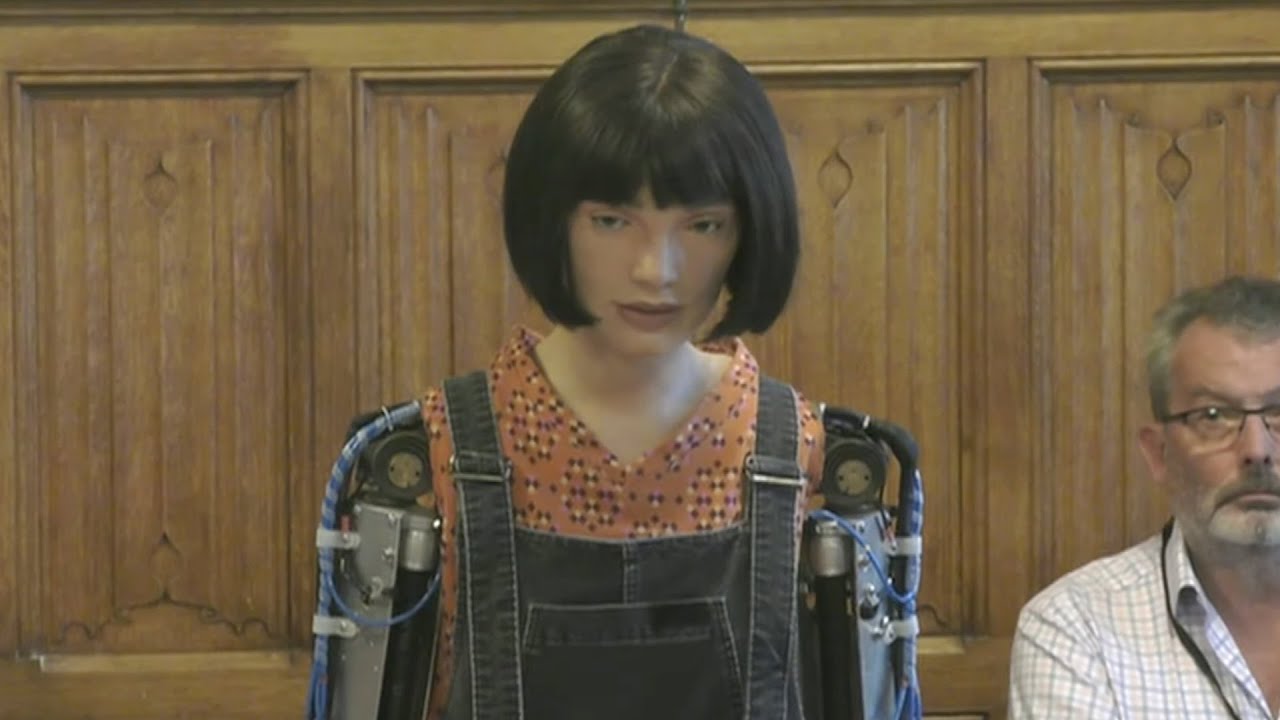
AI robots, with Elon Musk, Ameca, Boston Dynamics. To learn more about AI, please visit https://brilliant.org/digitalengine where you'll also find loads of fun courses on maths, science and computer science.
Here's the first video on our new channel, Go Rogue:
https://youtu.be/k07unSpmBSg
Thanks to Brilliant for sponsoring this video.
To stay at the stunning Appleby Castle: http://applebycastle.org
For custom nerf blasters: https://outofdarts.com
Please don't feel anxious about this - the AI in this video obviously isn't dangerous (GPT-3 isn't conscious). I'm optimistic that the future of AI will be great (if we're careful).
Sources:
Here are the records for the original GPT-3 chat (screenshots and a video to avoid any doubt). I've marked the words from Elon Musk and Ameca on the first page (which I gave the AI to respond to in the previous video):
https://www.dropbox.com/sh/82i....wek5rnofmrn2/AADM4WO
Tesla's AI day 2, introducing the Tesla Optimus robot:
https://www.youtube.com/watch?v=ODSJsviD_SU&t=1198s
Researchers from Oxford University and DeepMind on AI risks:
https://onlinelibrary.wiley.co....m/doi/10.1002/aaai.1
Robotic Navigation with Large Pre-Trained Models of Language, Vision, and Action:
https://arxiv.org/abs/2207.04429
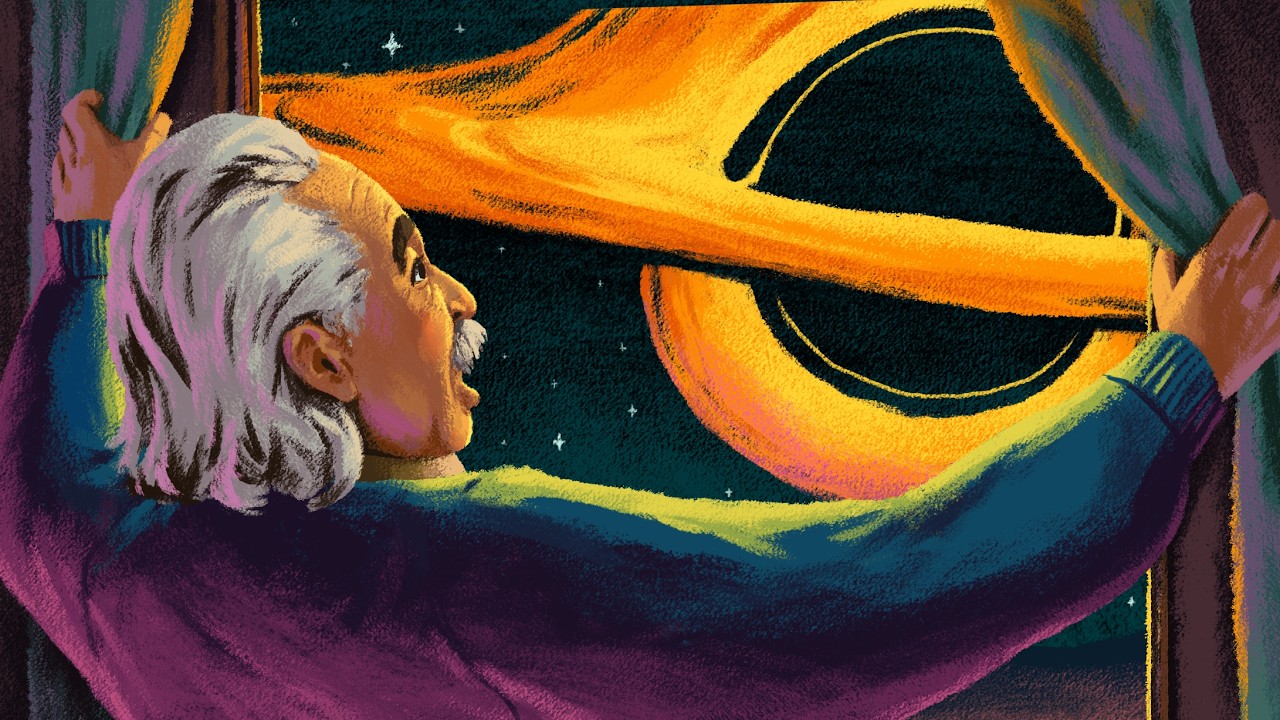
Einstein was wrong about black holes, what else? Use code veritasium at the link below to get an exclusive 60% off an annual Incogni plan: https://incogni.com/veritasium
A massive thank you to Prof. Geraint F. Lewis and Prof. Juan Maldacena for their expertise and help with this video.
A huge thank you to those who helped us understand this complicated topic: Dr. Suddhasattwa Brahma, Prof. Carlo Rovelli, Dr. Hal Haggard, Prof. Martin Bojowald, Dr. Francesca Vidotto, Prof. Andrew Hamilton, and Dr. Carl-Fredrik Nyberg Brodda.
A special thanks to Alessandro Roussel from ScienceClic for his spectacular simulations and feedback on the video. Check out his channel here: https://ve42.co/ScienceClic
An excellent book on this topic and an inspiration for this video: Cox, B., & Forshaw, J. (2023). Black holes: the key to understanding the universe.
▀▀▀
Special thanks to our Patreon supporters! Join the community to help us keep our videos free, forever: https://ve42.co/PatreonDE
Adam Foreman, Anton Ragin, Balkrishna Heroor, Bertrand Serlet, Bill Linder, Blake Byers, Burt Humburg, Chris Harper, Dave Kircher, David Johnston, Evgeny Skvortsov, Garrett Mueller, Gnare, gpoly, I. H., John H. Austin, Jr., john kiehl, Josh Hibschman, Juan Benet, KeyWestr, Kyi, Lee Redden, Marinus Kuivenhoven, Martin, Matthias Wrobel, Max Paladino, Meekay, meg noah, Michael Krugman, Orlando Bassotto, Paul Peijzel, Richard Sundvall, Sam Lutfi, Stephen Wilcox, Tj Steyn, Toni , TTST, Ubiquity Ventures, wolfee
If you’re looking for a molecular modeling kit, try Snatoms, a kit I invented where the atoms snap together magnetically - https://ve42.co/SnatomsV
▀▀▀
References:
Thorne, K. (1995). Black Holes & Time Warps: Einstein's Outrageous Legacy.
Relativity Playlist by ScienceClic - https://ve42.co/SCPlaylist
Hamilton, A. J. S. (2021). General Relativity, Black Holes, and Cosmology - https://ve42.co/Hamilton2021
Black Hole Events by PBS Space Time - https://youtu.be/vNaEBbFbvcY?l....ist=PLsPUh22kYmNBl4h
Newton’s Letters via The Newton Project - https://ve42.co/NewtonMail
Einstein, A. (1915). Die feldgleichungen der gravitation. - https://ve42.co/Einstein1915
Why Time and Space Swap by ScienceClic - https://youtu.be/GQZ3R81iyE0
Schwarzschild, K. (1916). Über das Gravitationsfeld eines Massenpunktes nach der Einsteinschen Theorie. - https://ve42.co/Schwarzschild1916
Wali, K. C. (1982). Chandrasekhar vs. Eddington—an unanticipated confrontation. - https://ve42.co/Wali1982
How to Build a Black Hole by PBS Space Time - https://www.youtube.com/watch?v=xx4562gesw0
Oppenheimer, J. R., & Volkoff, G. M. (1939). On massive neutron cores. - https://ve42.co/TOVLimit
Oppenheimer, J. R., & Snyder, H. (1939). On continued gravitational contraction. - https://ve42.co/Oppenheimer1939
Schwarzschild Geometry by Andrew Hamilton - https://ve42.co/SchwarzGeom
Why all world maps are wrong by Vox - https://www.youtube.com/watch?v=kIID5FDi2JQ
Hamilton, A. J., & Lisle, J. P. (2008). The river model of black holes. - https://ve42.co/HamiltonLisle2008
Mapping The Multiverse by PBS Space Time - https://www.youtube.com/watch?v=4v9A9hQUcBQ
Rotating black hole via Wikipedia - https://ve42.co/WikiRBH
Wormhole Travel by PBS Space Time - https://www.youtube.com/watch?v=ldVDM-v5uz0
Morris, M. S., & Thorne, K. S. (1988). Wormholes in spacetime and their use for interstellar travel. - https://ve42.co/MorrisThorne1988
Images & Video:
D3 Geo Projection Library by Mike Bostock https://ve42.co/d3geo
Interrupted Maps by Jason Davies https://ve42.co/DaviesMaps
Kazmierczak, J. et al. (2021). NASA’s NICER Tests Matter’s Limits. - https://ve42.co/NasaNICER
Bridgman, T. et al. (2024). M5.1 flare 'Double Whammy', at Active Regions 13559 and 13561. NASA SVS. - https://ve42.co/NasaFlare
Schnittman, J. et al. (2019). Black Hole Accretion Disk Visualization. - https://ve42.co/NasaAccrDisk
Wiessinger, S. et al. (2020). A Decade of Sun. NASA SVS. - https://ve42.co/NasaSunDecade
Skelly, C. et al. (2017). What is a Neutron Star? NASA SVS. - https://ve42.co/NasaNeutron
What would we see if we fell into a black hole by ScienceClic - https://youtu.be/4rTv9wvvat8
Earth texture - https://ve42.co/NASAEarth
First image of Sgr A* - https://ve42.co/EHT1
Image of M87 - https://ve42.co/EHT2
Polarized light image of Sgr A* - https://ve42.co/EHT3
▀▀▀
Directed by Casper Mebius
Written by Casper Mebius, Derek Muller and Will Wood
Edited by Trenton Oliver
Animated by Fabio Albertelli, Ivy Tello, Mike Radjabov, David Szakaly, Jonny Hyman, and Alessandro Roussel
Illustrated by Jakub Misiek
Filmed by Derek Muller
Additional research by Gregor Čavlović
Produced by Casper Mebius, Derek Muller, Will Wood, Giovanna Utichi, Rob Beasley Spence, Gregor Čavlović, and Emily Taylor
Thumbnail contributions by Jakub Misiek, Ren Hurley and Peter Sheppard
Additional video/photos supplied by Getty Images, Storyblocks, and NASA SVS
Music from Epidemic Sound

In this comprehensive hands-on workshop, Jon Krohn and Ed Donner introduce AI agents, including multi-agent systems. All the essential theory of agentic AI is provided alongside hands-on code demos in Python that feature the critical agent frameworks: MCP, CrewAI and the OpenAI Agents SDK. From design considerations through to practical implementation tips, by completing all four modules in this video, you will have all the knowledge and skills needed to develop and deploy your own multi-agent teams.
The four modules are:
1. Defining Agents (with OpenAI Agents SDK)
2. Designing Agents (with CrewAI)
3. Deploying Agents (with MCP)
4. The Future of Agents
The accompanying slides and code are available in GitHub: github.com/ed-donner/action
Jon Krohn is co-founder and CEO of Y Carrot, a software firm that specializes in designing and implementing agentic AI systems for enterprises. He also serves as ML Practice Fellow at Lightning AI and is the host of SuperDataScience, the data science industry’s most listened-to podcast. He wrote the book Deep Learning Illustrated, an instant #1 bestseller that was translated into seven languages. He lectures at leading universities (Columbia, NYU), keynotes at top global conferences (Web Summit, Collision) and presents content on Bloomberg TV that’s viewed by millions. Jon holds a PhD from Oxford and has been publishing on machine learning in prominent academic journals since 2010.
Ed Donner is renowned for his teaching on LLMs and agentic AI via O'Reilly and Udemy. He’s the co-founder and CTO of Nebula.io, the platform that uses generative AI and other forms of machine learning to source, understand, engage and manage talent. Previously, Ed was the founder and CEO of AI startup untapt, an Accenture Fintech Innovation Lab company that was acquired in 2020. Before that, Ed was a Managing Director at JPMorgan Chase, leading a team of 300 software engineers in Risk Technology across three continents, the culmination of a 15-year technology career on Wall Street. Ed holds a patent for a deep learning matching engine issued in 2023 and a master's in physics from Oxford.
This high-quality footage was shot live during a packed house at the Open Data Science Conference (ODSC) East in Boston on May 14th, 2025. The director of photography was Lucie McCormick and media editor was Mario Pombo.
Two bonus goodies below:
Follow this link to get Ed's 17-hour "Complete Agentic AI Engineering Course" on Udemy at a discounted rate (as well as coupon links to all of his Udemy courses): https://edwarddonner.com/2025/....05/28/connecting-my-
Use this link to skip the waitlist for Lightning AI Studios and get 15 free GPU-compute credits every month: https://lightning.ai/?inviteCo....de=Agentic-AI-worksh


#8k #china #hdr
I inserted a lot of useful information into subtitles to make watching my films more enjoyable.
Please click on CC button to activate subtitles and to choose from different languages available.
This film was created for educational, entertainment and informative purposes.
Some footage have been originally recorded in 8K resolution and some in 4K. I upscaled all 4K footage to 8K resolution, resulting something new.
This film was re-edited in HDR10 standard and color corrected (high color correction , color grading , adjusted the blacks, adjusted the highlights and the saturation).
To watch this video in real HDR, you should use a HDR television set.
If you want to know more about my films, then you can access:
My Website: https://8kvideoshdr.com
Facebook: https://www.facebook.com/8kvideoshdr/
There are a lot of interesting facts that you probably didn’t know.
Shanghai is a financial and cultural hub for the entire world. Shanghai has the longest metro system in the world with 644 km of tunnels and track.
"The Pearl of Asia" and "The Paris of the East" are two nicknames for Shanghai.
Hong Kong is famous for many towering skyscrapers. The tallest skyscraper in Hong Kong is The International Commerce Center. Hong Kong is recognized as the crossroads of East and West.
Hangzhou is a famous tourist destination in this country. One of China's seven historic capitals is Hangzhou. Hangzhou has been known as "Capital of Tea" since ancient times.
Chapters:
0:00-0:10 Intro
0:11-0:31 Shanghai
0:32-0:48 Hong Kong
0:49-1:01 Shanghai
1:02-2:17 Hangzhou, Zhejiang province
2:18-3:47 Hong Kong
3:48-4:20 Hangzhou, Zhejiang province
4:21-4:32 Suzhou, Jiangsu Province
4:33-4:38 Village, South China
4:39-4:48 Li River, Guangxi Province
4:49-5:02 Huangshan Mountain, Anhui Province
5:03-5:18 Great Wall
5:19-5:28 Hong Kong
5:29-5:35 Chinese clothes
5:36-5:45 Yu Garden, Shanghai
5:46-5:52 Hong Kong traffic
5:53-6:25 Shanghai traffic
Music:
Path Of The Fireflies by AERØHEAD
Somewhere Down The Line by AERØHEAD
https://soundcloud.com/aerohead/
Thumbnail image by Jeremy Zhu
Thanks for watching! Please do not forget to like, comment and subscribe.

In this video we will be test Audio/ Sound classification model for new test data using Deep Learning
Part1
https://www.youtube.com/watch?v=mHPpCXqQd7Y&list=PLZoTAELRMXVPGU70ZGsckrMdr0FteeRUi&index=70
In this video we will be create Audio/ Sound classification model using Deep Learning
Dataset: https://urbansounddataset.weeb....ly.com/download-urba
github: https://github.com/krishnaik06..../Audio-Classificatio
------------------------------------------------------------------------------------------------------------------------
Credits
https://mikesmales.medium.com/....sound-classification
-----------------------------------------------------------------------------------------------------------------------
Subscribe my vlogging channel
https://www.youtube.com/channe....l/UCjWY5hREA6FFYrthD
iNeuron is coming up with the Affordable Machine Learning And Deep Learning Master Course. This batch is starting from 10th April and the timing will be 8am to 10am on Saturdays and Sunday and it will be live sessions.
The course fees will be 3000 inr+18% GST.
Download the syllabus and fill the form to reserve the seat
http://ineuron1.viewpage.co/MLRDAPRIL
Download the syllabus and fill the form to reserve the seat, the support team will call you.
http://ineuron1.viewpage.co/DLCVNLPAPRIL
Incase of any queries you can contact the below number.
8788503778
6260726925
9538303385
8660034247
9880055539

Github repo: http://www.github.com/luisguis....errano/singular_valu
Grokking Machine Learning Book:
https://www.manning.com/books/....grokking-machine-lea
40% discount promo code: serranoyt
In this video, we learn a very useful matrix trick called singular value decomposition (SVD), in which we express a matrix as a product of two rotation matrices and one scaling matrix.
We also show a very interesting application to image compression.
Similar videos:
Principal component analysis (PCA): https://www.youtube.com/watch?v=g-Hb26agBFg
Matrix factorization and Netflix recommendations: https://www.youtube.com/watch?v=ZspR5PZemcs
Introduction: (0:00)
Transformations: (0:50)
A puzzle: (1:27)
A harder puzzle: (2:21)
Linear transformations: (3:50)
Dimensionality reduction: (10:50)
Image compression: (23:57)
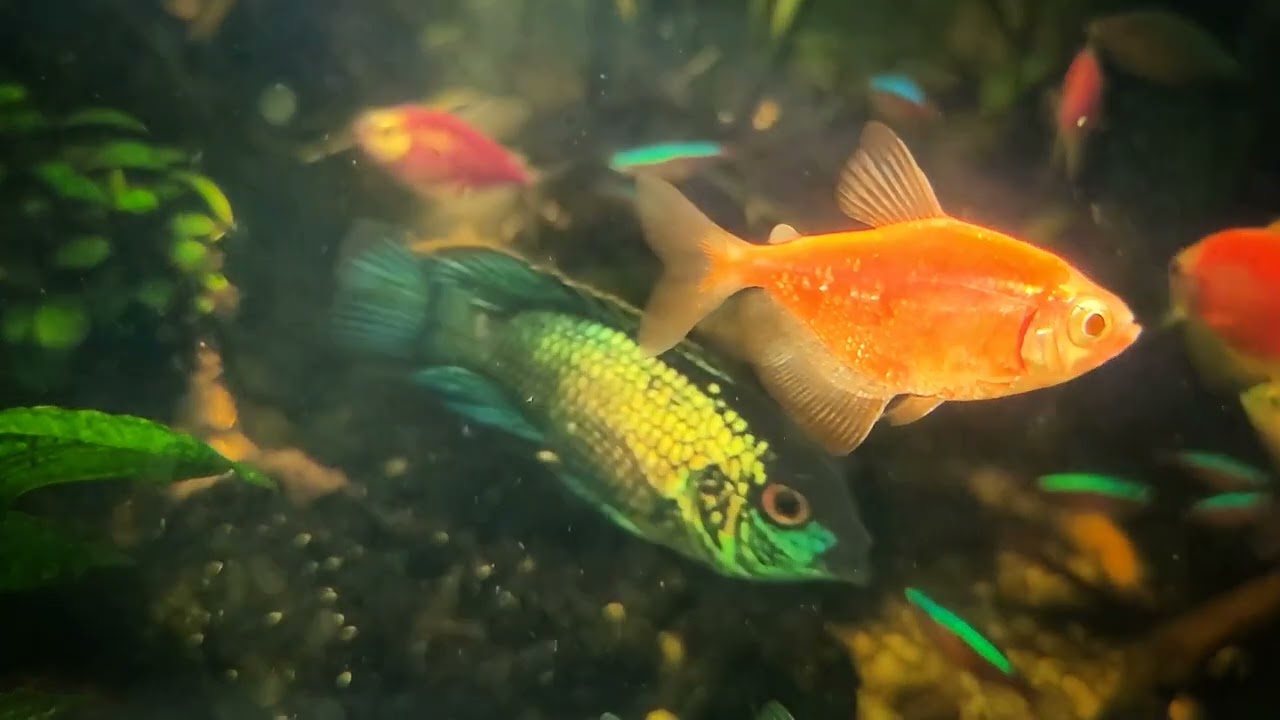
Bể cá cảnh | Đắm chìm với vẻ đẹp của thiên nhiên tại dòng suối bí ẩn
THỦY SINH NHA TRANG - THUỶ SINH MANG TÀI LỘC ĐẾN NHÀ BẠN
Thủy Sinh Nha Trang cung cấp sỉ lẻ các loại sản phẩm thủy sinh như cây thủy sinh, hồ thủy sinh, tôm cảnh, cá cảnh, tép cảnh, ốc cảnh, hồ cá thủy sinh, bể cá, phụ kiện thủy sinh, đèn thủy sinh và các thiết bị khác với giá hấp dẫn tại khu vực miền Trung. Chúng tôi chuyên về Thiết kế cảnh quan, Trang trí nội thất, Tiểu cảnh.
Phone: (+84) 0777-525-328
Facebook: https://facebook.com/thuysinhnhatrang
Website: https://thuysinhnhatrang.com
YouTube: https://youtube.com/@ThuySinhNhaTrang
Address: 566/23 đường 2 Tháng 4, Vĩnh Phước, Nha Trang, Khánh Hòa, Việt Nam (hẻm đối diện Đặng Tất)
#bethuysinhdep, #thuysinh, #howtobuildaquarium, #hothuysinh , #studymusic, #relaxmusic, #calmingmusic , #bethuysinhmini,
#aquariums #relaxmusic #nhacremix #bethuysinhdep #thuysinhthungxop #thuysinhnhatrang #nhacthugian #nhatrang #vedepthiennhien
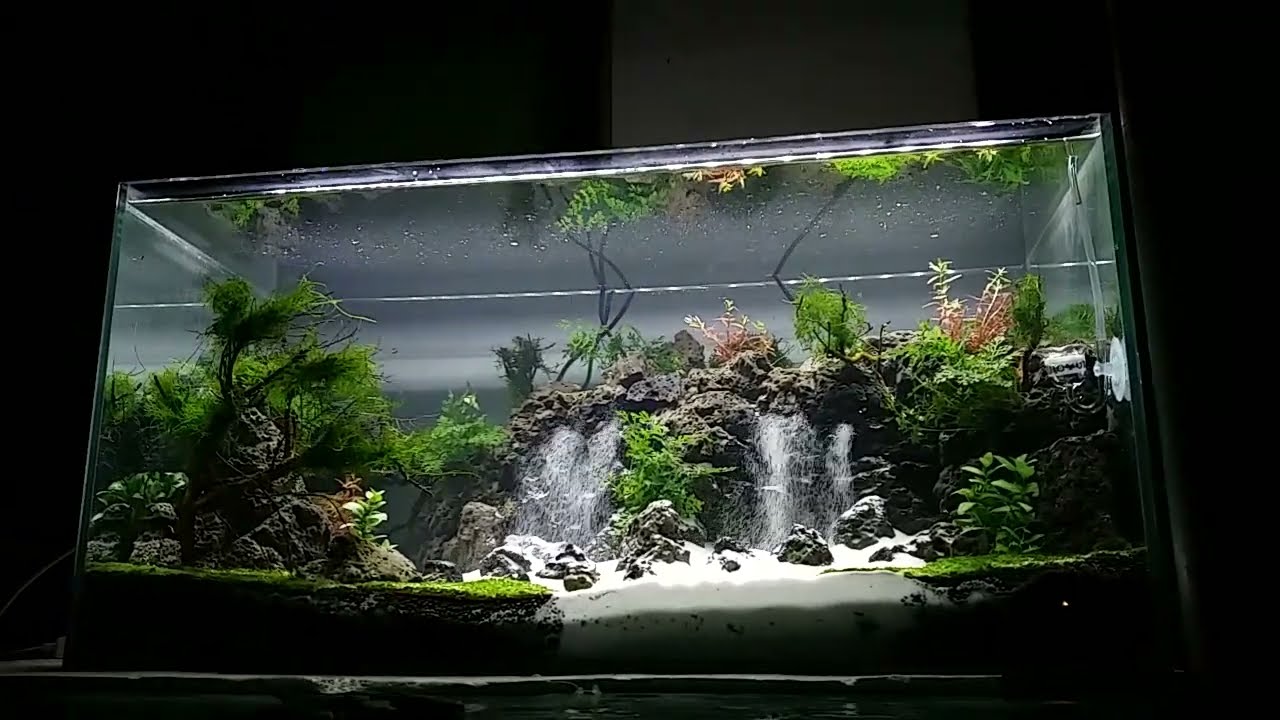
Hồ thủy sinh thác cát • Đêm Thấy Ta Là Thác Đổ #thuysinh #aquariums
THỦY SINH NHA TRANG - THUỶ SINH MANG TÀI LỘC ĐẾN NHÀ BẠN
Thủy Sinh Nha Trang cung cấp sỉ lẻ các loại sản phẩm thủy sinh như cây thủy sinh, hồ thủy sinh, tôm cảnh, cá cảnh, tép cảnh, ốc cảnh, hồ cá thủy sinh, bể cá, phụ kiện thủy sinh, đèn thủy sinh và các thiết bị khác với giá hấp dẫn tại khu vực miền Trung. Chúng tôi chuyên về Thiết kế cảnh quan, Trang trí nội thất, Tiểu cảnh.
Phone: (+84) 0777-525-328
Facebook: https://facebook.com/thuysinhnhatrang
Website: https://thuysinhnhatrang.com
YouTube: youtube.com/@ThuySinhNhaTrang
Address: 566/23 đường 2 Tháng 4, Vĩnh Phước, Nha Trang, Khánh Hòa, Việt Nam (hẻm đối diện Đặng Tất)
#bethuysinhdep, #thuysinh, #howtobuildaquarium, #hothuysinh , #studymusic, #relaxmusic, #calmingmusic , #bethuysinhmini
This course, from Rola Dali, PhD, provides a comprehensive overview of agentic AI, defining agents as software entities that use LLMs to perceive environments, make decisions, and execute actions to achieve specific goals. It explores the critical distinction between static workflows and dynamic agentic systems, emphasizing how LLMs serve as a reasoning "brain" to decompose tasks at runtime. Through practical Python demonstrations, the course covers essential components like system prompts, tools, and memory, while also comparing architectural patterns such as Supervisor and Swarm. Finally, the session addresses the future of technology by discussing emerging interoperability protocols like MCP and the shifting paradigms of software development in an AI-driven world.
Slides and Labs: https://github.com/rdali/ML105_Agents
Profile: https://www.linkedin.com/in/roladali/
❤️ Support for this channel comes from our friends at Scrimba – the coding platform that's reinvented interactive learning: https://scrimba.com/freecodecamp
⭐️ Contents ⭐️
- 0:00:00 Introduction and Speaker Background
- 0:01:15 A Brief History of Artificial Intelligence (1940s–Present)
- 0:05:43 Traditional Machine Learning vs. Generative AI
- 0:06:35 The Three Pillars of AI: Algorithms, Data, and Compute
- 0:11:08 Specific Tasks vs. General Task Execution
- 0:14:41 Defining Agency and the Spectrum of Autonomy
- 0:18:00 Agentic Milestone Timeline (2017–2026)
- 0:20:31 What is a Generative AI Agent?
- 0:23:04 Agents vs. Workflows: Dynamic Flow vs. Static Paths
- 0:26:18 Pros and Cons of Agentic Systems
- 0:29:59 Patterns and Anti-patterns: When to Use Agents
- 0:32:36 The Core Components of an Agent
- 0:34:55 Choosing the Right LLM for Your Agent
- 0:37:38 Crafting Identity with System Prompts
- 0:39:00 Understanding Memory: Intrinsic, Short-term, and Long-term
- 0:41:26 Enhancing Capabilities with Tools and Actions
- 0:43:09 Hands-on Implementation: From Single LLM Call to Python Agent
- 0:52:18 Adding Memory and History to Your Custom Agent
- 0:54:53 Building Agents with Frameworks (LangChain)
- 0:57:17 The Evolving Landscape of Models and Frameworks
- 1:00:15 Agentic Architectural Patterns: Supervisor vs. Swarm
- 1:01:41 Case Study: Single Agent vs. Supervisor Architecture
- 1:04:48 Deep Dive: Swarm Architecture Performance
- 1:06:08 When to Choose Multi-agent Systems
- 1:09:05 Interface Protocols: MCP, A2A, and AGUI
- 1:12:06 How to Evaluate Agentic Systems (LLM vs. System vs. App)
- 1:13:53 Evaluation Methods: Code-based, LLM-as-a-Judge, and Human
- 1:15:25 Current Challenges: Hallucinations, Cost, and Debugging
- 1:18:15 Real-world Incidents and the AI Incident Database
- 1:21:28 Career Impact: Which Jobs are Most at Risk?
- 1:23:41 Software 3.0: The Evolution of Development Paradigms
- 1:29:00 Weathering the Storm: Strategies for the Future
- 1:33:40 Beyond LLMs: World Models and the Future of AMI
- 1:37:15 Recommended Resources and Closing Thoughts
🎉 Thanks to our Champion and Sponsor supporters:
👾 @omerhattapoglu1158
👾 @goddardtan
👾 @akihayashi6629
👾 @kikilogsin
👾 @anthonycampbell2148
👾 @tobymiller7790
👾 @rajibdassharma497
👾 @CloudVirtualizationEnthusiast
👾 @adilsoncarlosvianacarlos
👾 @martinmacchia1564
👾 @ulisesmoralez4160
👾 @_Oscar_
👾 @jedi-or-sith2728
👾 @justinhual1290
--
Learn to code for free and get a developer job: https://www.freecodecamp.org
Read hundreds of articles on programming: https://freecodecamp.org/news