Latest videos

Discover how startups can benefit from adopting or creating Small Language Models and the role they have in enabling agentic AI. Learn from world-class experts Julien Simon, Chief Evangelist at Arcee, and Nicolas David, Sr. Startup Architect at AWS

Build your first app today with Mocha: https://www.getmocha.com?utm_source=matthew_berman
Download Humanities Last Prompt Engineering Guide (free) 👇🏼
https://bit.ly/4kFhajz
Download The Matthew Berman Vibe Coding Playbook (free) 👇🏼
https://bit.ly/3I2J0YQ
Join My Newsletter for Regular AI Updates 👇🏼
https://forwardfuture.ai
Discover The Best AI Tools👇🏼
https://tools.forwardfuture.ai
My Links 🔗
👉🏻 X: https://x.com/matthewberman
👉🏻 Forward Future X: https://x.com/forward_future_
👉🏻 Instagram: https://www.instagram.com/matthewberman_ai
👉🏻 Discord: https://discord.gg/xxysSXBxFW
👉🏻 TikTok: https://www.tiktok.com/@matthewberman_ai
Media/Sponsorship Inquiries ✅
https://bit.ly/44TC45V
Links:
https://arxiv.org/html/2510.04871v1

Read about this in more detail in my latest blog post: https://www.builder.io/blog/train-ai
#ai #developer #javascript #react

🚀 Small Language Models (SLMs): The Future of AI? 🤖
Most people think AI—like ChatGPT—needs huge servers and an internet connection. While that’s true for Large Language Models (LLMs), AI doesn’t have to be massive!
Introducing Small Language Models (SLMs)—AI that’s lightweight, efficient, and runs entirely offline. 📱💡
🔍 What You’ll Learn in This Video:
✅ SLMs vs. LLMs – What’s the difference?
✅ How SLMs work – Train them on your data for specific tasks.
✅ Real-world examples – AI for customer support, healthcare, and education.
✅ Why SLMs are the future – Privacy-friendly, low-energy, and cost-effective!
🌎 Why This Matters:
Unlike LLMs that require cloud computing, SLMs can run directly on your phone, laptop, or even a Raspberry Pi! No internet needed, no privacy concerns, and perfect for businesses, remote areas, and industries with strict data security requirements.
💡 SLMs Are Changing AI Forever!
• Instant AI-powered customer support 🏢
• Medical assistance in remote areas 🏥
• Personalized education tools for students 📚
• Energy-efficient AI for sustainability 🌱

While much of the world is focused on large language models, our Salesforce AI Research teams are looking at smaller models that offer unique advantages in speed, cost, and accessibility. In this episode, learn what Small Language Models are, how they work and how they can be used for task-specific situations like personal agents on wearable devices like smart watches and robotics.
Learn more about Agentforce: https://www.salesforce.com/agentforce/
Learn more about AI Agents: https://www.salesforce.com/agentforce/ai-agents/
The AI Research Lab - Explained gives you a sneak peak of cutting-edge AI techniques developed by Salesforce’s very own AI Research group. Along the way, we’ll demystify complex concepts and share real-world insights—all from the forefront of research.
#Salesforce #Agentforce
Subscribe to Salesforce’s YouTube Channel: http://bit.ly/SalesforceSubscribe
Learn more about Salesforce: https://www.salesforce.com
Facebook: https://www.facebook.com/salesforce
Twitter: https://www.twitter.com/salesforce
Instagram: https://www.instagram.com/salesforce
LinkedIn: https://www.linkedin.com/company/salesforce
About Salesforce:
Improve customer relationships with Salesforce, the #1 AI CRM where humans with agents drive customer success together. Our integrated platform pairs your unified customer data with trusted agents that can assist, take action autonomously, and hand off seamlessly to your employees in sales, service, marketing, commerce, and more.
Disclaimer: This video is for demonstration purposes only. All account data depicted is fictional and does not contain personally identifiable information (PII). This content is intended solely to illustrate product functionality in a simulated environment.

How to build your own Tiny Language Model from scratch - Luca Gilli - PyCon Italia 2025
Elevator Pitch:
Join us to discover Tiny Language Models: ultra-compact, resource-efficient AI tools that deliver impressive results. In this session, you’ll learn how to create your own model, from data preparation to training. These models combine innovation with efficiency, making AI more accessible than ever.
Learn more: https://2025.pycon.it/event/ho....w-to-build-your-own-
#MachineLearning #DeepLearning #NaturalLanguageProcessing

In this video, learn how to build your own Small Language Model (SLM) from scratch using Python, PyTorch, and Hugging Face datasets. We’ll walk through every step — from data collection and preprocessing to tokenization, transformer architecture, and model training.
You’ll discover how a compact 10–15 million parameter model can still generate coherent and meaningful text, using concepts inspired by GPT models. This tutorial simplifies complex AI topics like embedding layers, attention mechanisms, loss computation, and next-token prediction — all explained clearly with working code examples.
🔹 Topics Covered:
What are Small Language Models (SLMs)?
Using the TinyStories dataset from Hugging Face
Tokenization with OpenAI’s tiktoken library
Creating .bin training files for efficient processing
Building a Transformer architecture step-by-step
Implementing GPT-like attention blocks
Training configuration and hyperparameter tuning
Generating text from your trained SLM
🎯 Perfect for AI researchers, ML engineers, and enthusiasts who want to understand how GPT-style models actually work under the hood — without requiring massive GPUs or billion-parameter setups.
#SmallLanguageModel #BuildLLM #GPT2Tutorial #TransformerModel #PyTorch #AIML #DeepLearning #NLP #HuggingFace #TrainYourOwnGPT #SLM #LanguageModel #MachineLearning #ArtificialIntelligence #NanoGPT #AIProjects #PythonCoding #AICoding #OpenSourceAI #generativeai

Dr. Raj Dandekar (MIT PhD) conducted a 7-hour small language model workshop. This is part 3 of that workshop.
In this, we cover the following four aspects:
1. 00:00 Recap of the SLM architecture
2. 18:30 Calculating the SLM Loss
3. 58:27 SLM Pre-training loop: Theory + Coding
4. 01:23:00 SLM Inference
If you want to get access to the detailed lecture notes, register here: https://vizuara.ai/courses/bui....ld-slm-from-scratch-

Dr. Raj Dandekar (MIT PhD) conducted a 7-hour small language model workshop. This is part 1 of that workshop.
In this, we cover the following four aspects:
1. 00:00 Introduction to SLM
2. 40:15 Dataset loading
3. 53:36 Tokenization
4. 01:24:42 Creating input-output pairs
If you want to get access to the detailed lecture notes, register here: https://vizuara.ai/courses/bui....ld-slm-from-scratch-

In this video, Dr. Raj Dandekar (MIT PhD) teaches you how to build a production level SLM entirely from scratch.
You will learn the following:
(1) Creating the dataset
(2) Tokenizing the dataset
(3) Creating input-target pairs
(4) Creating the entire SLM architecture
(5) Setup the SLM for pre-training
(6) Pre-training the SLM
(7) Inference
Google Colab Notebook: https://colab.research.google.....com/drive/1k4G3G5MxY
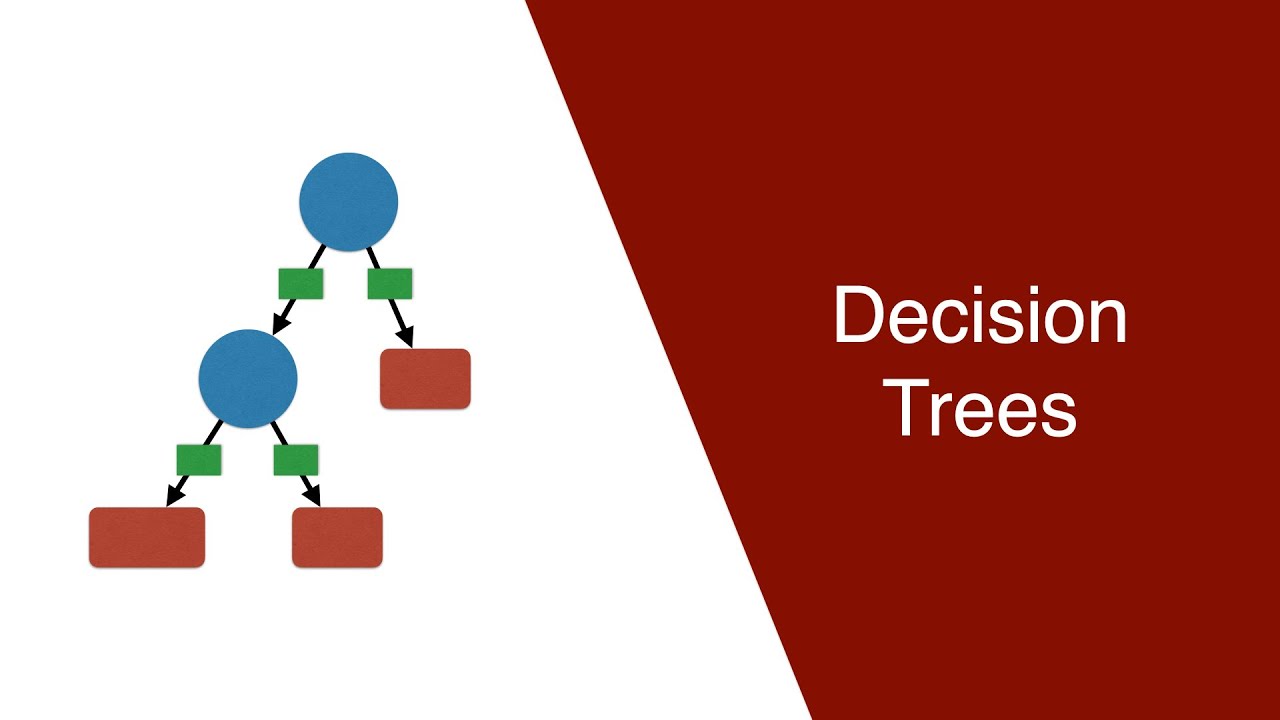
A video about decision trees, and how to train them on a simple example.
Accompanying blog post: https://medium.com/@luis.serra....no/splitting-data-by
For a code implementation, check out this repo:
https://github.com/luisguiserr....ano/manning/tree/mas
Helper videos:
- Gini index: https://www.youtube.com/watch?v=u4IxOk2ijSs
- Entropy and information gain: https://www.youtube.com/watch?v=9r7FIXEAGvs
- Machine learning error and metrics: https://www.youtube.com/watch?v=aDW44NPhNw0
Grokking Machine Learning book:
www.manning.com/books/grokking-machine-learning
40% discount code: serranoyt

For a code implementation, check out this repo:
https://github.com/luisguiserr....ano/manning/tree/mas
Announcement: New Book by Luis Serrano! Grokking Machine Learning. bit.ly/grokkingML
40% discount code: serranoyt
An introduction to support vector machines (SVMs) that requires very little math (no calculus or linear algebra), only a visual mind.
This is the third of a series of three videos.
- Linear Regression: https://www.youtube.com/watch?v=wYPUhge9w5c
- Logistic Regression: https://www.youtube.com/watch?v=jbluHIgBmBo
0:00 Introduction
1:42 Classification goal: split data
3:14 Perceptron algorithm
6:00 Split data - separate lines
7:05 How to separate lines?
12:01 Expanding rate
18:19 Perceptron Error
19:26 SVM Classification Error
20:34 Margin Error
25:13 Challenge - Gradient Descent
27:25 Which line is better?
28:24 The C parameter
30:16 Series of 3 videos
30:30 Thank you!

CORRECTION: At 10:56 we shouldn't divide by 4 to get the covariance, we should divide by 1+1+1+1/3, which is 10/3. That means the covariances are the following:
Var(x) = 1.056
Var(y) = 0.864
Cov(x,y) = 0.768
(Thank you Shivkumar Pippal!)
Mean, variance, covariance, and the covariance matrix for a dataset and a weighted dataset.
Announcement: Book by Luis Serrano! Grokking Machine Learning. bit.ly/grokkingML
40% discount code: serranoyt
0:00 Introduction
0:09 The covariance matrix
2:22 Average
3:23 X-variance
5:06 Problem: Same variances
7:59 Formulas
10:30 Center points
For a code implementation, check out these repos:
https://github.com/luisguiserr....ano/manning/tree/mas
https://github.com/luisguiserr....ano/manning/tree/mas
Announcement: New Book by Luis Serrano! Grokking Machine Learning. bit.ly/grokkingML
40% discount code: serranoyt
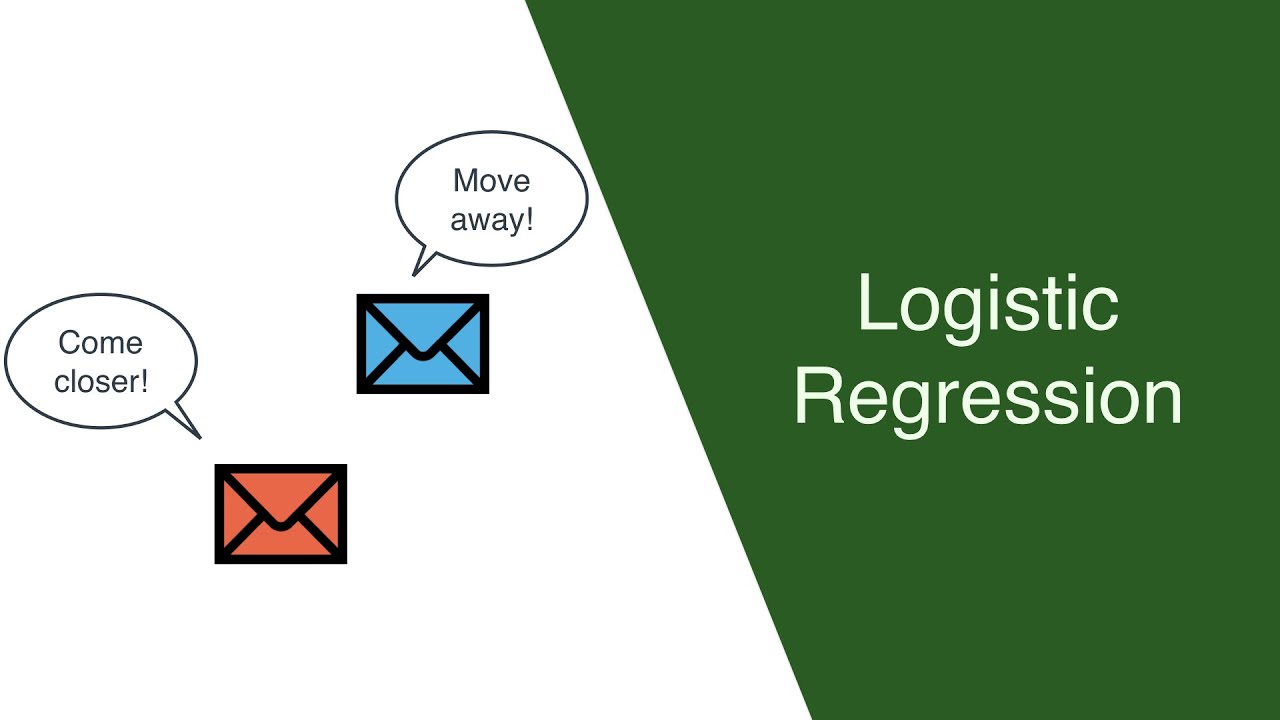
An introduction to logistic regression and the perceptron algorithm that requires very little math (no calculus or linear algebra), only a visual mind.
0:00 Introduction
0:08 Series of 3 videos
0:41 E-mail spam classifier
7:19 Classification goal: split data
11:36 How to move a line
12:21 Rotating and translating
18:47 Perceptron Trick
23:20 Correctly and incorrectly classified points
24:20 Positive and negative regions
27:18 Perceptron Error
29:40 Gradient Descent
34:36 A friendly introduction to deep learning and neural networks
37:48 Activation function (sigmoid)
38:31 Log-Loss Error
41:37 Perceptron Algorithm
42:45 Logistic regression algorithm
44:48 Thank you!

serranosmusicacademy.com

Covariance matrix video: https://youtu.be/WBlnwvjfMtQ
Clustering video: https://youtu.be/QXOkPvFM6NU
A friendly description of Gaussian mixture models, a very useful soft clustering method.
Announcement: New Book by Luis Serrano! Grokking Machine Learning. bit.ly/grokkingML
40% discount code: serranoyt
0:00 Introduction
0:13 Clustering applications
1:56 Hard clustering - soft clustering
3:36 Step 1: Colouring points
6:10 Step 2: Fitting a Gaussian
10:33 Gaussian Mixture Models (GMM)