Top videos
#sponsored Get your 30-day free trial here! https://gohighlevel.com/aimaster
🧠 Get the full agent-building playbook on AI Master → https://aimaster.me/yt/agent_claude
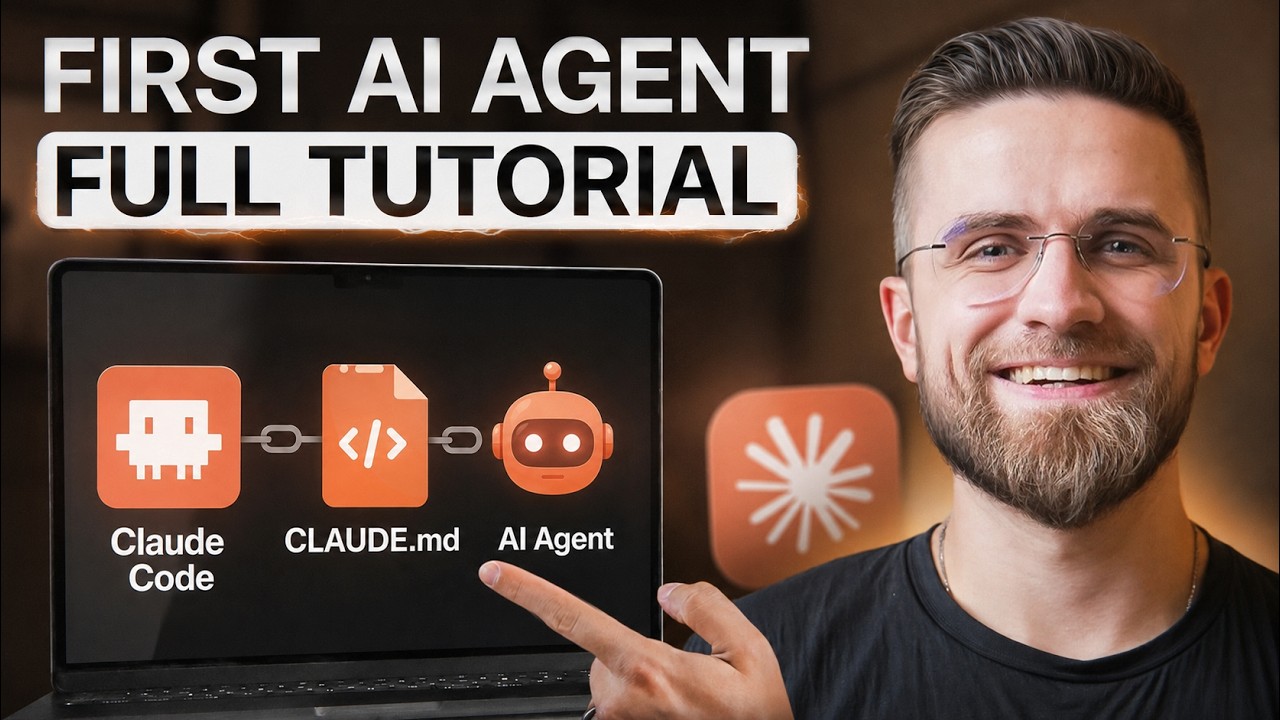
Most people use Claude wrong — they paste a task into chat and call it an agent. A real agent has a process, knows when it's uncertain, and asks before it acts. In this tutorial I show you how to build one with no code, no APIs, no developer setup — just Claude Desktop and a folder on your computer.
We cover the 3 levels of working with Claude, how to set up your Claude Code workspace, why the CLAUDE.md file is the most important piece of the whole system, and how planning mode stops Claude from guessing. Then we build two real agents live. Plus the 5 mistakes that kill most agent builds.
Chapters:
00:20 What an AI Agent Actually Is
03:05 The Three Things That Make an Agent Real
04:32 Setting Up Your Workspace
05:38 CLAUDE.md — The File That Changes Everything
08:11 The Habit That Makes or Breaks Results
10:13 How Agent Systems Are Actually Structured
12:04 Building Your First Real Workflow
13:51 Running the Agent on a Live Task
15:22 Iterating on the Output
16:26 Building a Second Workflow
17:53 The Five Mistakes That Kill Agent Workflows
20:12 Expanding Your Agent Stack Over Tim
#claude #aiagents #claudetutorial #aiautomation #aimaster

"🔥Microsoft Applied Agentic AI: Systems Design & Impact - https://www.simplilearn.com/agentic-ai-course-training?utm_campaign=kk_uZWQAF3A&utm_medium=DescriptionFF&utm_source=Youtube
🔥AI Accelerator Program - From Prompts to Agentic Workflows - https://www.simplilearn.com/ai-accelerator-program?utm_campaign=kk_uZWQAF3A&utm_medium=DescriptionFF&utm_source=Youtube
🔥Microsoft Applied Generative AI and Agentic AI Specialization - https://www.simplilearn.com/microsoft-applied-ai-course?utm_campaign=kk_uZWQAF3A&utm_medium=DescriptionFF&utm_source=Youtube
🔥Virginia Tech Applied Agentic AI: Systems Design & Impact - https://www.simplilearn.com/vt-applied-agentic-ai-course?utm_campaign=kk_uZWQAF3A&utm_medium=DescriptionFF&utm_source=Youtube
🔥Michigan Engineering Generative AI Applications for Leaders - https://www.simplilearn.com/generative-ai-for-business-transformation?utm_campaign=kk_uZWQAF3A&utm_medium=DescriptionFF&utm_source=Youtube"
This video on Agentic AI Full Course 2026 by Simplilearn will help you learn Agentic AI from beginner to advanced level and understand how autonomous AI systems can plan, reason, make decisions, and execute complex tasks with minimal human intervention. The course begins with an introduction to Agentic AI and explains how AI agents differ from traditional AI models by combining reasoning, planning, memory, tool usage, and goal-oriented execution. You will learn key concepts such as AI agents, large language models (LLMs), prompt engineering, Retrieval-Augmented Generation (RAG), tool calling, agent workflows, multi-agent systems, memory management, and orchestration frameworks.
Following are the topics covered in the Agentic AI Full Course 2026
00:00:00 - Introduction To Agentic AI Full Course 2026
00:03:54 - Basics of Agentic AI
00:08:06 - Core Concepts of Agentic AI
00:15:15 - Agentic AI Frameworks & Libraries
00:22:09 - Memory and Long-Term Context
00:30:01 - Planning & Decision Chains
00:36:25 - Advanced Use-Cases of Agentic AI
00:39:48 - Agent Evaluation and Prompt Optimization
00:43:50 - Risks, Ethics, and Future of Agentic AI
00:47:27 - Hands-On Project
04:08:49 - Top Hacks To Speed Up Your AI Coding Workflow
05:51:53 - Generative Adversarial Tutorial
06:52:32 - Emergent AI App Builder Tutorial For Beginners
07:03:58 - Top 5 AI Automation Tools 2026
07:15:15 - How To Build WhatsApp AI Agent Using n8n
08:14:34 - Mobile App Development In 12 Minutes Using AI
09:40:37 - LangSmith Tutorial For Beginners 2026
10:14:58 - LangChain Tutorial For Beginners 2026
11:00:54 - LangGraph vs LangChain vs LangFlow vs LangSmith 2026
11:10:27 - Build LLM Apps Using Langchain
12:37:42 - Build a Chatbot Using Langchain
13:43:40 - What Is Miro And How To Use It?
13:59:30 - MetaGPT Tutorial For Beginners
14:56:55 - Streamlit Tutorial For Beginners
15:23:37 - Prompt Engineering Tutorial For Beginners
15:57:03 - LLM scale and deployment
16:07:26 - Large language models overview
16:14:53 - Features, tokens, and model choice
16:21:24 - AI tools across industries
16:26:32 - Resume and job matching demo
16:37:05 - Prompt engineering fundamentals
16:54:41 - Everyday prompt use cases
17:04:21 - Multimodal AI capabilities
18:19:50 - Key takeaways and next steps
18:26:41 - Effective prompt design principles
19:08:36 - Gen AI For Data Analytics
20:53:11 - Data integrity and EDA setup
21:42:42 - Data modeling with genAI
22:07:34 - Modeling techniques and use cases
23:46:43 - Future trends and wrap-up
24:03:57 - Gen AI Powered SQL For Data Analytics
25:09:42 - ER model fundamentals
26:26:15 - Database commands and basic setup
27:04:37 - Table creation and constraints
28:33:57 - Query logic and aggregation
29:00:27 - SQL functions introduction
30:19:37 - Using ChatGPT for SQL practice
30:22:09 - Agentic AI Projects For Beginners 2026
30:46:15 - What Is GenAI?
30:50:35 - How To Become Generative AI Engineer?
31:00:40 - Generative AI Vs Agentic AI Vs AI Agents
32:37:26 - LLM As Operating System
33:30:16 - LLM Benchmarking
34:46:06 - Prompt engineering with GPT-4
35:41:26 - Vibe coding tools comparison
36:06:01 - Generative AI learning roadmap
36:58:56 - AI for research and content
37:22:52 - Data insights and AI workflows
38:12:03 - Gemini CLI versus Claude Code
38:37:03 - ChatGPT attempts LeetCode problems
40:56:55 - Prompt library foundations
41:11:56 - Reasoning with o1 models
42:57:42 - Prompt library recap
43:56:35 - How To Build AI Automations Using n8n
44:26:47 - How To Build a Self Learning AI Agent
46:20:12 - Top 30 Generative AI Interview Questions 2026
✅Subscribe to our Channel to learn more about the top Technologies: https://bit.ly/2VT4WtH
⏩ Check out More AI Videos By Simplilearn: https://youtube.com/playlist?l....ist=PLEiEAq2VkUULyr_
👉 Enroll Now: https://www.simplilearn.com/applied-ai-course?utm_campaign=kk_uZWQAF3A&utm_medium=Description&utm_source=Youtube

#8k #china #60fps
Best of China 8K HDR Ultra HD - Relaxing nature movie with soothing music
This film was created for educational, entertainment and informative purposes.
Some footage have been originally recorded in 8K resolution and some in 4K. I upscaled all 4K footage to 8K resolution, resulting something new.
This film was re-edited in HDR10 standard and color corrected (high color correction , color grading , adjusted the blacks, adjusted the highlights and the saturation).
To watch this video in real HDR, you should use a HDR television set.
There are a lot of interesting facts that you probably didn’t know.
Shanghai is a financial and cultural hub for the entire world. Shanghai has the longest metro system in the world with 644 km of tunnels and track.
"The Pearl of Asia" and "The Paris of the East" are two nicknames for Shanghai.
Hong Kong is famous for many towering skyscrapers. The tallest skyscraper in Hong Kong is The International Commerce Center. Hong Kong is recognized as the crossroads of East and West.
Hangzhou is a famous tourist destination in this country. One of China's seven historic capitals is Hangzhou. Hangzhou has been known as "Capital of Tea" since ancient times.
#scenicrelaxation #8kvideo #relaxationmusic #relaxationfilm #8kvideoultrahd
------------------------------
🌿Welcome to the new relaxing music stream on Scenic Relaxation 8K channel. You can keep the video at low volume and start doing any work like studying, working, reading… or simply relaxing or getting a good night's sleep.
🌿Music to relax, meditate, study, read, massage, spa or sleep. This type of music is ideal to combat anxiety, stress or insomnia as it facilitates relaxation and helps us to get rid of bad vibrations. You can also use this music as a background for guided meditation classes or sleep relaxation.
🌿If you enjoyed the live stream and want more relaxing music content, don't forget to like and subscribe!
------------------------------
🎹More soothing music on Spotify playlist: https://spoti.fi/38bwOia
Music By:
"---------------------------------------------
🌿 Music by Helios Records:
➤ Spotify Relaxing: https://heliosrecords.fanlink.to/SpotifyRelaxing
➤ Spotify Concentration: https://heliosrecords.fanlink.....to/SpotifyConcentrat
➤ Instagram: https://heliosrecords.fanlink.to/Instagram
➤ Facebook: https://heliosrecords.fanlink.to/Facebook
➤ Tiktok: https://heliosrecords.fanlink.to/Tiktok
➤ SoundCloud: https://heliosrecords.fanlink.to/Soundcloud
---------------------------------------------"
"🌿 Music by Helios Relaxing Space
➤ Spotify: https://spoti.fi/3kJuAy3
🌿 Music by Vincent Carry
➤ Spotify: https://spoti.fi/2ZSgDCA
🌿 Music by Finn
➤ Spotify: https://spoti.fi/3Cm9QCk "
------------------------------
"🌞 For contact and submit music: [email protected]
►All rights belong to their respective owners.
✔ This video was given a special license directly from the artists and the right holders."
A revolution in AI is occurring thanks to progress in deep learning. How far are we towards the goal of achieving human-level AI? What are some of the main challenges ahead?
Yoshua Bengio believes that understanding the basics of AI is within every citizen’s reach. That democratizing these issues is important so that our societies can make the best collective decisions regarding the major changes AI will bring, thus making these changes beneficial and advantageous for all.
___________________________
Yoshua Bengio is one of the pioneers of Deep Learning. He is the head of the Montreal Institute for Learning Algorithms (MILA), Professor at the Université de Montréal, member of the NIPS board and co-founder of Element AI. With a PhD from McGill University (1991, Computer Science) and postdocs at MIT and AT&T Bell Labs, he holds the Canada Research Chair in Statistical Learning Algorithms, is a Senior Fellow of the Canadian Institute for Advanced Research and co-directs its program focused on deep learning. He is best known for his contributions to deep learning, recurrent nets, neural language models, neural machine translation and biologically inspired machine learning.
https://mila.umontreal.ca/en/
https://www.elementai.com/
___________________________
For more information visit http://www.tedxmontreal.com
This talk was given at a TEDx event using the TED conference format but independently organized by a local community. Learn more at https://www.ted.com/tedx
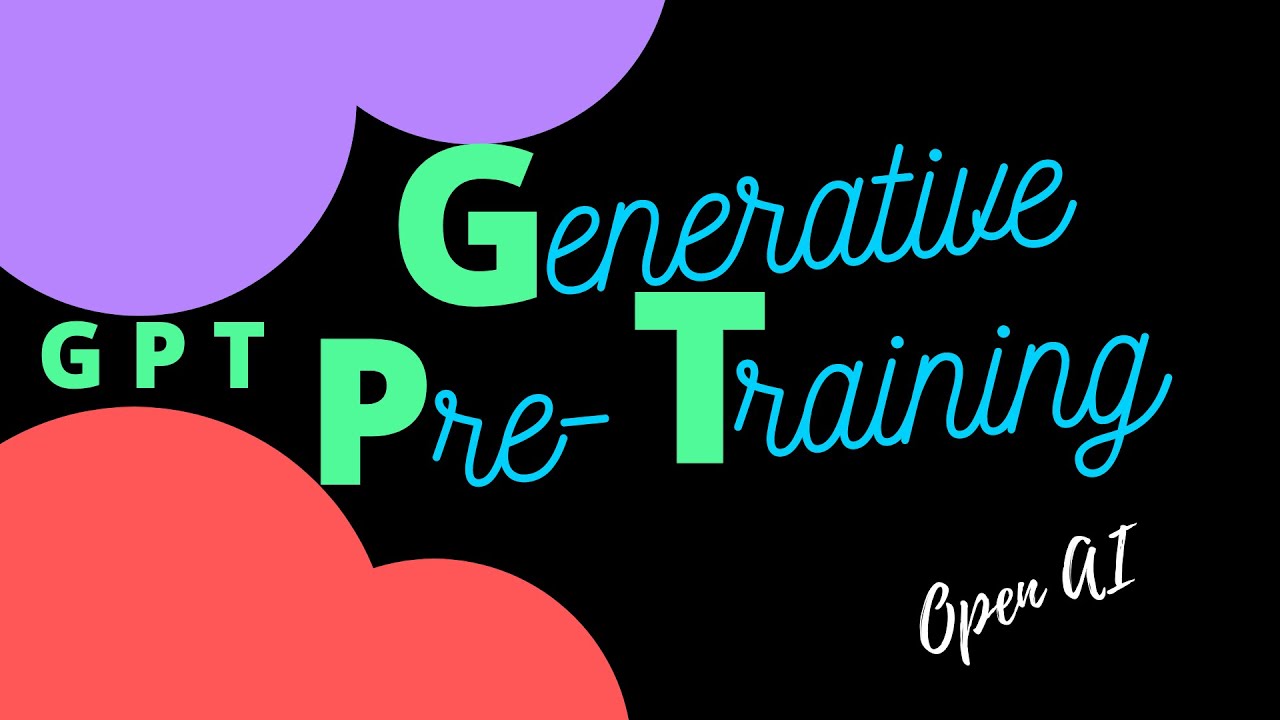
GPT is the first of the papers which proved the effectiveness of unsupervised pre-training for language processing tasks. This video is about GPT-1 which became quite an impactful work in the series of GPT papers that we now have (GPT-2 and GPT-3).
Paper: https://www.cs.ubc.ca/~amuham0....1/LING530/papers/rad
code: https://github.com/openai/finetune-transformer-l
Official OpenAI blog: https://openai.com/blog/language-unsupervised/
Paper Abstract:
Natural language understanding comprises a wide range of diverse tasks suchas textual entailment, question answering, semantic similarity assessment, anddocument classification. Although large unlabeled text corpora are abundant,labeled data for learning these specific tasks is scarce, making it challenging fordiscriminatively trained models to perform adequately. We demonstrate that largegains on these tasks can be realized bygenerative pre-trainingof a language modelon a diverse corpus of unlabeled text, followed bydiscriminative fine-tuningon eachspecific task. In contrast to previous approaches, we make use of task-aware inputtransformations during fine-tuning to achieve effective transfer while requiringminimal changes to the model architecture. We demonstrate the effectiveness ofour approach on a wide range of benchmarks for natural language understanding.Our general task-agnostic model outperforms discriminatively trained models thatuse architectures specifically crafted for each task, significantly improving upon thestate of the art in 9 out of the 12 tasks studied. For instance, we achieve absoluteimprovements of 8.9% on commonsense reasoning (Stories Cloze Test), 5.7% onquestion answering (RACE), and 1.5% on textual entailment (MultiNLI).
AI Bites
YouTube: https://www.youtube.com/c/AIBites
Twitter: https://twitter.com/ai_bites
Patron: https://www.patreon.com/ai_bites
github: https://github.com/ai-bites


🔥 Edureka IoT Certification Training (𝐔𝐬𝐞 𝐂𝐨𝐝𝐞: 𝐘𝐎𝐔𝐓𝐔𝐁𝐄𝟐𝟎) : https://www.edureka.co/search
This "IoT Tutorial For Beginners" video by Edureka will help you grasp the basic concepts of Internet of Things & explains, how IoT is trying to revolutionize the world. This IoT tutorial video helps you to learn following topics:
1. What is Internet of Things
2. Why do we need Internet of Things
3. Benefits of Internet of Things
4. IoT features
5. IoT Demo - Weather Station application using Raspberry Pi and Sense Hat
Subscribe to our Edureka channel to get video updates. Hit the subscribe button above.
#Edureka #EdurekaIoT #Whatisiot #iot #iottutorial #internetofthings #iotonlinetraining #iotforbeginners
For more information, Please write back to us at [email protected] or call us at IND: 9606058406 / US: 18338555775 (toll-free).
Instagram: https://www.instagram.com/edureka_learning/
Facebook: https://www.facebook.com/edurekaIN/
Twitter: https://twitter.com/edurekain
LinkedIn: https://www.linkedin.com/company/edureka
Telegram: https://t.me/edurekaupdates


🔥𝐄𝐝𝐮𝐫𝐞𝐤𝐚 𝐒𝐚𝐥𝐞𝐬𝐟𝐨𝐫𝐜𝐞 𝐂𝐞𝐫𝐭𝐢𝐟𝐢𝐜𝐚𝐭𝐢𝐨𝐧 𝐓𝐫𝐚𝐢𝐧𝐢𝐧𝐠 : https://www.edureka.co/salesfo....rce-administrator-an (𝐔𝐬𝐞 𝐂𝐨𝐝𝐞: 𝐘𝐎𝐔𝐓𝐔𝐁𝐄𝟐𝟎)
This "Salesforce Apex Tutorial for Beginners" video by Edureka will help you understand about salesforce's apex programming language. This video is ideal for beginners and will talk about some of the basic topics in apex programming languages, like classes in apex, datatypes and variables in apex, conditional statements in apex and so on. It will also explain how to write your first apex program:
00:00:00 Introduction
00:01:23 WHAT IS APEX IN SALESFORCE?
00:04:37 WHEN TO CHOOSE APEX?
00:05:56 APEX DEVELOPER ENVIRONMENT
00:12:34 CLASSES IN SALESFORCE
00:16:31 APEX DATATYPE & VARIABLES
00:23:49 KEYWORDS IN APEX
00:26:03 APEX CONDTIONAL STATEMENTS
00:30:13 APEX LOOP STATEMENT
00:34:42 WHAT ARE TRIGGERS IN SALESFORCE?
00:35:22 SYNTAX FOR WRITING A TRIGGER
🔴 Subscribe to our channel to get video updates. Hit the subscribe button above: https://goo.gl/6ohpTV
📝Feel free to share your comments below.📝
🔴 𝐄𝐝𝐮𝐫𝐞𝐤𝐚 𝐎𝐧𝐥𝐢𝐧𝐞 𝐓𝐫𝐚𝐢𝐧𝐢𝐧𝐠 𝐚𝐧𝐝 𝐂𝐞𝐫𝐭𝐢𝐟𝐢𝐜𝐚𝐭𝐢𝐨𝐧𝐬
🔵 DevOps Online Training: http://bit.ly/3VkBRUT
🌕 AWS Online Training: http://bit.ly/3ADYwDY
🔵 React Online Training: http://bit.ly/3Vc4yDw
🌕 Tableau Online Training: http://bit.ly/3guTe6J
🔵 Power BI Online Training: http://bit.ly/3VntjMY
🌕 Selenium Online Training: http://bit.ly/3EVDtis
🔵 PMP Online Training: http://bit.ly/3XugO44
🌕 Salesforce Online Training: http://bit.ly/3OsAXDH
🔵 Cybersecurity Online Training: http://bit.ly/3tXgw8t
🌕 Java Online Training: http://bit.ly/3tRxghg
🔵 Big Data Online Training: http://bit.ly/3EvUqP5
🌕 RPA Online Training: http://bit.ly/3GFHKYB
🔵 Python Online Training: http://bit.ly/3Oubt8M
🌕 Azure Online Training: http://bit.ly/3i4P85F
🔵 GCP Online Training: http://bit.ly/3VkCzS3
🌕 Microservices Online Training: http://bit.ly/3gxYqqv
🔵 Data Science Online Training: http://bit.ly/3V3nLrc
🌕 CEHv12 Online Training: http://bit.ly/3Vhq8Hj
🔵 Angular Online Training: http://bit.ly/3EYcCTe
🔴 𝐄𝐝𝐮𝐫𝐞𝐤𝐚 𝐑𝐨𝐥𝐞-𝐁𝐚𝐬𝐞𝐝 𝐂𝐨𝐮𝐫𝐬𝐞𝐬
🔵 DevOps Engineer Masters Program: http://bit.ly/3Oud9PC
🌕 Cloud Architect Masters Program: http://bit.ly/3OvueZy
🔵 Data Scientist Masters Program: http://bit.ly/3tUAOiT
🌕 Big Data Architect Masters Program: http://bit.ly/3tTWT0V
🔵 Machine Learning Engineer Masters Program: http://bit.ly/3AEq4c4
🌕 Business Intelligence Masters Program: http://bit.ly/3UZPqJz
🔵 Python Developer Masters Program: http://bit.ly/3EV6kDv
🌕 RPA Developer Masters Program: http://bit.ly/3OteYfP
🔵 Web Development Masters Program: http://bit.ly/3U9R5va
🌕 Computer Science Bootcamp Program : http://bit.ly/3UZxPBy
🔵 Cyber Security Masters Program: http://bit.ly/3U25rNR
🌕 Full Stack Developer Masters Program : http://bit.ly/3tWCE2S
🔵 Automation Testing Engineer Masters Program : http://bit.ly/3AGXg2J
🌕 Python Developer Masters Program : https://bit.ly/3EV6kDv
🔵 Azure Cloud Engineer Masters Program: http://bit.ly/3AEBHzH
🔴 𝐄𝐝𝐮𝐫𝐞𝐤𝐚 𝐔𝐧𝐢𝐯𝐞𝐫𝐬𝐢𝐭𝐲 𝐏𝐫𝐨𝐠𝐫𝐚𝐦𝐬
🔵 Post Graduate Program in DevOps with Purdue University: https://bit.ly/3Ov52lT
🌕 Advanced Certificate Program in Data Science with E&ICT Academy, IIT Guwahati: http://bit.ly/3V7ffrh
🔵 Advanced Certificate Program in Cloud Computing with E&ICT Academy, IIT Guwahati: https://bit.ly/43vmME8
📌𝐓𝐞𝐥𝐞𝐠𝐫𝐚𝐦: https://t.me/edurekaupdates
📌𝐓𝐰𝐢𝐭𝐭𝐞𝐫: https://twitter.com/edurekain
📌𝐋𝐢𝐧𝐤𝐞𝐝𝐈𝐧: https://www.linkedin.com/company/edureka
📌𝐈𝐧𝐬𝐭𝐚𝐠𝐫𝐚𝐦: https://www.instagram.com/edureka_learning/
📌𝐅𝐚𝐜𝐞𝐛𝐨𝐨𝐤: https://www.facebook.com/edurekaIN/
📌𝐒𝐥𝐢𝐝𝐞𝐒𝐡𝐚𝐫𝐞: https://www.slideshare.net/EdurekaIN
📌𝐂𝐚𝐬𝐭𝐛𝐨𝐱: https://castbox.fm/networks/505?country=IN
📌𝐌𝐞𝐞𝐭𝐮𝐩: https://www.meetup.com/edureka/
📌𝐂𝐨𝐦𝐦𝐮𝐧𝐢𝐭𝐲: https://www.edureka.co/community/
Please write back to us at [email protected] or call us at IND: 9606058406 / US: 18338555775 (toll-free) for more information.

🔥AI/ML Course for 3-8 Yrs Work Exp: https://l.linklyhq.com/l/1tx6v
🔥AI/ML Course for 0-3 Yrs Work Exp: https://l.linklyhq.com/l/1ugBG
🔥AI/ML Course for 8+ Yrs Work Exp: https://l.linklyhq.com/l/1tx6z
This Deep Learning tutorial will help you in understanding what is Deep learning, why do we need Deep learning, applications of Deep Learning along with a detailed explanation on Neural Networks and how these Neural Networks work. Deep learning is inspired by the integral function of the human brain specific to artificial neural networks. These networks, which represent the decision-making process of the brain, use complex algorithms that process data in a non-linear way, learning in an unsupervised manner to make choices based on the input.
Below topics are explained in this Deep Learning Tutorial:
Start (0:00)
1. What is Deep Learning? ( 02:25 )
2. Why do we need Deep Learning? ( 03:42 )
3. Applications of Deep Learning ( 04:55 )
4. What is Neural Network? ( 11:32 )
5. Activation Functions ( 15:50 )
6. Working of Neural Network ( 26:14 )
Check Out Simplilearn Deep Learning Course here: https://www.simplilearn.com/deep-learning-course-with-tensorflow-training?utm_campaign=What-is-Deep-Learning-FbxTVRfQFuI&utm_medium=Tutorials&utm_source=youtube
📚What is DeepLearning Article: https://bit.ly/30cOWGa
To learn more about Deep Learning, subscribe to our YouTube channel: https://www.youtube.com/user/S....implilearn?sub_confi
You can also go through the Slide here: https://goo.gl/EX98sh
Watch more videos on Deep Learning: https://www.youtube.com/playli....st?list=PLEiEAq2VkUU
#DeepLearning #Datasciencecourse #DataScience #SimplilearnMachineLearning #DeepLearningCourse
We've partnered with Purdue University and collaborated with IBM to offer you the unique Post Graduate Program in AI and Machine Learning. Learn more about it here - https://www.simplilearn.com/ai-and-machine-learning-post-graduate-certificate-program-purdue?utm_campaign=What-is-Deep-Learning-FbxTVRfQFuI&utm_medium=Tutorials&utm_source=youtube
➡️ About Post Graduate Program In AI And Machine Learning
This AI ML course is designed to enhance your career in AI and ML by demystifying concepts like machine learning, deep learning, NLP, computer vision, reinforcement learning, and more. You'll also have access to 4 live sessions, led by industry experts, covering the latest advancements in AI such as generative modeling, ChatGPT, OpenAI, and chatbots.
✅ Key Features
- Post Graduate Program certificate and Alumni Association membership
- Exclusive hackathons and Ask me Anything sessions by IBM
- 3 Capstones and 25+ Projects with industry data sets from Twitter, Uber, Mercedes Benz, and many more
- Master Classes delivered by Purdue faculty and IBM experts
- Simplilearn's JobAssist helps you get noticed by top hiring companies
- Gain access to 4 live online sessions on latest AI trends such as ChatGPT, generative AI, explainable AI, and more
- Learn about the applications of ChatGPT, OpenAI, Dall-E, Midjourney & other prominent tools
✅ Skills Covered
- ChatGPT
- Generative AI
- Explainable AI
- Generative Modeling
- Statistics
- Python
- Supervised Learning
- Unsupervised Learning
- NLP
- Neural Networks
- Computer Vision
- And Many More…
👉 Learn More At:
Learn more at: https://www.simplilearn.com/deep-learning-course-with-tensorflow-training?utm_campaign=What-is-Deep-Learning-FbxTVRfQFuI&utm_medium=Tutorials&utm_source=youtube
🔥Free Artificial Intelligence Course: https://www.simplilearn.com/learn-ai-basics-skillup?utm_campaign=DeepLearning&utm_medium=Description&utm_source=youtube
🔥🔥 Interested in Attending Live Classes? Call Us: IN - 18002127688 / US - +18445327688

🔥Professional Certificate Program in Generative AI and Machine Learning - IITG (India Only) - https://www.simplilearn.com/iitg-generative-ai-machine-learning-program?utm_campaign=7UrC2Jl4tvs&utm_medium=DescriptionFirstFold&utm_source=Youtube
🔥Purdue - Ai And Machine Learning Post Graduate Certificate Program - https://www.simplilearn.com/applied-ai-course?utm_campaign=7UrC2Jl4tvs&utm_medium=DescriptionFirstFold&utm_source=Youtube
Unlock the secrets to rapid skill acquisition with our latest YouTube guide How To USE CHATGPT To LEARN Any SKILL You Want Quickly. Learn the smart strategies and ChatGPT prompts that can turbocharge your learning journey. Whether you're aiming to master a new language, pick up coding, or delve into the arts, this video is your roadmap to success. We'll walk you through creating a personalized learning plan with ChatGPT, leveraging its AI power to simplify complex concepts, and effectively practice for real-world proficiency. No more guesswork - just focused, accelerated learning with the power of prompts. Our step-by-step tutorial ensures that your learning process is efficient, enjoyable, and effective
00:00 How To Use ChatGPT To Learn Any Skill
03:36 Mentorship Through ChatGPT
Utilizing ChatGPT for Accountability
Information Condensation
Knowledge Assessment
Resource Identification for Learning:
Anticipating Learning Challenges
✅Subscribe to our Channel to learn more about the top Technologies: https://bit.ly/2VT4WtH
⏩ Check out More AI Videos By Simplilearn: https://youtube.com/playlist?l....ist=PLEiEAq2VkUULyr_
#HowToUseChatgptToLearnAnySkill #LearnChatgpt #Chatgpt #AITools #AI #GenerativeAI #AIML #MachineLearning #ML #ArtificialIntelligence #AI #Simplilearn
➡️ About Post Graduate Program In AI And Machine Learning
This AI ML course is designed to enhance your career in AI and ML by demystifying concepts like machine learning, deep learning, NLP, computer vision, reinforcement learning, and more. You'll also have access to 4 live sessions, led by industry experts, covering the latest advancements in AI such as generative modeling, ChatGPT, OpenAI, and chatbots.
✅ Key Features
- Post Graduate Program certificate and Alumni Association membership
- Exclusive hackathons and Ask me Anything sessions by IBM
- 3 Capstones and 25+ Projects with industry data sets from Twitter, Uber, Mercedes Benz, and many more
- Master Classes delivered by Purdue faculty and IBM experts
- Simplilearn's JobAssist helps you get noticed by top hiring companies
- Gain access to 4 live online sessions on latest AI trends such as ChatGPT, generative AI, explainable AI, and more
- Learn about the applications of ChatGPT, OpenAI, Dall-E, Midjourney & other prominent tools
✅ Skills Covered
- ChatGPT
- Generative AI
- Explainable AI
- Generative Modeling
- Statistics
- Python
- Supervised Learning
- Unsupervised Learning
- NLP
- Neural Networks
- Computer Vision
- And Many More…
👉 Enroll Now: https://www.simplilearn.com/pgp-ai-machine-learning-certification-training-course?utm_campaign=16Feb2023CHATGPTToLEARNAnySKILLYouWantQuickly&utm_medium=Description&utm_source=youtube
🔥🔥 *Interested in Attending Live Classes? Call Us:* IN - 18002127688 / US - +18445327688
✅ Inspiring Success Stories of Simplilearn's Learners: https://www.simplilearn.com/reviews?utm_campaign=16Feb2023CHATGPTToLEARNAnySKILLYouWantQuickly&utm_medium=Description&utm_source=youtube

Not only have I built hundreds of AI agents myself, I've seen other people build thousands of AI agents for every use case under the sun. The people who are the most successful are the ones who don't overcomplicate it - and I want that to be you too.
It's easy to think building AI agents is super complicated, but honestly you can learn 90% of what you need to know (and what to focus on) from this video. No matter how you're building your agents, I'll show you here what you need to think about, and more importantly what you shouldn't worry about when you're first creating your agent.
~~~~~~~~~~~~~~~~~~~~~~~~~~~~~~~~~~~~~~~~~~~~
Platforms mentioned in this video (most are open source!):
- Synk for automated AI-native app security:
https://snyk.plug.dev/xgmYQhO
- Guardrails AI for agent guardrails:
https://github.com/guardrails-ai/guardrails
- Pydantic AI for the AI Agent framework:
https://ai.pydantic.dev/
- Mem0 for long term memory:
https://mem0.ai
- Langfuse for agent observability:
https://langfuse.com/
- Docker for deployment:
https://www.docker.com/
~~~~~~~~~~~~~~~~~~~~~~~~~~~~~~~~~~~~~~~~~~~~
- If you want to master AI coding assistants and learn how to build systems for reliable and repeatable results, check out the new Agentic Coding Course in Dynamous:
https://dynamous.ai/agentic-coding-course
- Here is the repo for the super simple AI Agent we built in this video:
https://github.com/coleam00/ot....tomator-agents/tree/
- Here is the system prompt template I covered:
https://docs.google.com/docume....nt/d/1-OB4ZMg20pIRVm
~~~~~~~~~~~~~~~~~~~~~~~~~~~~~~~~~~~~~~~~~~~~
Thanks to Snyk for working with me on the security portion of this video! It's been a pleasure and I really do believe Snyk is on the forefront of software/agent/AI coding security especially with their new MCP server:
https://docs.snyk.io/integrati....ons/snyk-studio-agen
~~~~~~~~~~~~~~~~~~~~~~~~~~~~~~~~~~~~~~~~~~~~
00:00 - Master the First 90% of Building AI Agents
01:38 - The 4 Core Components of AI Agents
03:06 - The First 3 Steps of Building an Agent
04:09 - Building a Basic AI Agent Together Live
09:17 - Choosing Your LLM
10:34 - Crafting Your System Prompt
12:20 - Creating Your Tools (Agent Capabilities)
14:26 - AI Agent Security
15:32 - Guardrails AI
16:45 - Snyk MCP Server
19:45 - Managing Agent Context (Memory)
22:05 - Mem0 for Long Term Agent Memory
23:53 - Agent Observability (with Langfuse)
26:28 - Agent Deployment (with Docker)
28:41 - Final Thoughts
~~~~~~~~~~~~~~~~~~~~~~~~~~~~~~~~~~~~~~~~~~~~
Join me as I push the limits of what is possible with AI. I'll be uploading videos weekly - at least every Wednesday at 7:00 PM CDT!

Host your n8n agents on Hostinger: https://www.hostinger.com/david
Use code David ;)
Learn about the best AI Business models here - https://www.youtube.com/watch?v=Ta5g-OxjPO4
Wanna learn how to code with AI? Go here: https://www.skool.com/new-society
Follow me on Instagram - https://www.instagram.com/davidondrej1/
Follow me on Twitter - https://x.com/DavidOndrej1
Subscribe if you're serious about AI.
This is the ultimate guide about AI Agents.
www.vectal.ai

Ready to become a certified watsonx Data Scientist? Register now and use code IBMTechYT20 for 20% off of your exam → https://ibm.biz/BdbvCi
Learn more about AI Agents here → https://ibm.biz/BdbvCj
AI agents are transforming how intelligent systems work 🤖. Deanna Berger explains how Agentic AI, workflow automation, and AI infrastructure enable smarter, autonomous solutions. See how connected agents drive innovation and real‑world impact.
AI news moves fast. Sign up for a monthly newsletter for AI updates from IBM → https://ibm.biz/BdbvCZ
#ai #agenticai #aiagents #automation

Lecture 2: Science and Research
Instructor: John Gabrieli
View the complete course: http://ocw.mit.edu/9-00SCS11
License: Creative Commons BY-NC-SA
More information at http://ocw.mit.edu/terms
More courses at http://ocw.mit.edu

Deep learning currently provides state-of-the-art performance in computer vision, natural language processing, and many other machine learning tasks. In this talk, we will learn when deep learning is useful (and when it isn't!), how to implement some simple neural networks in Python using Theano, and how to build more powerful systems using the OpenDeep package.
Our first model will be the 'hello world' of deep learning - the multilayer perceptron. This model generalizes logistic regression as your typical feed-forward neural net for classification.
Our second model will be an introduction to unsupervised learning with neural nets - the denoising auto-encoder. This model attempts to reconstruct corrupted inputs, learning a useful representation of your input data distribution that can deal with missing values.
Finally, we will explore the modularity of neural nets by implementing an image-captioning system using the the OpenDeep package.
Markus Beissinger
Recent graduate from the Jerome Fisher Program in Management and Technology dual degree program at the University of Pennsylvania (The Wharton School and the School of Engineering and Applied Science), and current Master's student in computer science. Focus on machine learning, startups, and management.
Slides: http://goo.gl/P9QGnV


The video focuses how to get started but particularly on the prompt engineering part to give you ideas and inspiration to what you can explore. Since Stable Diffusion was released couple of days ago this has been incorporated into MidJourney too which you can access by "—beta" argument which supposedly helps with face quality.
Resources mentioned:
https://github.com/willwulfken..../MidJourney-Styles-a
https://pitch.com/v/DALL-E-prompt-book-v1-tmd33y
https://docs.google.com/docume....nt/d/11WlzjBT0xRpQhP
Timestamps:
0:00 - Introduction to MJ and what you can do
8:17 - Resources for prompt inspiration
12:30 - How to iterate on the prompt/caption (prompt engineering)
29:40 - Other arguments you can use
32:26 - Final images result
33:25 - Ending
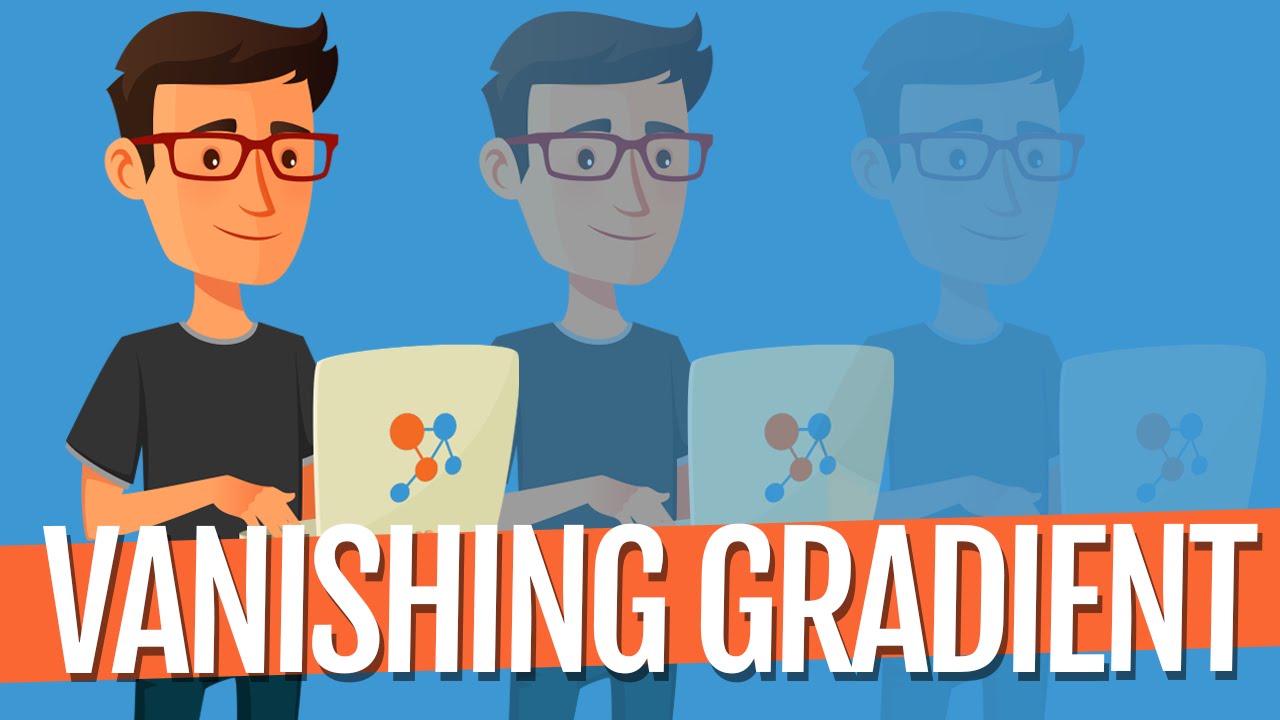
If deep neural networks are so powerful, why aren’t they used more often? The reason is that they are very difficult to train due to an issue known as the vanishing gradient.
Deep Learning TV on
Facebook: https://www.facebook.com/DeepLearningTV/
Twitter: https://twitter.com/deeplearningtv
To train a neural network over a large set of labelled data, you must continuously compute the difference between the network’s predicted output and the actual output. This difference is called the cost, and the process for training a net is known as backpropagation, or backprop. During backprop, weights and biases are tweaked slightly until the lowest possible cost is achieved. An important aspect of this process is the gradient, which is a measure of how much the cost changes with respect to a change in a weight or bias value.
Backprop suffers from a fundamental problem known as the vanishing gradient. During training, the gradient decreases in value back through the net. Because higher gradient values lead to faster training, the layers closest to the input layer take the longest to train. Unfortunately, these initial layers are responsible for detecting the simple patterns in the data, while the later layers help to combine the simple patterns into complex patterns. Without properly detecting simple patterns, a deep net will not have the building blocks necessary to handle the complexity. This problem is the equivalent of to trying to build a house without the proper foundation.
Have you ever had this difficulty while using backpropagation? Please comment and let me know your thoughts.
So what causes the gradient to decay back through the net? Backprop, as the name suggests, requires the gradient to be calculated first at the output layer, then backwards across the net to the first hidden layer. Each time the gradient is calculated, the net must compute the product of all the previous gradients up to that point. Since all the gradients are fractions between 0 and 1 – and the product of fractions in this range results in a smaller fraction – the gradient continues to shrink.
For example, if the first two gradients are one fourth and one third, then the next gradient would be one fourth of one third, which is one twelfth. The following gradient would be one twelfth of one fourth, which is one forty-eighth, and so on. Since the layers near the input layer receive the smallest gradients, the net would take a very long time to train. As a subsequent result, the overall accuracy would suffer.
Credits
Nickey Pickorita (YouTube art) -
https://www.upwork.com/freelan....cers/~0147b8991909b2
Isabel Descutner (Voice) -
https://www.youtube.com/user/IsabelDescutner
Dan Partynski (Copy Editing) -
https://www.linkedin.com/in/danielpartynski
Jagannath Rajagopal (Creator, Producer and Director) -
https://ca.linkedin.com/in/jagannathrajagopal