Latest videos

Learn more:
https://developer.movidius.com/
https://software.intel.com/en-us/ai-academy
https://www.youtube.com/user/intelswnetwork
Subscribe here: https://goo.gl/9FS8uF
Become a Patron!: https://www.patreon.com/ColdFusion_TV
CF Bitcoin address: 13SjyCXPB9o3iN4LitYQ2wYKeqYTShPub8
Hi, welcome to ColdFusion (formerly known as ColdfusTion).
Experience the cutting edge of the world around us in a fun relaxed atmosphere.
Sources:
https://qz.com/1034972/the-dat....a-that-changed-the-d
http://usblogs.pwc.com/emergin....g-technology/top-10-
https://medium.com/nurture-ai/....keeping-up-with-the-
Dancing AI: https://youtu.be/PCBTZh41Ris
https://arxiv.org/abs/1808.07371
Wifi signal mapping:
http://rfpose.csail.mit.edu/
Motion transfer Animals in video games:
http://homepages.inf.ed.ac.uk/tkomura/dog.pdf
Neural Network Arm:
https://www.youtube.com/watch?v=txHQoYKaSUk
http://vpg.cs.princeton.edu/
Nvidia super slow motion:
https://people.cs.umass.edu/~h....zjiang//projects/sup
https://www.youtube.com/watch?v=MjViy6kyiqs
Shout out to 2 minute papers who covers the latest in AI research. Check him out here:
https://www.youtube.com/channe....l/UCbfYPyITQ-7l4upoX
//Soundtrack//
**coming soon**
» ColdFusion Book "New Thinking" |
https://newthinkingbook.squarespace.com/about/
» Facebook | https://www.facebook.com/ColdFusionTV
» My music | http://burnwater.bandcamp.com or
» http://www.soundcloud.com/burnwater
» https://www.patreon.com/ColdFusion_TV
» Collection of music used in videos: https://www.youtube.com/watch?v=YOrJJKW31OA
Producer: Dagogo Altraide
» Twitter | @ColdFusion_TV

In this video, I am building Deep Learning PC build from scratch. Now just a disclaimer, in order to learn deep learning you don't need to have such an expensive setup. Whatever laptop or personal computer you have should still work ok. If you have a requirements for running heavy jobs, you can utilize cloud for that. For me, NVIDIA gave 2500$ Titan RTX GPU for free and than I spent close to 1000$ for other parts to build this PC. My plan is to run some heavy deep learning jobs on this computer and I will be making videos on that in future.
Special thanks to my nephew (Harsh Patel) who helped me a lot during entire PC build process. Thanks Harsh! :)
Do you want to learn technology from me? Check https://codebasics.io/ for my affordable video courses.
PC Parts
========
Processor: AMD Ryzen 7 3700 8-Core
Motherboard: Asus ROG Strix B450-F Gaming Motherboard
GPU: NVIDIA Titan RTX
SSD: Sabrent Rocket Q 1TB SSD
Power Supply: Thermaltake 650 W power supply
32 GB RAM
Cooling Graphite Thermal Pad (To keep the CPU cool)
BenQ 27 inch monitor
Thermaltake V200 Tempered Glass Case (Cabin)
Magnetic LED strip (for inside lighting)
Wireless keyboard and mouse
Website: https://codebasics.io/
Facebook: https://www.facebook.com/codebasicshub
Twitter: https://twitter.com/codebasicshub
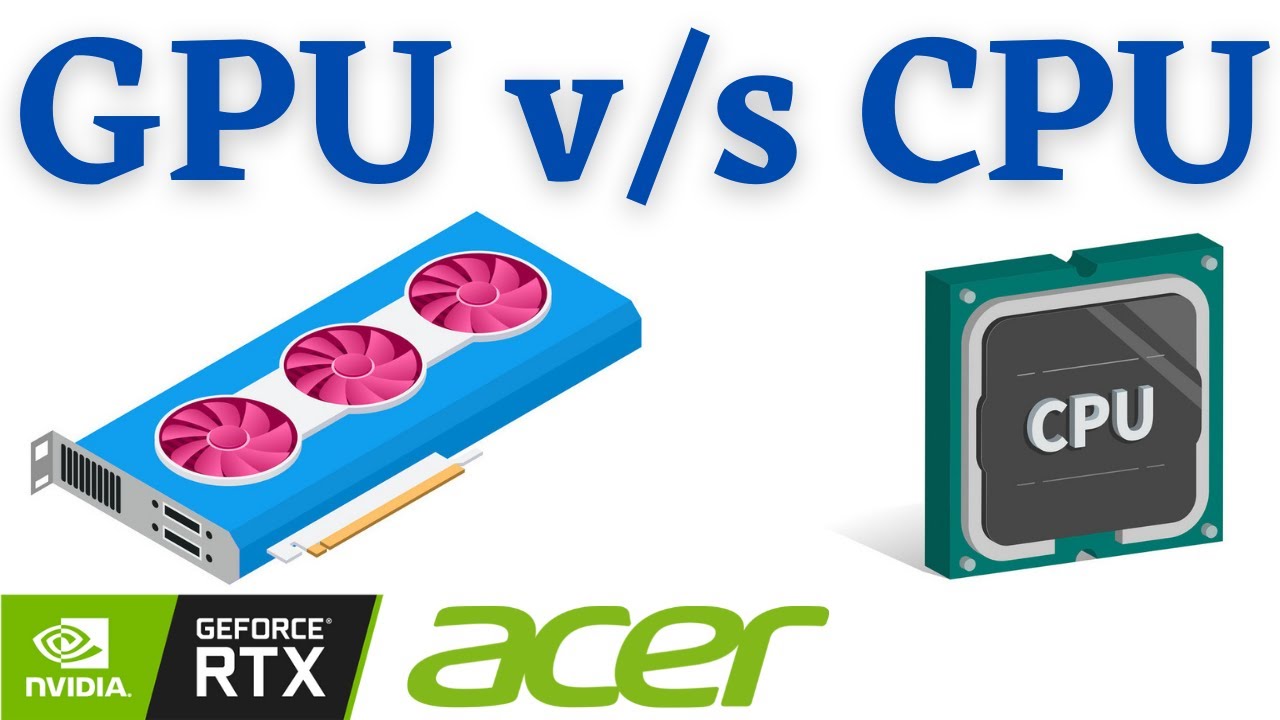
NVIDIA GeForce RTX 3050 GPU on Acer Nitro 5 vs CPU performance comparison. Thanks To Acer & NVIDIA for sharing this amazing laptop.If you're thinking of getting an RTX Laptop, then NVIDIA is also providing an amazing opportunity for Students, if you purchase an RTX Laptop then you can avail a Deep Learning Instructor-Led Certification Course from Deep Learning Institute which will give you a head start in your Deep Learning Career.
▶ Learn more about the offer here : https://amzn.to/33DqTV0
▶ Follow NVIDIA GeForce India at - https://www.facebook.com/NVIDIAGeForceIN
▶ Sponsor me on GitHub : https://github.com/sponsors/bhattbhavesh91/
▶ Join this channel to get access to perks: https://bit.ly/BhaveshBhattJoin
▶ Join the Telegram channel for regular updates: https://t.me/bhattbhavesh91
▶ If you like my work, you can buy me a coffee : https://bit.ly/BuyBhaveshCoffee
*I use affiliate links on the products that I recommend. These give me a small portion of the sales price at no cost to you. I appreciate the proceeds and they help me to improve my channel!
▶ Best Book for Python : https://amzn.to/3qYThqu
▶ Best Book for Statistics : https://amzn.to/3vzvHEn
▶ Best Book for BERT: https://amzn.to/3lpX0fz
▶ Best Book for Machine Learning : https://amzn.to/2P6aZuT
▶ Best Book for Deep Learning : https://amzn.to/30UMTGl
▶ Best Intro Book for MLOps : https://amzn.to/3AoPZmM
Equipments I use for recording the videos:
▶ 1st Laptop I use : https://amzn.to/3AqI8Fp
▶ 2nd Laptop I use : https://amzn.to/3KAiYsB
▶ Microphone : https://amzn.to/3qUPxtz
▶ Camera : https://amzn.to/3rKQsM2
▶ Mobile Phone : https://amzn.to/3nRHP1f
▶ Ring Light : https://amzn.to/33LedM5
▶ RGB Light : https://amzn.to/3KzLgmS
▶ Bag I use : https://amzn.to/3AsM3RZ
If you do have any questions with what we covered in this video then feel free to ask in the comment section below & I'll do my best to answer those.
If you enjoy these tutorials & would like to support them then the easiest way is to simply like the video & give it a thumbs up & also it's a huge help to share these videos with anyone who you think would find them useful.
Please consider clicking the SUBSCRIBE button to be notified for future videos & thank you all for watching.
You can find me on:
▶ Blog - https://bhattbhavesh91.github.io
▶ Twitter - https://twitter.com/_bhaveshbhatt
▶ GitHub - https://github.com/bhattbhavesh91
▶ Medium - https://medium.com/@bhattbhavesh91
▶ About.me - https://about.me/bhattbhavesh91
▶ Linktree - https://linktr.ee/bhattbhavesh91
▶ DEV Community - https://dev.to/bhattbhavesh91
▶ Telegram - https://t.me/bhattbhavesh91
#NVIDIA #RTX3050

🔥Edureka Tensorflow Training - https://www.edureka.co/ai-deep....-learning-with-tenso
This video on "Python for Deep Learning" will provide you with detailed and comprehensive knowledge of Deep Learning, How it came into emergence. The various subparts of Data Science, how they are related, and How Deep Learning is revolutionalizing the world we live in.
🔴Subscribe to our channel to get video updates. Hit the subscribe button above: https://goo.gl/6ohpTV
------------------------------------Edureka Online Training and Certification---------------------------------
🔵 DevOps Online Training: https://bit.ly/2BPwXf0
🟣 Python Online Training: https://bit.ly/2CQYGN7
🔵 AWS Online Training: https://bit.ly/2ZnbW3s
🟣 RPA Online Training: https://bit.ly/2Zd0ac0
🔵 Data Science Online Training: https://bit.ly/2NCT239
🟣 Big Data Online Training: https://bit.ly/3g8zksu
🔵 Java Online Training: https://bit.ly/31rxJcY
🟣 Selenium Online Training: https://bit.ly/3dIrh43
🔵 PMP Online Training: https://bit.ly/3dJxMTW
🟣 Tableau Online Training: https://bit.ly/3g784KJ
-----------------------------------------Edureka Masters Programs---------------------------------------------------
🔵DevOps Engineer Masters Program: https://bit.ly/2B9tZCp
🟣Cloud Architect Masters Program: https://bit.ly/3i9z0eJ
🔵Data Scientist Masters Program: https://bit.ly/2YHaolS
🟣Big Data Architect Masters Program: https://bit.ly/31qrOVv
🔵Machine Learning Engineer Masters Program: https://bit.ly/388NXJi
🟣Business Intelligence Masters Program: https://bit.ly/2BPLtn2
🔵Python Developer Masters Program: https://bit.ly/2Vn7tgb
🟣RPA Developer Masters Program: https://bit.ly/3eHwPNf
-----------------------------------------Edureka PGP Courses---------------------------------------------------
🔵Artificial and Machine Learning PGP: https://bit.ly/2Ziy7b1
🟣CyberSecurity PGP: https://bit.ly/3eHvI0h
🔵Digital Marketing PGP: https://bit.ly/38cqdnz
🟣Big Data Engineering PGP: https://bit.ly/3eTSyBC
🔵Data Science PGP: https://bit.ly/3dIeYV9
🟣Cloud Computing PGP: https://bit.ly/2B9tHLP
-----------------------------------------------------------------
Twitter: https://twitter.com/edurekain
LinkedIn: https://www.linkedin.com/company/edureka
Instagram: https://www.instagram.com/edureka_lea...
Facebook: https://www.facebook.com/edurekaIN/
SlideShare: https://www.slideshare.net/EdurekaIN
Castbox: https://castbox.fm/networks/505?count...
Meetup: https://www.meetup.com/edureka/
#edureka #DeepLearningEdureka #DeepLearningwithPython #DeepLearning #Pythontutorial #Pythononlinetraining #Pythonforbeginners
---------------------------------------------------------------
How it Works?
1. This is 21 hrs of Online Live Instructor-led course. Weekend class: 7 sessions of 3 hours each.
2. We have a 24x7 One-on-One LIVE Technical Support to help you with any problems you might face or any clarifications you may require during the course.
3. At the end of the training you will have to undergo a 2-hour LIVE Practical Exam based on which we will provide you a Grade and a Verifiable Certificate!
- - - - - - - - - - - - - -
About the Course
Edureka's Deep learning with Tensorflow course will help you to learn the basic concepts of TensorFlow, the main functions, operations and the execution pipeline. Starting with a simple “Hello Word” example, throughout the course you will be able to see how TensorFlow can be used in curve fitting, regression, classification and minimization of error functions. This concept is then explored in the Deep Learning world. You will evaluate the common, and not so common, deep neural networks and see how these can be exploited in the real world with complex raw data using TensorFlow. In addition, you will learn how to apply TensorFlow for backpropagation to tune the weights and biases while the Neural Networks are being trained. Finally, the course covers different types of Deep Architectures, such as Convolutional Networks, Recurrent Networks and Autoencoders.
- - - - - - - - - - - - - -
Who should go for this course?
The following professionals can go for this course:
1. Developers aspiring to be a 'Data Scientist'
2. Analytics Managers who are leading a team of analysts
3. Business Analysts who want to understand Deep Learning (ML) Techniques
4. Information Architects who want to gain expertise in Predictive Analytics
5. Professionals who want to captivate and analyze Big Data
6. Analysts wanting to understand Data Science methodologies
- - - - - - - - - - - - - -
For more information, please write back to us at [email protected] or call us at IND: 9606058406 / US: 18338555775 (toll-free).
This video explains Artificial Intelligence, Machine Learning, Neural Networks, Deep Learning & Computer Vision for beginners. This is the first video of our tutorial series about Artificial intelligence for beginners that gives a basic introduction to the field of AI and Computer Vision.
The first use of the phrase “Artificial Intelligence”: https://www.aaai.org/ojs/index.....php/aimagazine/arti
✅Artificial Intelligence, or AI, is the science and engineering of making machines learn, think, and act like humans.
✅Machine Learning is a sub-field of AI where machines learn directly from data instead of hand-coded rules.
✅Deep Learning is a sub-field of Machine Learning where machines learn using Deep Neural Networks.
✅And finally, Computer Vision is the science and engineering of interpreting visual data. Many Computer Vision problems are solved using AI, but many others are not.
❓FAQ
What are artificial intelligence, machine learning, and deep learning?
What are artificial intelligence and machine vision?
What is artificial intelligence in machine learning?
Is computer vision artificial intelligence or machine learning?
⭐️Time Stamps⭐️
0:00-0:34 : Introduction
0:34-0:46 : What is Artificial Intelligence
0:46-1:11 : Early AI techniques
1:11-1:28 : What is Machine Learning
1:28-2:31 : What is Neural Network
2:31-2:38 : What is Deep Learning
2:38-3:49 : What is Computer Vision
3:49-4:46 : Summary
🖥️ On our blog - https://learnopencv.com we also share tutorials and code on topics like Image Processing, Image Classification, Object Detection, Face Detection, Face Recognition, YOLO, Segmentation, Pose Estimation, and many more using OpenCV(Python/C++), PyTorch, and TensorFlow.
🤖 Learn from the experts on AI: Computer Vision and AI Courses
YOU have an opportunity to join the over 5300+ (and counting) researchers, engineers, and students that have benefited from these courses and take your knowledge of computer vision, AI, and deep learning to the next level.🤖
https://opencv.org/courses
#️⃣ Social Media #️⃣
📝 Linkedin: https://www.linkedin.com/in/satyamall...
📱 Twitter: https://twitter.com/LearnOpenCV
🔊 Facebook: https://www.facebook.com/profile.php?...
📸 Instagram: https://www.instagram.com/learnopencv/
🔗 Reddit: https://www.reddit.com/user/spmallick
🔖Hashtags🔖
#AI #machinelearning #deeplearning #computervision #deeplearningai #deeplearningtutorial #computerscience #opencv #machinelearningbasics #artificialintelligencecoachingcenter #learnopencv

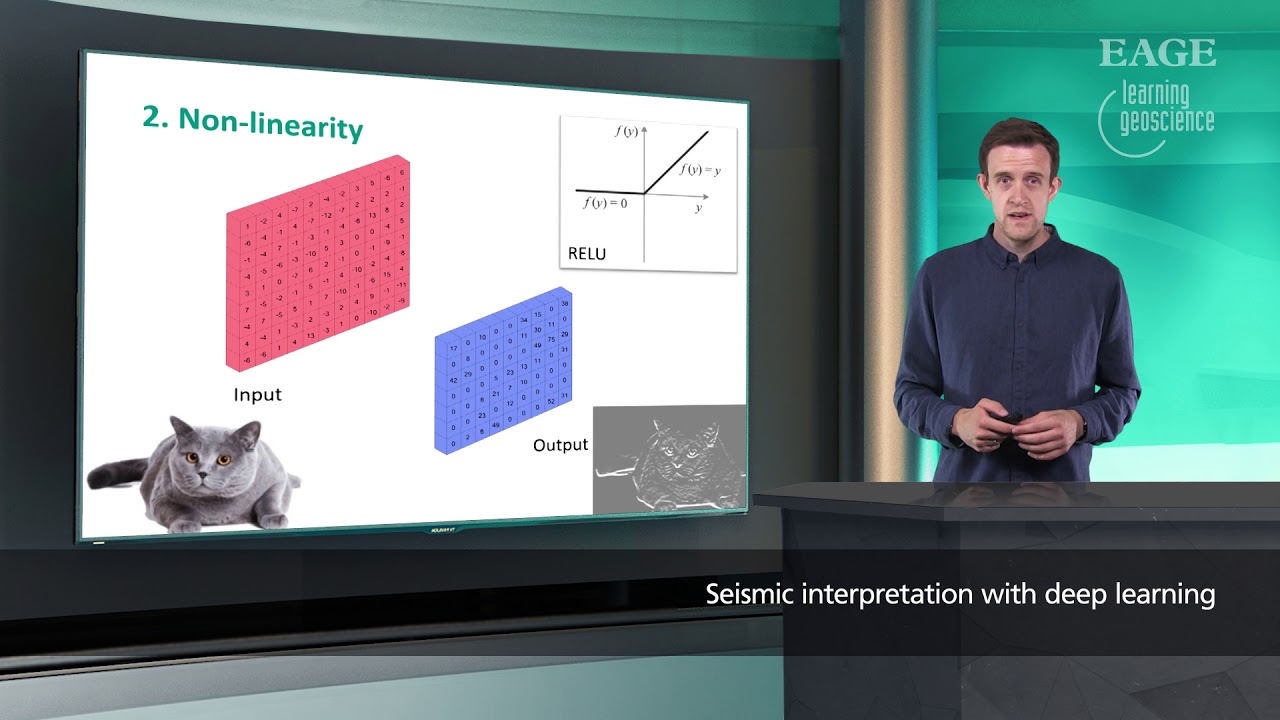
ReLU stands for the rectified linear unit and is a type of activation function. Mathematically, it is defined as y = max(0, x). ReLU is the most commonly used activation function in neural networks, especially in CNNs. If you are unsure what activation function to use in your network, ReLU is usually a good first choice. #DeepLearning #ReLU #LeakyReLU
𝑫𝒆𝒆𝒑 𝑳𝒆𝒂𝒓𝒏𝒊𝒏𝒈 👉 https://www.youtube.com/playli....st?list=PLPN-43Xehst
𝑴𝒂𝒄𝒉𝒊𝒏𝒆 𝑳𝒆𝒂𝒓𝒏𝒊𝒏𝒈 👉https://www.youtube.com/playli....st?list=PLPN-43Xehst
𝑨𝒓𝒕𝒊𝒇𝒊𝒄𝒊𝒂𝒍 𝑰𝒏𝒕𝒆𝒍𝒍𝒊𝒈𝒆𝒏𝒄𝒆 👉https://www.youtube.com/playli....st?list=PLPN-43Xehst
𝑪𝒍𝒐𝒖𝒅 𝑪𝒐𝒎𝒑𝒖𝒕𝒊𝒏𝒈 👉https://www.youtube.com/playli....st?list=PLPN-43Xehst
𝑾𝒊𝒓𝒆𝒍𝒆𝒔𝒔 𝑻𝒆𝒄𝒉𝒏𝒐𝒍𝒐𝒈𝒚 👉https://www.youtube.com/playli....st?list=PLPN-43Xehst
𝑫𝒂𝒕𝒂 𝑴𝒊𝒏𝒊𝒏𝒈 👉https://www.youtube.com/playli....st?list=PLPN-43Xehst
𝑺𝒊𝒎𝒖𝒍𝒂𝒕𝒊𝒐𝒏 𝑴𝒐𝒅𝒆𝒍𝒊𝒏𝒈 👉https://www.youtube.com/playli....st?list=PLPN-43Xehst
𝑩𝒊𝒈 𝑫𝒂𝒕𝒂 👉https://www.youtube.com/playli....st?list=PLPN-43Xehst
𝑩𝒍𝒐𝒄𝒌𝒄𝒉𝒂𝒊𝒏 𝑻𝒆𝒄𝒉𝒏𝒐𝒍𝒐𝒈𝒚 👉https://www.youtube.com/playli....st?list=PLPN-43Xehst
𝑰𝑶𝑻 👉https://www.youtube.com/playli....st?list=PLPN-43Xehst
𝓕𝓸𝓵𝓵𝓸𝔀 𝓶𝓮 𝓸𝓷 𝓘𝓷𝓼𝓽𝓪𝓰𝓻𝓪𝓶 👉 https://www.instagram.com/adhyapakh/
𝓥𝓲𝓼𝓲𝓽 𝓶𝔂 𝓟𝓻𝓸𝓯𝓲𝓵𝓮 👉 https://www.linkedin.com/in/reng99/
𝓢𝓾𝓹𝓹𝓸𝓻𝓽 𝓶𝔂 𝔀𝓸𝓻𝓴 𝓸𝓷 𝓟𝓪𝓽𝓻𝓮𝓸𝓷 👉 https://www.patreon.com/ranjiraj
𝓖𝓲𝓽𝓗𝓾𝓫👉 https://github.com/ranjiGT

When Geoffrey Hinton, a researcher at Google and professor emeritus at the University of Toronto, began his work in deep learning in the 1970s, he was told he would spend his life toiling away in obscurity. Deep learning is a form of artificial intelligence that mimics the human brain. Now, four decades later, his research is revolutionizing AI. He joins The Agenda to discuss his work and what kept him going.

Credits
Research Paper: https://arxiv.org/pdf/1409.0473.pdf
Please donate if you want to support the channel through GPay UPID,
Gpay: krishnaik06@okicici
Discord Server Link: https://discord.gg/tvAJuuy
Telegram link: https://t.me/joinchat/N77M7xRvYUd403DgfE4TWw
Please join as a member in my channel to get additional benefits like materials in Data Science, live streaming for Members and many more
https://www.youtube.com/channe....l/UCNU_lfiiWBdtULKOw
Please do subscribe my other channel too
https://www.youtube.com/channe....l/UCjWY5hREA6FFYrthD
Connect with me here:
Twitter: https://twitter.com/Krishnaik06
Facebook: https://www.facebook.com/krishnaik06
instagram: https://www.instagram.com/krishnaik06
A revolution in AI is occurring thanks to progress in deep learning. How far are we towards the goal of achieving human-level AI? What are some of the main challenges ahead?
Yoshua Bengio believes that understanding the basics of AI is within every citizen’s reach. That democratizing these issues is important so that our societies can make the best collective decisions regarding the major changes AI will bring, thus making these changes beneficial and advantageous for all.
___________________________
Yoshua Bengio is one of the pioneers of Deep Learning. He is the head of the Montreal Institute for Learning Algorithms (MILA), Professor at the Université de Montréal, member of the NIPS board and co-founder of Element AI. With a PhD from McGill University (1991, Computer Science) and postdocs at MIT and AT&T Bell Labs, he holds the Canada Research Chair in Statistical Learning Algorithms, is a Senior Fellow of the Canadian Institute for Advanced Research and co-directs its program focused on deep learning. He is best known for his contributions to deep learning, recurrent nets, neural language models, neural machine translation and biologically inspired machine learning.
https://mila.umontreal.ca/en/
https://www.elementai.com/
___________________________
For more information visit http://www.tedxmontreal.com
This talk was given at a TEDx event using the TED conference format but independently organized by a local community. Learn more at https://www.ted.com/tedx

⭐ Kite is a free AI-powered coding assistant that will help you code faster and smarter. The Kite plugin integrates with all the top editors and IDEs to give you smart completions and documentation while you’re typing. I've been using Kite for a few months and I love it! https://www.kite.com/get-kite/?utm_medium=referral&utm_source=youtube&utm_campaign=krishnaik&utm_content=description-only
All Playlist In My channel
Interview Playlist: https://www.youtube.com/playli....st?list=PLZoTAELRMXV
Complete DL Playlist: https://www.youtube.com/watch?v=9jA0KjS7V_c&list=PLZoTAELRMXVPGU70ZGsckrMdr0FteeRUi
Julia Playlist: https://www.youtube.com/watch?v=Bxp1YFA6M4s&list=PLZoTAELRMXVPJwtjTo2Y6LkuuYK0FT4Q-
Complete ML Playlist :https://www.youtube.com/playli....st?list=PLZoTAELRMXV
Complete NLP Playlist:https://www.youtube.com/playli....st?list=PLZoTAELRMXV
Docker End To End Implementation: https://www.youtube.com/playli....st?list=PLZoTAELRMXV
Live stream Playlist: https://www.youtube.com/playli....st?list=PLZoTAELRMXV
Machine Learning Pipelines: https://www.youtube.com/playli....st?list=PLZoTAELRMXV
Pytorch Playlist: https://www.youtube.com/playli....st?list=PLZoTAELRMXV
Feature Engineering :https://www.youtube.com/playli....st?list=PLZoTAELRMXV
Live Projects :https://www.youtube.com/playli....st?list=PLZoTAELRMXV
Kaggle competition :https://www.youtube.com/playli....st?list=PLZoTAELRMXV
Mongodb with Python :https://www.youtube.com/playli....st?list=PLZoTAELRMXV
MySQL With Python :https://www.youtube.com/playli....st?list=PLZoTAELRMXV
Deployment Architectures:https://www.youtube.com/playli....st?list=PLZoTAELRMXV
Amazon sagemaker :https://www.youtube.com/playli....st?list=PLZoTAELRMXV
Please donate if you want to support the channel through GPay UPID,
Gpay: krishnaik06@okicici
Telegram link: https://t.me/joinchat/N77M7xRvYUd403DgfE4TWw
Please join as a member in my channel to get additional benefits like materials in Data Science, live streaming for Members and many more
https://www.youtube.com/channe....l/UCNU_lfiiWBdtULKOw
Please do subscribe my other channel too
https://www.youtube.com/channe....l/UCjWY5hREA6FFYrthD
Connect with me here:
Twitter: https://twitter.com/Krishnaik06
Facebook: https://www.facebook.com/krishnaik06
instagram: https://www.instagram.com/krishnaik06

Code generated in the video can be downloaded from here: https://github.com/bnsreenu/py....thon_for_microscopis

LSTM model can train a deep neural network to classify sequence data. An #LSTM network allows us to feed sequence data into a system and identify conclusions based on the sequences data's distinct time steps. Access premium content at https://matlabhelper.com/cours....e/deeplearning-m2c3l or Buy & Download MATLAB Code from https://matlabhelper.com/cart/?add-to-cart=16336
00:00 Introduction
00:38 About LSTM network
01:00 Loading of data
01:15 Time series analysis
03:48 Training of network
#Deep #learning is a subset of machine learning where artificial neural networks, algorithms inspired by the human brain, learn from extensive data. Like how we learn from experience, the deep learning algorithm would repeatedly perform a task, each time tweaking it a little to improve the outcome. MATLAB makes deep learning easy. Learn how to create and train #neural #network architectures, including #Convolutional Neural Networks, #Recurrent Neural Networks, #LSTMs, etc., with MATLAB Helper. Enroll today to begin your journey toward becoming a Deep Learning Expert! Book our premium online course at https://mlhp.link/DeepLearning & get access to MATLAB codes, explanations, and support files. Want to see more #DeepLearning videos? Watch playlist: https://www.youtube.com/playli....st?list=PLmyWlxlLCcz
If you found this video helpful, Like, Comment & Share it. Make sure to Subscribe to our YouTube Channel. You can buy Super Thanks and show your support to this video and our channel.
If you are looking for #Expert Help, a paid service, then share your requirement on website chat at https://mlhp.link/services or email at [email protected] with your service preference, timeline, and any necessary attachments. We provide live sessions & offline work on #MATLAB & #Simulink Projects, including Homework, Assignment, Thesis, and #Research.
Join #training module of MATLAB Associate, MATLAB Professional, Simulink Fundamental, Image Processing, Arduino Interfacing, AppDesigner, or Machine Learning and get trained from #Mathworks Certified MATLAB Associate & Experts. Get training syllabus & proposal from https://mlhp.link/training
Explore our learning portal at https://mlhp.link/lms
Join a self-paced online #course at https://mlhp.link/courses
Participate in our #quiz & contests at https://mlhp.link/quiz
Watch and learn from our #webinar at https://mlhp.link/live
WhatsApp us at +91-8104622179 or https://mlhp.link/WhatsApp
Follow us on Linkedin: https://mlhp.link/LinCompany
Like us on Facebook: https://mlhp.link/facebook
Follow us on Instagram: https://mlhp.link/instagram
Education is our future. MATLAB is our feature. Happy MATLABing!
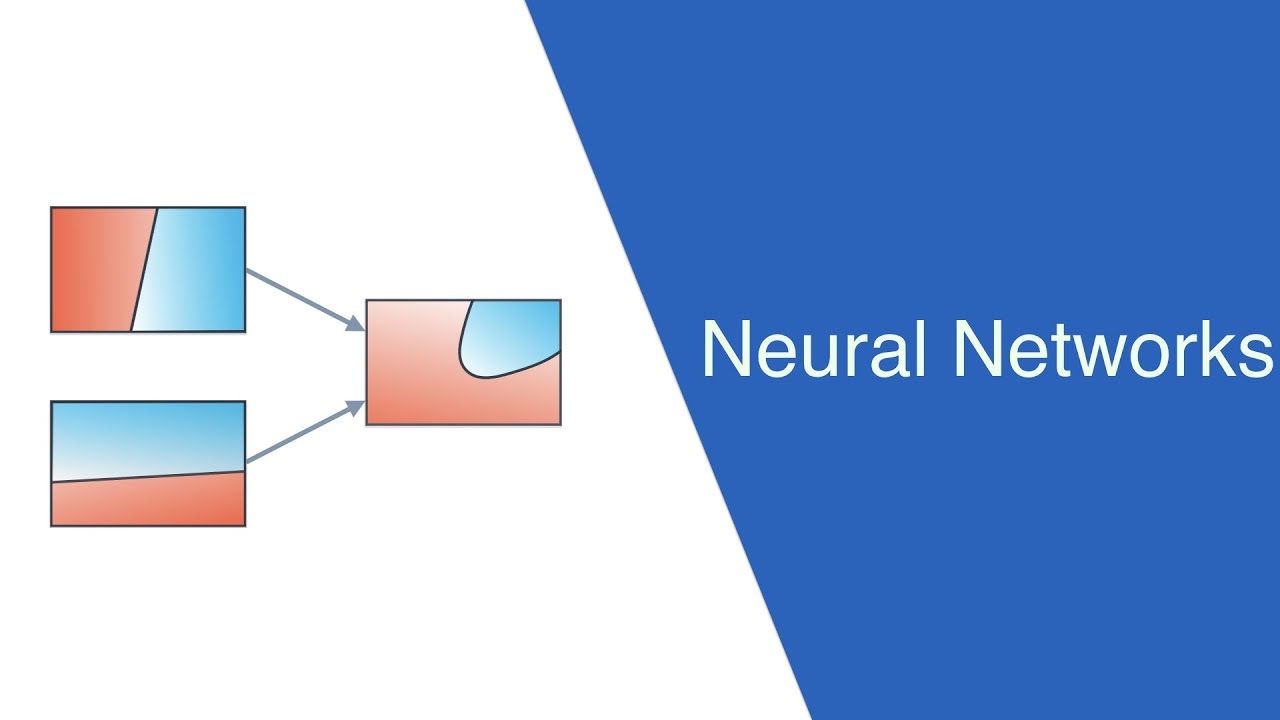
Announcement: New Book by Luis Serrano! Grokking Machine Learning. bit.ly/grokkingML
40% discount code: serranoyt
A friendly introduction to neural networks and deep learning.
This is a follow up to the Introduction to Machine Learning video.
https://www.youtube.com/watch?v=IpGxLWOIZy4
Note: In this tutorial I use natural logarithms. If you used logarithms base 10, you may get different answers that I got, although at the end it doesn't matter, since using a different base for the logarithm just scales all the logarithms by a constant.
00:00 What is machine learning?
2:22 Gradient descent
5:07 Neural network
10:11 logistic regression
12:28 Probability
14:57 Activation Function
19:56 Error function
22:34 Node(Neuron)
24:07 Non-linear regions
31:22 Deep neural network

FPGA-based hardware is a good fit for deep learning inferencing on embedded devices because they deliver low latency and power consumption. Early prototyping is essential to developing a deep learning network that can be efficiently deployed to an FPGA.
See how Deep Learning HDL Toolbox™ automates FPGA prototyping of deep learning networks directly from MATLAB®. With a few lines of MATLAB code, you can deploy to and run inferencing on a Xilinx® ZCU102 FPGA board. This direct connection allows you to run deep learning inferencing on the FPGA as part of your application in MATLAB, so you can converge more quickly on a network that meets your system requirements.
--------------------------------------------------------------------------------------------------------
Get a free product trial: https://goo.gl/ZHFb5u
Learn more about MATLAB: https://goo.gl/8QV7ZZ
Learn more about Simulink: https://goo.gl/nqnbLe
See what's new in MATLAB and Simulink: https://goo.gl/pgGtod
© 2020 The MathWorks, Inc. MATLAB and Simulink are registered trademarks of The MathWorks, Inc.
See www.mathworks.com/trademarks for a list of additional trademarks. Other product or brand names may be trademarks or registered trademarks of their respective holders.

Emil Björnson explains the basics of supervised deep learning and two useful applications of it in the physical layer of communication systems.
If you want to learn more, you can read "Two Applications of Deep Learning in the Physical Layer of Communication Systems" by Emil Björnson and Pontus Giselsson (https://arxiv.org/pdf/2001.03350)
In Application 1, the following paper is used as an example:
Trinh Van Chien, Emil Björnson, Erik G. Larsson, “Sum Spectral Efficiency Maximization in Massive MIMO Systems: Benefits from Deep Learning,” IEEE International Conference on Communications (ICC), 2019. https://arxiv.org/pdf/1903.08163.pdf
In Application 2, the following paper is used as an example:
Özlem Tugfe Demir, Emil Björnson, “Channel Estimation in Massive MIMO under Hardware Non-Linearities: Bayesian Methods versus Deep Learning,” IEEE Open Journal of the Communications Society, 2020. https://arxiv.org/pdf/1911.07316.pdf
To learn more about what EAGE has to offer on Machine Learning, please visit the EAGE calendar of events here:
https://www.eage.org/en/events/calendar-of-events
How and why can Deep Learning be used for seismic interpretation?
The machine learning technique called deep learning is revolutionizing the field of computer vision. A central part of deep learning is convolutional neural networks (CNN). This E-lecture gives a simple and intuitive introduction to CNNs in the context of seismic interpretation.
Github link:
https://github.com/waldeland/CNN-for-ASI
Paper link:
https://doi.org/10.3997/2214-4609.201700918
Paper link:
https://library.seg.org/doi/ab....s/10.1190/tle3707052
EAGE also offers Webinars on a range of geoscience and engineering topics. Learn more here:
https://prod.eage.org/sitecore..../content/learning-ge