Latest videos

Andrew Ng, Adjunct Professor & Kian Katanforoosh, Lecturer - Stanford University
http://onlinehub.stanford.edu/
Andrew Ng
Adjunct Professor, Computer Science
Kian Katanforoosh
Lecturer, Computer Science
To follow along with the course schedule and syllabus, visit:
http://cs230.stanford.edu/
To get the latest news on Stanford’s upcoming professional programs in Artificial Intelligence, visit: http://learn.stanford.edu/AI.html
To view all online courses and programs offered by Stanford, visit: http://online.stanford.edu

In a matter of seconds, a new algorithm interprets chest X-rays for 14 pathologies, performing as well as radiologists in most cases.
Read the story: http://med.stanford.edu/news/a....ll-news/2018/11/ai-o
Stanford News: http://news.stanford.edu/
Stanford University: http://www.stanford.edu/
Stanford University Channel on YouTube: http://www.youtube.com/stanford

Andrew Ng, Adjunct Professor & Kian Katanforoosh, Lecturer - Stanford University
http://onlinehub.stanford.edu/
Andrew Ng
Adjunct Professor, Computer Science
Kian Katanforoosh
Lecturer, Computer Science
To follow along with the course schedule and syllabus, visit:
http://cs230.stanford.edu/
To get the latest news on Stanford’s upcoming professional programs in Artificial Intelligence, visit: http://learn.stanford.edu/AI.html
To view all online courses and programs offered by Stanford, visit: http://online.stanford.edu

For more information about Stanford’s Artificial Intelligence professional and graduate programs, visit: https://stanford.io/ai
Professor Emma Brunskill, Stanford University
https://stanford.io/3eJW8yT
Professor Emma Brunskill
Assistant Professor, Computer Science
Stanford AI for Human Impact Lab
Stanford Artificial Intelligence Lab
Statistical Machine Learning Group
To follow along with the course schedule and syllabus, visit: http://web.stanford.edu/class/cs234/index.html
#EmmaBrunskill #reinforcementlearning
Chapters:
0:00 intro
02:20 Reward for Sequence of Decisions
13:23 Imitation Learning vs RL
23:02 Sequential Decision Making
24:42 Example: Robot unloading dishwasher
25:19 Example: Blood Pressure Control
52:04 Key challenges in learning to make sequences of good decisions
54:15 Reinforcement learning example
Abigail See, Stanford PhD student of world-renowned computer scientist Chris Manning, gives a brief overview of Deep-Learning, Artificial Intelligence (AI), and Natural Language Processing (NLP).
http://www.abigailsee.com/
Highlights:
- What is Natural Language Processing (NLP)? (0:58)
- What is Deep-Learning? (1:43)
- Deep-Learning Vs Machine Learning (ML) (2:20)
- Auto summarization - extractive and abstractive (4:31)
- What is sentiment analysis? (5:18)
- Ethics of AI (6:49)
- Can humans learn from AI? (8:38)
- The role of data in AI (12:22)

Today's robots excel at performing very specific tasks within a narrow and controlled environment. But, when faced with a novel situation, their highly specialized training doesn’t enable them to adjust on the fly. In the future, could robots learn to adapt to new tasks they haven’t been trained to do?
One possible solution to this problem is deep learning. While deep learning is expanding the capabilities of both machine learning and reinforcement learning, it also has the potential to unleash new possibilities for robotics. Join Professor Chelsea Finn in this discussion of modern deep reinforcement learning algorithms, and learn more about their usefulness towards solving ambitious challenges in robotics.
For more information about Stanford's Artificial Intelligence programs visit: https://stanford.io/ai
#deeplearning #robotics

Andrew Ng, Adjunct Professor & Kian Katanforoosh, Lecturer - Stanford University
https://stanford.io/3eJW8yT
Andrew Ng
Adjunct Professor, Computer Science
Kian Katanforoosh
Lecturer, Computer Science
To follow along with the course schedule and syllabus, visit:
http://cs230.stanford.edu/
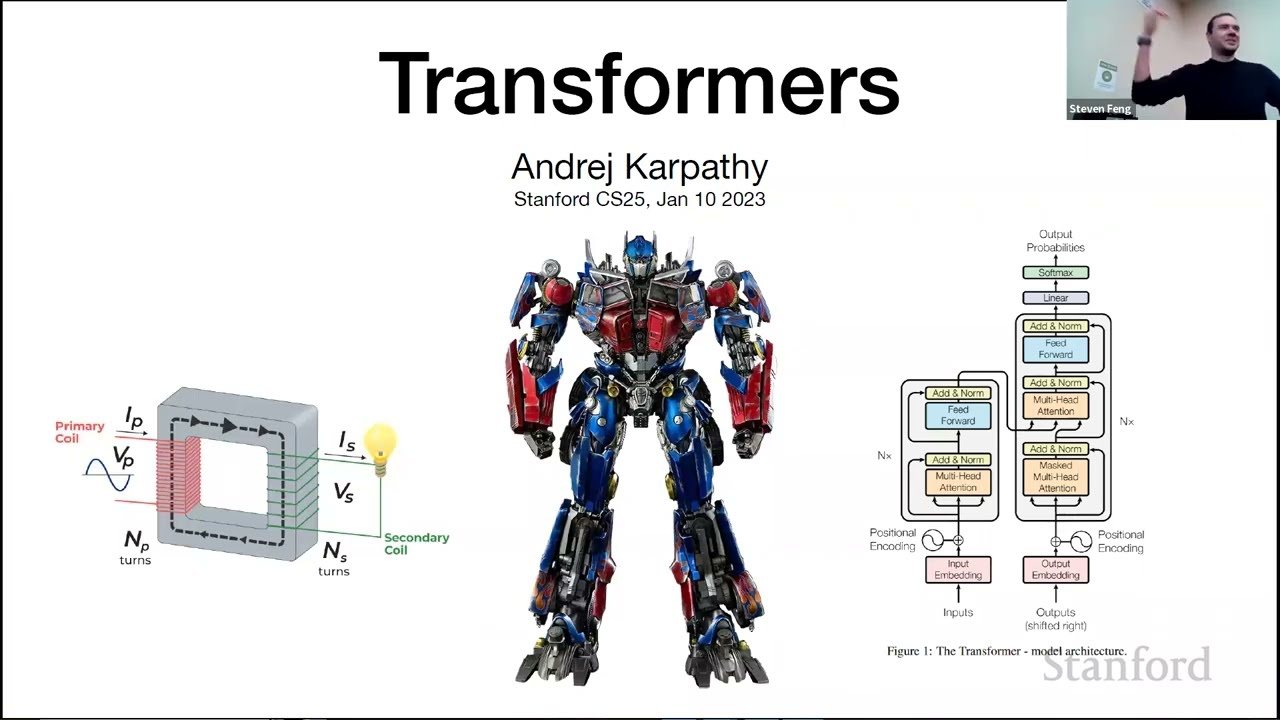
January 10, 2023
Introduction to Transformers
Andrej Karpathy: https://karpathy.ai/
Since their introduction in 2017, transformers have revolutionized Natural Language Processing (NLP). Now, transformers are finding applications all over Deep Learning, be it computer vision (CV), reinforcement learning (RL), Generative Adversarial Networks (GANs), Speech or even Biology. Among other things, transformers have enabled the creation of powerful language models like GPT-3 and were instrumental in DeepMind's recent AlphaFold2, that tackles protein folding.
In this speaker series, we examine the details of how transformers work, and dive deep into the different kinds of transformers and how they're applied in different fields. We do this by inviting people at the forefront of transformers research across different domains for guest lectures.
More about the course can be found here: https://web.stanford.edu/class/cs25/
0:00 Introduction
0:47 Introducing the Course
3:19 Basics of Transformers
3:35 The Attention Timeline
5:01 Prehistoric Era
6:10 Where we were in 2021
7:30 The Future
10:15 Transformers - Andrej Karpathy
10:39 Historical context
1:00:30 Thank you - Go forth and transform

GPT3 & Beyond: Key concepts and open questions in a golden age for natural language understanding
Listen in as Professor Christopher Potts discusses the significance and implications of recent Natural Language Understanding developments including GPT-3. He describes the fundamental building blocks of these systems and describes how we can reliably assess and understand them.
Learn more about the AI Professional Program: https://stanford.io/3kYThd2
View the slides for this webinar here: https://stanford.io/potts-GPT3-webinar2023
#gpt3 #stanfordwebinar
Chapters:
0:00 Opening
00:09 Introduction for Chris Potts
1:09 Chris Potts - Welcome to the webinar
03:43 Quick Demo of GPT-3
06:41 GLUE benchmark
10:26 How can you contribute to NLU in this era of these gargantuan models?
11:44 The last mile problem
13:35 GPT example
14:50 Contrast In-Context learning with the standard paradigm of standard supervision
16:47 What are the mechanisms behind this?
18:18 Why does this work so well?
18:35 Self-Supervision
21:08 The role of human feedback
21:32 Chat GPT Diagram
23:42 Step-by-step reasoning
28:13 LLMs for everything approach
41:29 AI Courses at Stanford
46:28 Predictions about the future
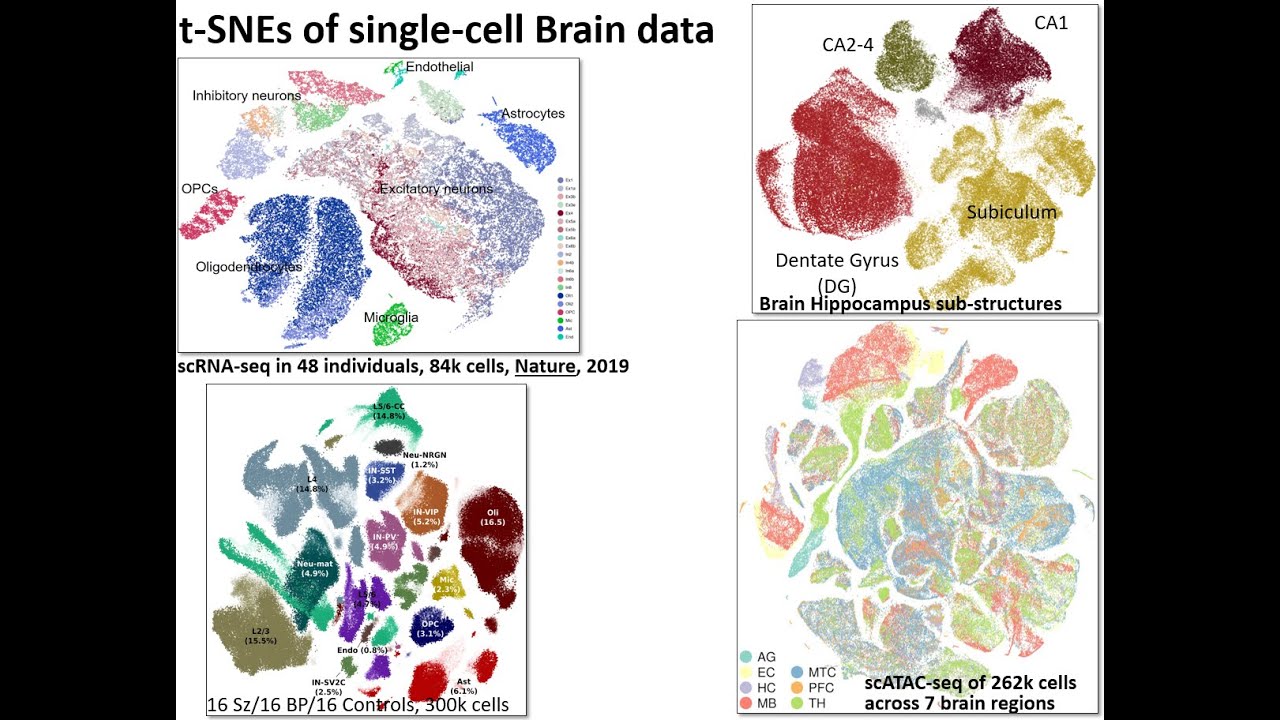
MIT 6.874 Lecture 11. Spring 2020
Course website: https://mit6874.github.io/
Lecture slides: https://mit6874.github.io/assets/sp2020/slides/L11_PCA_tSNE_Autoencoders.pdf
Outline:
1. Gene expression analysis: The Biology of RNA-seq
2. Supervised (Classification) vs. unsupervised (Clustering)
3. Supervised: Differential expression analysis
4. Unsupervised: Embedding into lower dimensional space
5. Linear reduction of dimensionality
- Principle Component Analysis
- Singular Value Decomposition
6. Non-linear dimensionality reduction: embeddings
- t-distributed Stochastic Network Embedding (t-SNE)
- Building intuition: Playing with t-SNE parameters
7. Deep Learning embeddings
- Autoencoders
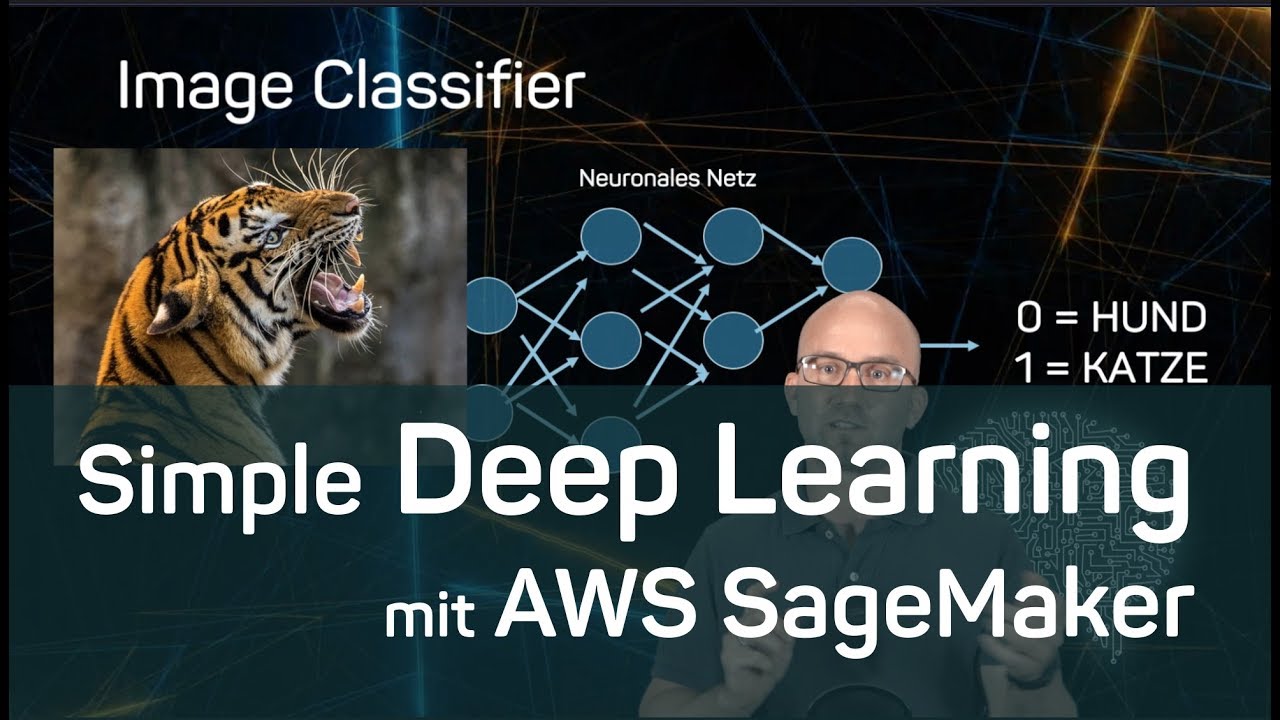
In diesem Video sehen wir eine Einführung in AWS SageMaker. Dabei handelt es sich um eine End to End Machine Learning Plattform in der Amazon Cloud.
An einem Beispiel schauen wir uns alle typischen Schritte an, die nötig sind um ein Modell zu entwickeln und es in eine Produktionsumgebung zu deployen. Wir verwenden dabei ein eigenes Dataset und bauen ein Modell, das vorhersagen kann, ob unsere Mitarbeiter/innen Brille tragen oder nicht.
Video Produktion: https://twitter.com/moseroli @codecentric

MIT Computational Biology: Genomes, Networks, Evolution, Health
http://compbio.mit.edu/6.047/
Prof. Manolis Kellis
Full playlist with all videos in order is here: https://www.youtube.com/playli....st?list=PLypiXJdtIca
All slides from Fall 2019 are here: https://stellar.mit.edu/S/cour....se/6/fa19/6.047/mate
Outline for this lecture:
1. Supervised Learning with Neural networks
- Perceptron, layers, activation units (sigmoid, softplus, ReLU)
- Learning: Gradient, Back-propagation, Rate, Dropout, Overfitting
2. Unsupervised learning with Deep belief networks & autoencoders
- Boltzmann machines, Restricted BMs (RBMs), Deep belief networks
- Learning: Energy, Gibbs Sampling, Simulated Annealing, Wake-sleep
3. Modern deep learning architectures
- Auto-encoders: Self-training, representation learning, RBM pre-training
- Convolutional neural networks: convolutional filters, pooling (sum/max)
- Recurrent neural networks: learning linear/temporal relationships
- Transfer learning, generative adversarial networks (GANs)
4. Deep learning in regulatory genomics
- Deciphering tissue-specific splicing code
- Deciphering regulatory grammars. DeepBind, DeepSea, Basset.
5. Three-dimensional structures: protein-DNA interactions, drug design
- Modern deep learning computing infrastructure
- Engines: TensorFlow, Theano, Torch, Caffe. Envs: Keras, Lasagene
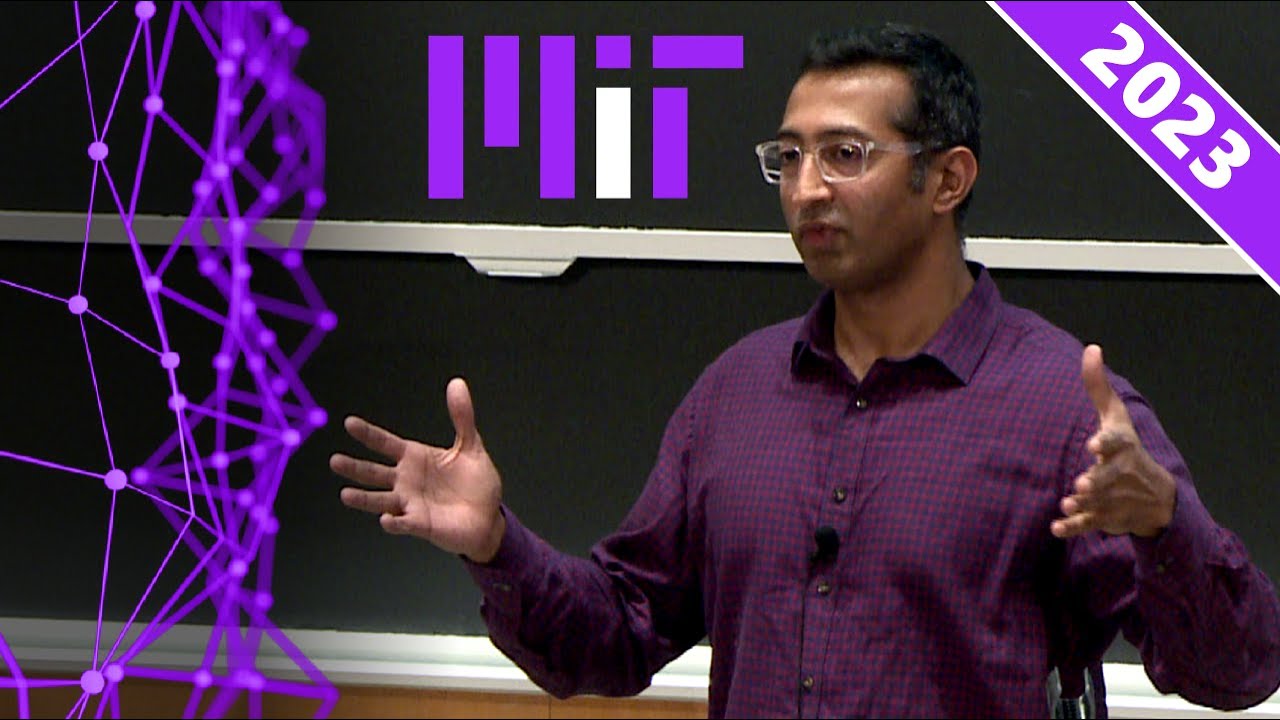
MIT Introduction to Deep Learning 6.S191: Lecture 8
Deep Learning Limitations and New Frontiers
Lecturer: Dilip Krishnan
2023 Edition
For all lectures, slides, and lab materials: http://introtodeeplearning.com
Lecture Outline - coming soon!
Subscribe to stay up to date with new deep learning lectures at MIT, or follow us @MITDeepLearning on Twitter and Instagram to stay fully-connected!!
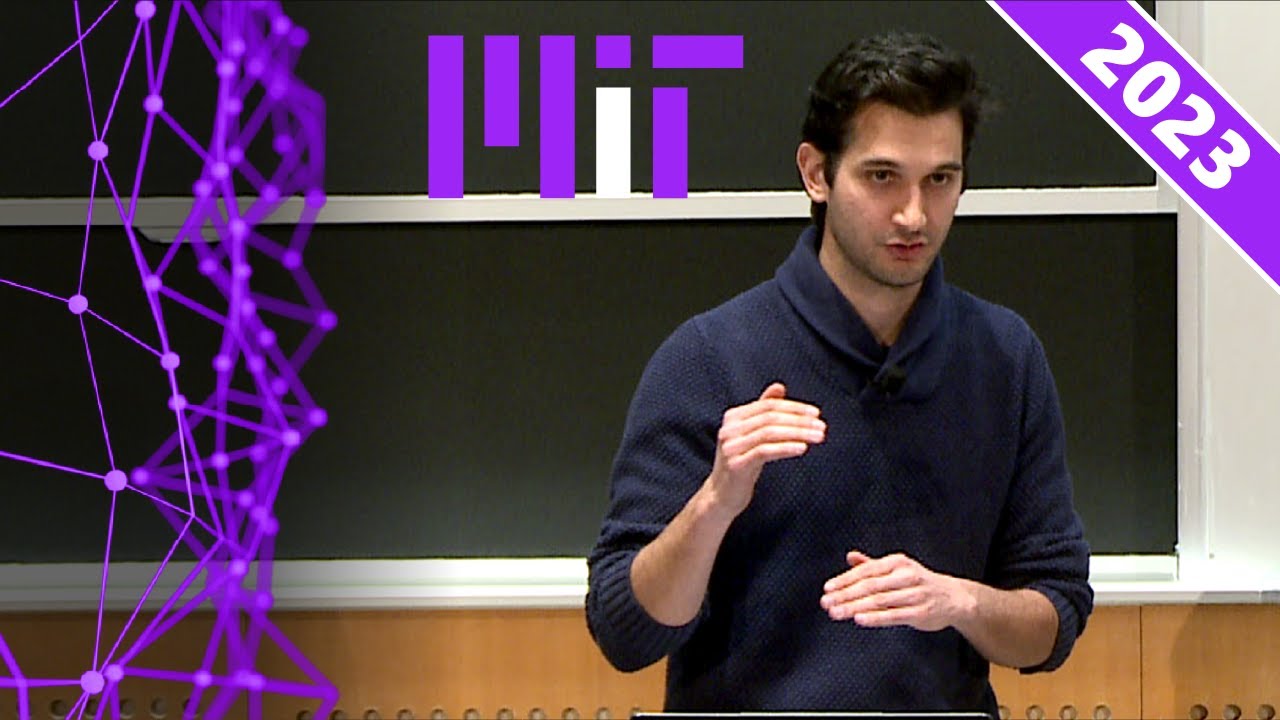
MIT Introduction to Deep Learning 6.S191: Lecture 5
Deep Reinforcement Learning
Lecturer: Alexander Amini
2023 Edition
For all lectures, slides, and lab materials: http://introtodeeplearning.com
Lecture Outline:
0:00 - Introduction
3:49 - Classes of learning problems
6:48 - Definitions
12:24 - The Q function
17:06 - Deeper into the Q function
21:32 - Deep Q Networks
29:15 - Atari results and limitations
32:42 - Policy learning algorithms
36:42 - Discrete vs continuous actions
39:48 - Training policy gradients
47:17 - RL in real life
49:55 - VISTA simulator
52:04 - AlphaGo and AlphaZero and MuZero
56:34 - Summary
Subscribe to stay up to date with new deep learning lectures at MIT, or follow us @MITDeepLearning on Twitter and Instagram to stay fully-connected!!
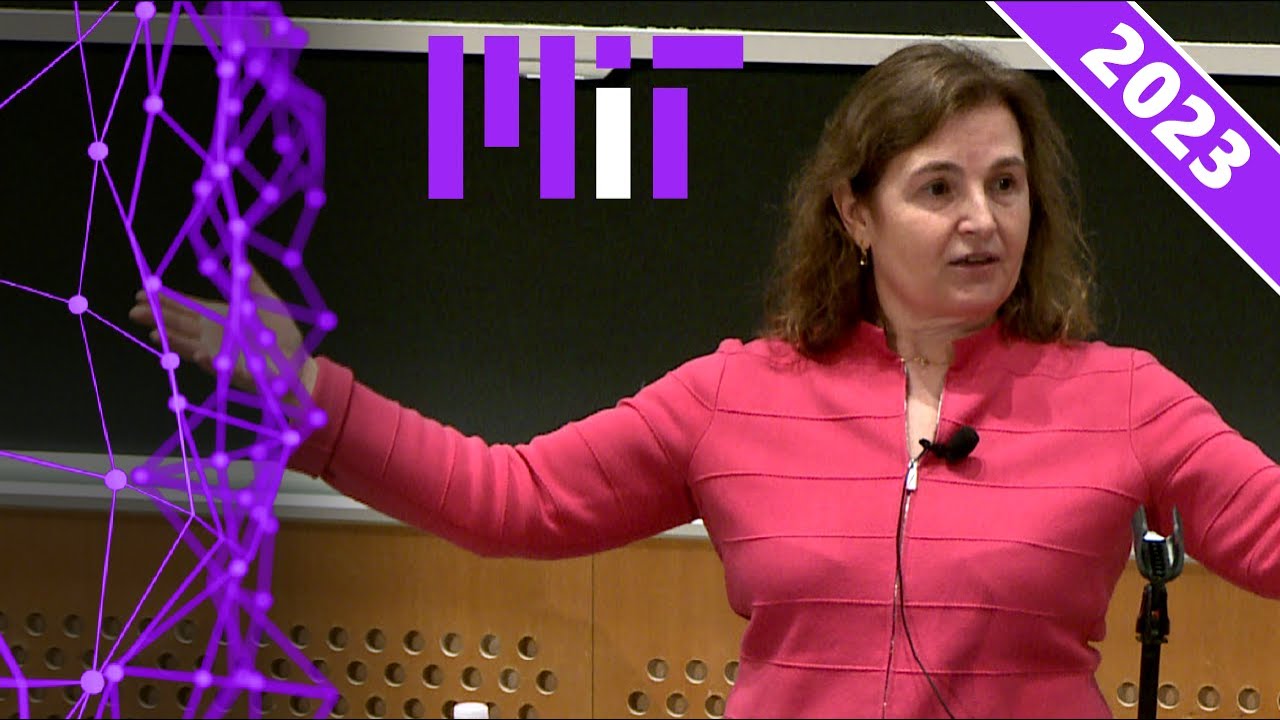
MIT Introduction to Deep Learning 6.S191: Lecture 10
The Future of Robot Learning
Lecturer: Daniela Rus
2023 Edition
For all lectures, slides, and lab materials: http://introtodeeplearning.com
Lecture Outline - coming soon!
Subscribe to stay up to date with new deep learning lectures at MIT, or follow us @MITDeepLearning on Twitter and Instagram to stay fully-connected!!
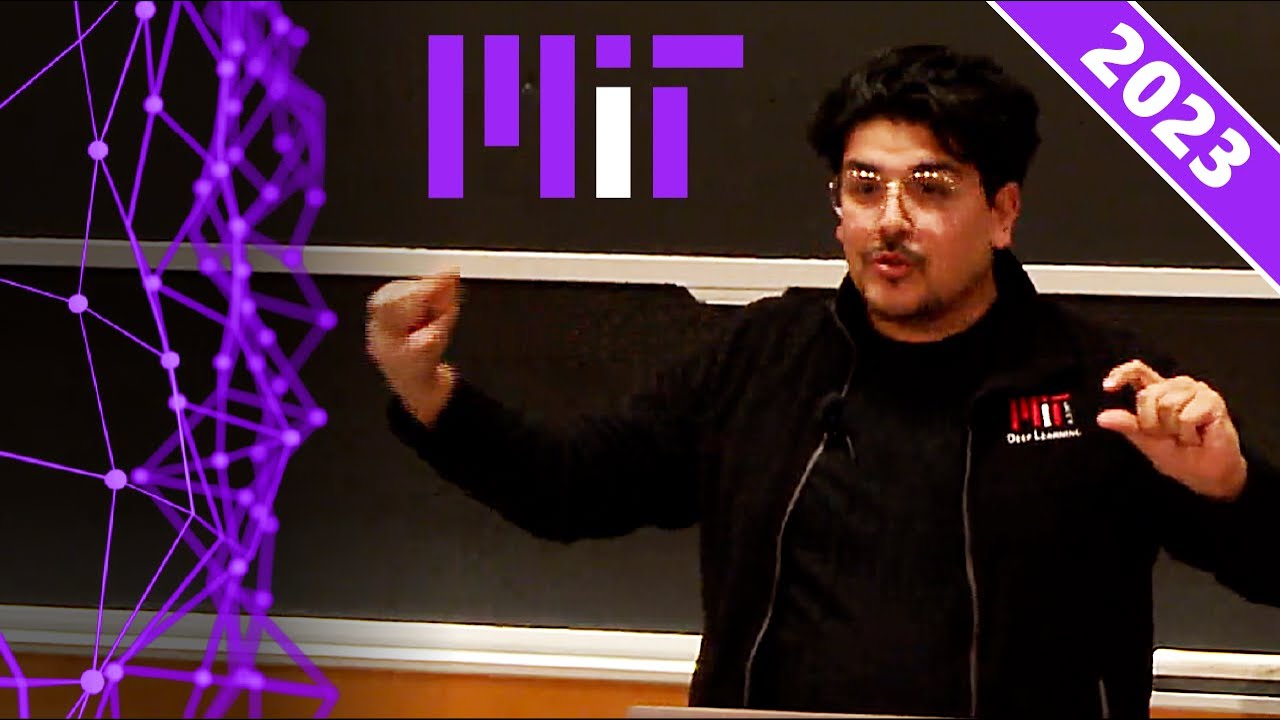
MIT Introduction to Deep Learning 6.S191: Lecture 9
The Modern Era of Statistics
Lecturer: Ramin Hasani
2023 Edition
For all lectures, slides, and lab materials: http://introtodeeplearning.com
Lecture Outline - coming soon!
Subscribe to stay up to date with new deep learning lectures at MIT, or follow us @MITDeepLearning on Twitter and Instagram to stay fully-connected!!