Latest videos

Faithless - Insomnia (Official 4K Video)
Stream Faithless here: https://FaithlessOfficial.lnk.to/StreamAY
Subscribe to Faithless' YouTube Channel: https://FaithlessOfficial.lnk.to/YouTubeAY
Follow Faithless:
Official website - https://www.faithless.co.uk/
Facebook - https://www.facebook.com/Faithless/
Twitter - https://twitter.com/faithless
Instagram - https://www.instagram.com/faithlessofficial/
WATCH INSOMNIA ► https://FaithlessOfficial.lnk.to/VideosAY/youtube
WATCH WE COME 1 ► https://FaithlessOfficial.lnk.to/VideosAY/youtube2
WATCH GOD IS A DJ ► https://FaithlessOfficial.lnk.to/VideosAY/youtube3
WATCH ONE STEP TOO FAR ► https://FaithlessOfficial.lnk.to/VideosAY/youtube4
#Faithless #InsomniaRemix #FaithlessOfficial #Insomnia #InsomniaOfficialAudio #InsonmiaOfficialVideo #FaithlessInsomnia #BestOfFaithless #FaithlessOfficialVideo #FaithlessOfficialAudio #FaithlessInsomnia #NewYearMusic #HappyNewYearMusic #NewYearPlaylist #HappyNewYear
Lyrics
Deep in the bosom of the gentle night
Is when I search for the light
Pick up my pen and start to write
I struggle, fight dark forces In the clear moon light
Without fear
Insomnia
I can't get no sleep
I used to worry, thought I was goin' mad in a hurry
Gettin' stress, makin' excess mess in darkness
No electricity, something's all over me, greasy
Insomnia please release me and let me dream of
Makin' mad love to my girl on the heath
Tearin' off tights with my teeth
But there's no release, no peace
I toss and turn without cease
Like a curse, open my eyes and rise like yeast
At least a couple of weeks
Since I last slept, kept takin' sleepers
But now I keep myself pepped
Deeper still, that night I write by candle light
I find insight, fundamental movement
So when it’s black this insomniac take an original tack
Keep the beast in my nature under ceaseless attack
I gets no sleep
I can't get no sleep
I can't get no sleep
I can't get no sleep
I need to sleep, although I get no sleep
I need to sleep, although I get no sleep
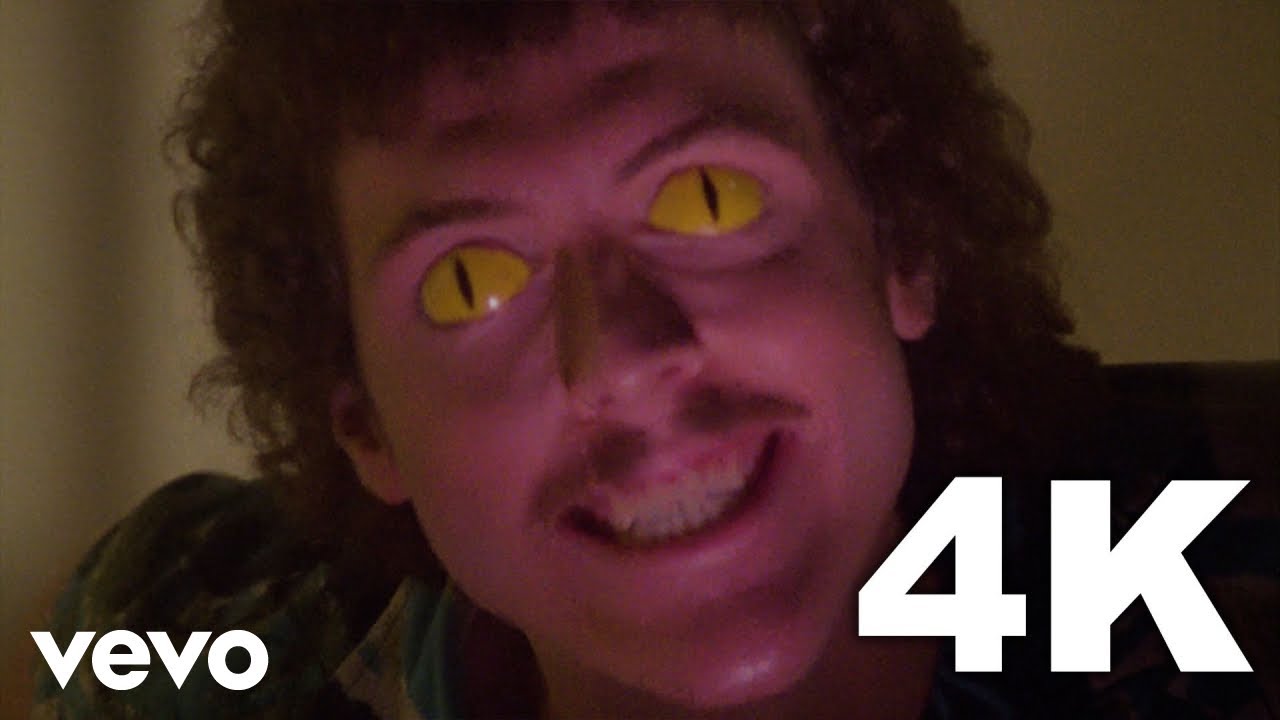
“Eat It” by "Weird Al" Yankovic - NOW IN 4K
Follow "Weird Al" Yankovic on Spotify: http://smarturl.it/WeirdAlSpotify
In the new biopic WEIRD: The Al Yankovic Story, there’s a scene where we see a clip of the “Eat It” video being played on a TV screen - except it’s actually a “deep fake,” with Al’s face replaced with Daniel Racliffe's (Dan, of course, plays Al in the movie). In order to create that particular scene, the producers had to track down source material that was considerably better quality than the existing standard-definition version. So Yankovic went into his personal video vault and had all the original 16mm film that was shot for the video in 1983 lovingly transferred to 4K. Then, while traveling the country on his 2022 tour, he painstakingly re-edited the video on his laptop, matching the original video frame for frame. The resulting video is not without scratches and artifacts (even in a temperature-controlled storage unit, film will start to degrade after a few decades) but it is exponentially better quality than any version that has ever existed before.
“Eat It” is one of 46 tracks on the just-released WEIRD: The Al Yankovic Story - Original Soundtrack album - you can stream, download or pre-order here: https://weirdalyankovic.lnk.to/WeirdTAYSYD
WEIRD: The Al Yankovic Story is now streaming exclusively on The Roku Channel! Stream free on a Roku device, the Roku mobile app, therokuchannel.com, Samsung Smart TV & FireTV.
Lyrics:
How come you're always such a fussy young man?
Don't want no Captain Crunch, don't want no Raisin Bran
Well, don't you know that other kids are starving in Japan?
So eat it, just eat it
Don't wanna argue, I don't wanna debate
Don't wanna hear about what kind of food you hate
You won't get no dessert 'till you clean off your plate
So eat it
Don't you tell me you're full
Just eat it, eat it, eat it, eat it
Get yourself an egg and beat it
Have some more chicken, have some more pie
It doesn't matter if it's broiled or fried
Just eat it, eat it, just eat it, eat it
Just eat it, eat it, just eat it, eat it, ooh
Your table manners are a cryin' shame
You're playin' with your food, this ain't some kind of game
Now, if you starve to death, you'll just have yourself to blame
So eat it, just eat it
You better listen, better do what you're told
You haven't even touched your tuna casserole
You better chow down or it's gonna get cold
So eat it
I don't care if you're full
Just eat it, eat it, eat it, eat it
Open up your mouth and feed it
Have some more yogurt, have some more Spam
It doesn't matter if it's fresh or canned
Just eat it, eat it, eat it, eat it
Don't you make me repeat it
Have a banana, have a whole bunch
It doesn't matter what you had for lunch
Just eat it, eat it, eat it, eat it
Eat it, eat it, eat it, eat it
Eat it, eat it, eat it, eat it
If it's gettin' cold, reheat it
Have a big dinner, have a light snack
If you don't like it, you can't send it back
Just eat it, eat it, eat it, eat it
Get yourself an egg and beat it
(Oh Lord)
Have some more chicken, have some more pie
It doesn't matter if it's broiled or fried
Just eat it, eat it, eat it, eat it
Don't you make me repeat it
(Oh no)
Have a banana, have a whole bunch
It doesn't matter what you had for lunch
#WeirdAlYankovic #OfficialMusicVideo #Parody #4KRemastered

Thoda Thoda Pyaar Full Video Song 4k 60fps - Sidharth Malhotra & Neha Sharma
Free Amazon Prime for 1 Month (India):
https://www.freedeal4u.com/
Thoda Thoda Pyaar Lyrics:
Teri Nazar Ne Yeh Kya Kar Diya
Mujhse Hi Mujhko Juda Kar Diya
Teri Nazar Ne Yeh Kya Kar Diya
Mujhse Hi Mujhko Juda Kar Diya
Main Rehta Hoon Tere Paas Kahin
Ab Mujhko Mera Ehsaas Nahi
Dil Kehta Hai Bas Mujhe
Ke Thoda Thoda Pyaar Hua Tumse
Ke Thoda Ikraar Hua Tumse
Ke Thoda Thoda Pyaar Hua Tumse
Ke Thoda Ikraar Hua Tumse
Ke Zyada Bhi Hoga Tumhi Se
Ke Thoda Ikraar Hua Tumse
Meri Aankhon Ki Dua Hai
Yeh Chehra Tera
Ab Dekhe Bin Tujhe
Na Guzara Ho Mera
Meri Aankhon Ki Dua Hai
Yeh Chehra Tera Ab Dekhe Bin
Tujhe Na Guzara Ho Mera
Main Saans Bhi Loon
Tujhe Chahe Bina
Ab Hoga Na Yeh Humse
Ke Thoda Thoda Pyaar Hua Tumse
Ke Thoda Ikraar Hua Tumse
Ke Thoda Thoda Pyaar Hua Tumse
Ke Thoda Thoda Pyaar Hua Tumse
Ke Zyada Bhi Hoga Tumhi Se
Ke Thoda Thoda Pyaar Hua Tumse
Ke Thoda Thoda Pyaar Hua Tumse
Ke Zyada Bhi Hoga Tumhi Se
Ke Thoda Thoda Pyaar Hua Tumse
#4KSong

You are watching the official 4K video for Our House by Madness.
Check out the Madheads 2020 version of the video here: https://youtu.be/HGvqTKev0bY
Click here for more Madness: https://madnessband.lnk.to/bestofID
Lyrics:
Father wears his Sunday best
Mother's tired, she needs a rest
The kids are playing up downstairs
Sister's sighing in her sleep
Brother's got a date to keep
He can't hang around
Our house, in the middle of our street
Our house, in the middle of our
Our house it has a crowd
There's always something happening
And it's usually quite loud
Our mum, she's so house-proud
Nothing ever slows her down
And a mess is not allowed
Our house, in the middle of our street
Our house, in the middle of our
Our house, in the middle of our street
Our house (Something tells you)
(That you've got to move away from it) In the middle of our
Father gets up late for work
Mother has to iron his shirt
Then she sends the kids to school
Sees them off with a small kiss (Ah, ah, ah, ah)
She's the one they're going to miss
In lots of ways
Our house, in the middle of our street
Our house, in the middle of our
I remember way back then
When everything was true and when
We would have such a very good time
Such a fine time, such a happy time
And I remember how we'd play
Simply waste the day away
Then we'd say nothing would come between us
Two dreamers
Father wears his Sunday best
Mother's tired she needs a rest
The kids are playing up downstairs
Sister's sighing in her sleep
Brother's got a date to keep
He can't hang around
Our house, in the middle of our street
Our house, in the middle of our street
Our house, in the middle of our street
Our house, in the middle of our
Our house, was our castle and our keep
Our house, in the middle of our street
Our house, that was where we used to sleep
Our house, in the middle of our street
Our house
Madness - Our House (Official 4K Video)
http://www.madness.co.uk
http://www.facebook.com/madnessofficial
http://www.twitter.com/madnessnews
http://www.instagram.com/madnessband
https://open.spotify.com/artis....t/4AYkFtEBnNnGuoo8Ha
#Madness #OurHouse #OurHouse2021 #Suggs #ItMustBeLove #MadnessXL #HouseOfFun

Movie/album: Main Khiladi Tu Anari
Singers: Alka Yagnik
Song Lyricists: Rahat Indori
Music Composer: Anu Malik
Music Director: Anu Malik
Music Label: Venus Records
Starring: Akshay Kumar, Saif Ali Khan, Shilpa Shetty, Raageshwari
Release on: 23rd September, 1994
Dil ka darwaaja khula hai raja, raja raja raja
Aath roz ki tu chhooti leke aaja, aaja aaja aaja
Dil ka darwaaja khula hai raja
Aath roz ki tu chhooti leke aaja
Dil ka darwaaja khula hai raja
Aath roz ki tu chhooti leke aaja
Naya somvaar aayega saath tere
Mere haath mein honge phir haath tere
Manaayenge mangal ko jungle mein mangal
To budh tak chalega yeh mangal ka dangal
To budh tak chalega yeh mangal ka dangal
Mm, maza somras ka mujhe
Bhi jaga jaa, aaja aaja aaja
Pada hai jo parda voh
Aake utha jaa, aaja aaja aaja
Dil ka darwaaja khula hai raja
Aath roz ki tu chhooti leke aaja
Dil ka darwaaja khula hai raja
Aath roz ki tu chhooti leke aaja
Naye gur guruvaar ke seekh le na
Oh, hunar mujhse kuch pyaar ke seekh le na
Bada shukr phir shukravaar ab na hoga
To poora hamaara koi sapna hoga
To poora hamaara koi sapna hoga
Haan haan, to is baar mera vrat bhi
Chhuda jaa, aaja aaja aaja
Tujhe pyaar kar karke kar
Doongi taaja, aaja aaja aaja
Dil ka darwaaja khula hai raja
Aath roz ki tu chhooti leke aaja
Dil ka darwaaja khula hai raja
Aath roz ki tu chhooti leke aaja
Shanivaar ki raat bhaari padegi
Mohabbat ki gaadi se gaadi ladegi
Ravivaar ko apna paigaam hoga
Ke chhooti ke bin bhi bahut kaam hoga
Ke chhooti ke bin bhi bahut kaam hoga
Haaye, meri saaton raatein
Suhaagan bana jaa, aaja aaja aaja
Manaayenge khushiyaan
Bajaayenge baaja, aaja aaja aaja
Dil ka darwaaja khula hai raja
Aath roz ki tu chhooti leke aaja
Dil ka darwaaja khula hai raja
Aath roz ki tu chhooti leke aaja.
dil ka darwaja khula hai raja,
dil ka darwaja khula hai raja song,
dil ka darwaja khula hai raja dj song,
dil ka darwaja khula hai raja full song,
dil ka darwaja khula hai raja aaja,
dil ka darwaja khula hai raja dj,
dil ka darwaja khula hai raja film,
dil ka darwaja khula hai raja status,
dil ka darwaja khula hai raja movie,
dil ka darwaja khula hai raja video gana,
dil ka darwaja khula hai raja roz ki chutti leke aaja,
dil ka darwaja khula hai raja jhankar song,
dil ka darwaja khula hai raja 4k video song,
dil ka darwaja khula hai raja dance video,

Apna Bana Le Video Song 4k 60fps- Bhediya | Varun Dhawan, Kriti Sanon, Arijit Singh & Sachin-Jigar
Apna Bana Le Lyrics:
Tu Mera Koyi Na
Hoke Bhi Kuchh Laage
Tu Mera Koyi Na
Hoke Bhi Kuchh Laage
Kiya Re Jo Bhi Toone
Kaise Kiya Re
Jiya Ko Mere Baandh
Aise Liya Re
Samajh Ke Bhi Na
Samajh Main Sakun
Saweron Ka Bhi Mere
Tu Sooraj Laage
Tu Mera Koyi Na
Hoke Bhi Kuchh Laage
Tu Mera Koyi Na
Hoke Bhi Kuchh Laage
Tu Mera Koyi Na
Hoke Bhi Kuchh Laage
Apna Bana Le Piya
Apna Bana Le Piya
Apna Bana Le Mujhe
Apna Bana Le Piya
Apna Bana Le Piya
Apna Bana Le Piya
Dil Ke Nagar Mein
Shehar Tu Basa Le Piya
Chhoone Se Tere
Haan Tere Haan Tere
Feeki Ruton Ko Rang Lage
Hmm.. Chhoone Se Tere
Haan Tere Haan Tere
Feeki Ruton Ko Rang Lage
Teri Disha Mein Kyun Chalne Se Mere
Pairon Ko Pankh Lage
Raha Na Mere Kaam Ka Jag Saara
Haan Bas Tere Naam Se Hi Guzaara
Ulajh Ke Yoon Na
Sulajh Na Sakun
Zubaaniyan Teri
Jhoothi Bhi Sach Laage
Tu Mera Koyi Na
Hoke Bhi Kuchh Laage
Tu Mera Koyi Na
Hoke Bhi Kuchh Laage
Tu Mera Koyi Na
Hoke Bhi Kuchh Laage
Apna Bana Le Piya
Apna Bana Le Piya
Apna Bana Le Mujhe
Apna Bana Le Piya
Apna Bana Le Piya
Apna Bana Le Piya
Dil Ke Nagar Mein
Shehar Tu Basa Le Piya
Ho Sab Kuchh Mera Chahe
Naam Apne Likha Le
Badle Mein Itni Toh
Yaari Nibha Le
Jag Ki Hirasat Se
Mujhko Chhuda Le
Apna Bana Le
Bas Apna Bana Le
Apna Bana Le
Apna Bana Le
#4ksong #4kVideoSong #60fpsVideoSong #4k #60fps

🔥 Buy or rent the movie NOW ➤ https://www.amazon.com/Top-Gun....-Maverick-Tom-Cruise
📢 Don't miss this video ➤ https://www.youtube.com/playli....st?list=PLaARvwn7BsA
✔️ Follow us on Facebook ➤ https://www.facebook.com/204568612956950
© Paramount Pictures
Thanks to your support we can share amazing content. Please JOIN 4K WALK.
https://www.youtube.com/channe....l/UC7kpCjVmzNj-UlIqw
🎥Camera used: https://amzn.to/3vaKF2m
🎬Stabilizer used: https://amzn.to/2TbSK9z
🎤Sound recorded on: https://amzn.to/3czrhW7
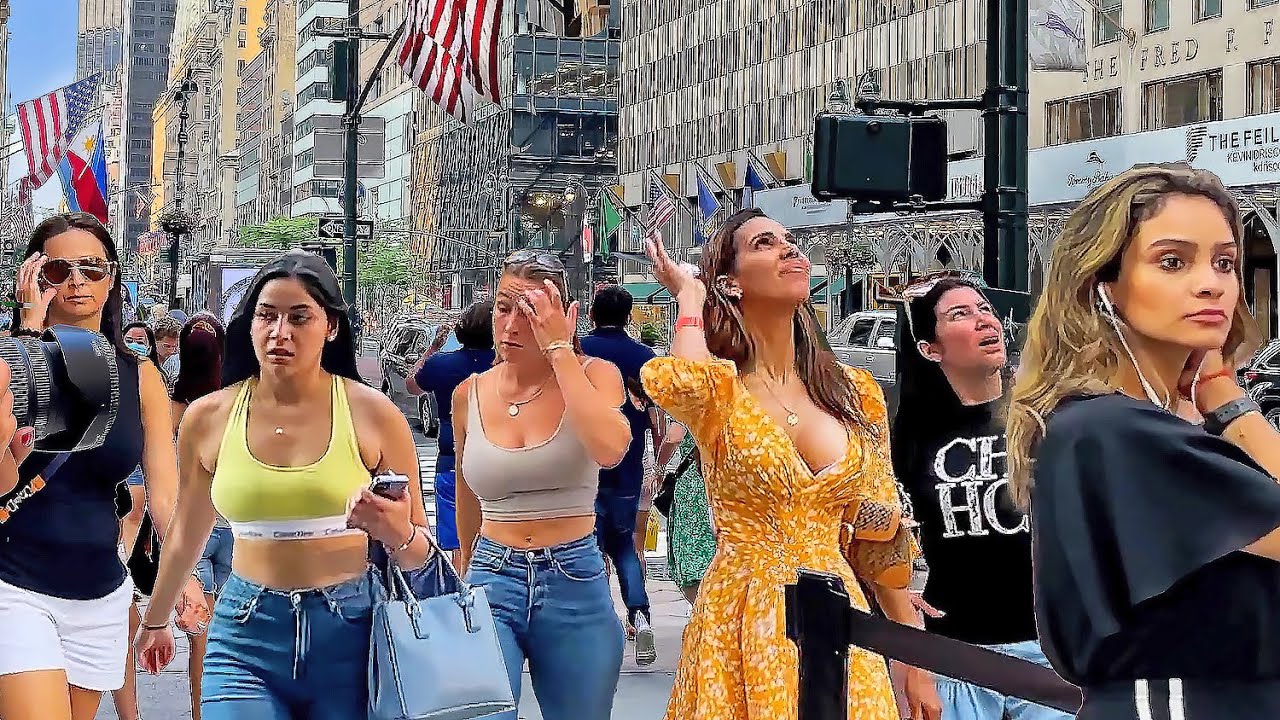
【4K】WALK Fifth Avenue NEW YORK City USA vlog 4k video TRAVEL
Walking along of the most important Avenues in New York City: Fifth Avenue in Midtown Manhattan. Chick and glamour meet here with several of the most important shops. It was on a Sunday, so the crowd is somehow different from what you can find every other day.
This urban walk was a pleasure and everybody. should be able to experience it. It was a perfect day. Manhattan was fun! An awesome walk where to feel city. This is New York 4k as seen by this travel vlogger! Take a virtual walk with us. Let's virtual hike watching this slow tv documentary 4k video.
The sanitary situation had improved, and normal life was almost back but again is being threatened! Check this new reality out!
✅ Please support my channel via PayPal using this link
👉🏼https://www.paypal.me/4kwalk?locale.x=en_XC
Also, you can always help my channel grow with a LIKE on the videos and a COMMENT. No money needed for that
👉Follow me on INSTAGRAM: https://www.instagram.com/4kwalk/
Facebook: https://www.facebook.com/4kwalk/
All material in this video is original and personally recorded by 4KWALK on location.
Copyright © 2021 All Rights Reserved.
🔶CONTACT US: [email protected]
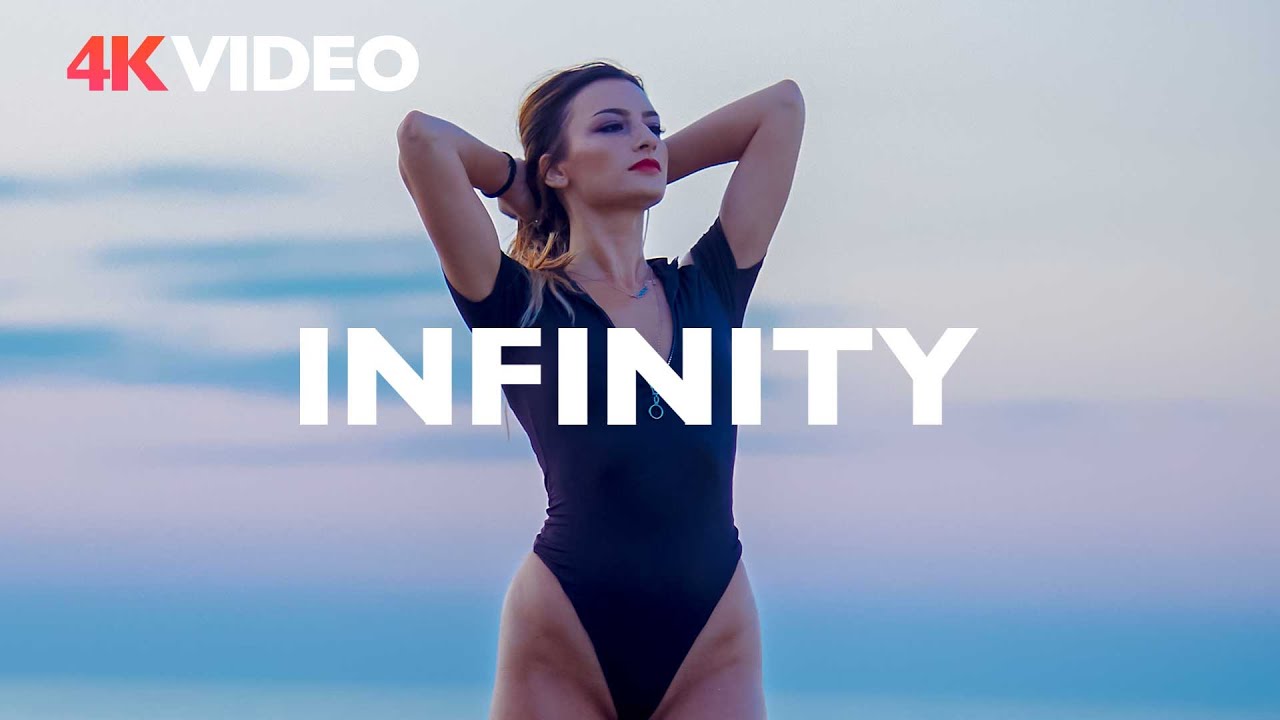
"Hold me" by ØGM is one of those tracks that you need to have in your car while driving at 3 AM when you take a break from reality. A chill track that will surely require the repeat button on. Enjoy! 👌🏻
⭐️ All our links in one place: https://linktr.ee/infinityvideohub
👕Get a T-Shirt: https://infinity-by-videohub-s....tore.creator-spring.
🔥Join the Infinity Home and see upcoming exclusive content! 🔥
https://www.youtube.com/channe....l/UCxs8r_GaKqb3RUZjc
⭐️⭐️⭐️ Infinity - For you to #enjoy | Car Music Selection | Deep House | Summer Vibes | Bass Music and more with Stunning 4K Videos ⭐️⭐️⭐️
______________________________________________
🔥Artists 🔥
🔊 Follow ØGM 🔊
https://www.instagram.com/ogmmusic_uk
https://www.facebook.com/ogmmusicx
https://open.spotify.com/artist/2eyWj
👱🏼♀️ Model 👱🏼♀️
https://instagram.com/1619i
📹 Official Infinity Video - Follow Our Team 📹
https://instagram.com/andreiesd
https://instagram.com/laur.lrx
_______________________________________________
💎 Infinity Videohub - Other Links 💎
Website: https://infinityvideohub.com
Facebook: https://www.facebook.com/videohuboffi/
Instagram: https://www.instagram.com/videohuboffi/
Soundcloud: https://soundcloud.com/videohuboffi
Telegram: https://t.me/videohuboffi
TikTok: https://vm.tiktok.com/4WWB9c/
🎵 More Music 🎵
😈 Videohub: https://bit.ly/videohubyt
🎧 Infinity Bass Music: https://bit.ly/infinitybass
🏝 Infinity Deep Music: https://bit.ly/infinitydeep
🎊 Infinity Latin & Afro: https://bit.ly/infinitylatinafro
_____________________________________________

Siberia is easily one of the most fascinating regions on earth. Enjoy this 4K Scenic Relaxation film featuring the diverse landscapes & wildlife of Russia's Siberia. From the wonders of Lake Baikal, to the wild volcanic terrain of Kamchatka, Siberia is bound to take your breath away with its endless beauty. Where is your favorite place in Siberia?
Our other Relaxation films:
Russia 4K - https://youtu.be/lyh2kAjcmSY
African Wildlife 4K - https://youtu.be/b_jkVx4wyrE
Patagonia 4K - https://youtu.be/DsXMR7dY35w
Fiji 4K - https://youtu.be/zleIaEIBs2M
Norway 4K - https://youtu.be/Bxo2JkiqG_o
Ireland 4K - https://youtu.be/dR-BW-alOF4
Italy 4K - https://youtu.be/H4tyzzP33Cw
Alps 4K - https://youtu.be/BTMjD7_evjE
Animals 4K - https://youtu.be/pb-j3svRQLI
Follow us on instagram @scenicrelaxationfilms
Where we get our music - https://fm.pxf.io/gbYAm9
Great Place for Stock footage - https://bit.ly/38b1EJH
Great Place for Music - https://bit.ly/3GptQHd
Great Place for Assets - https://bit.ly/3K59ZPK
Free stock footage, guides & luts - https://sellfy.com/ryanshirley
Timestamps:
0:00 - Soaring over Siberia
8:20 - Altai Mountains
10:41 - Kamchatka (Volcanic Peninsula)
17:48 - Lake Baikal (World's largest Lake)
21:35 - Animals of Siberia
27:17 - Ergaki Nature Park
30:38 - Cities of Siberia (Pevek, Yakutsk, Novosibirsk)
33:29 - Vladivostok & Far East Coast
39:09 - Siberian Winter
42:15 - Landscapes of Altai
48:55 - Chara Sand Dunes
50:32 - Landscapes of Siberia
Thanks for watching :)
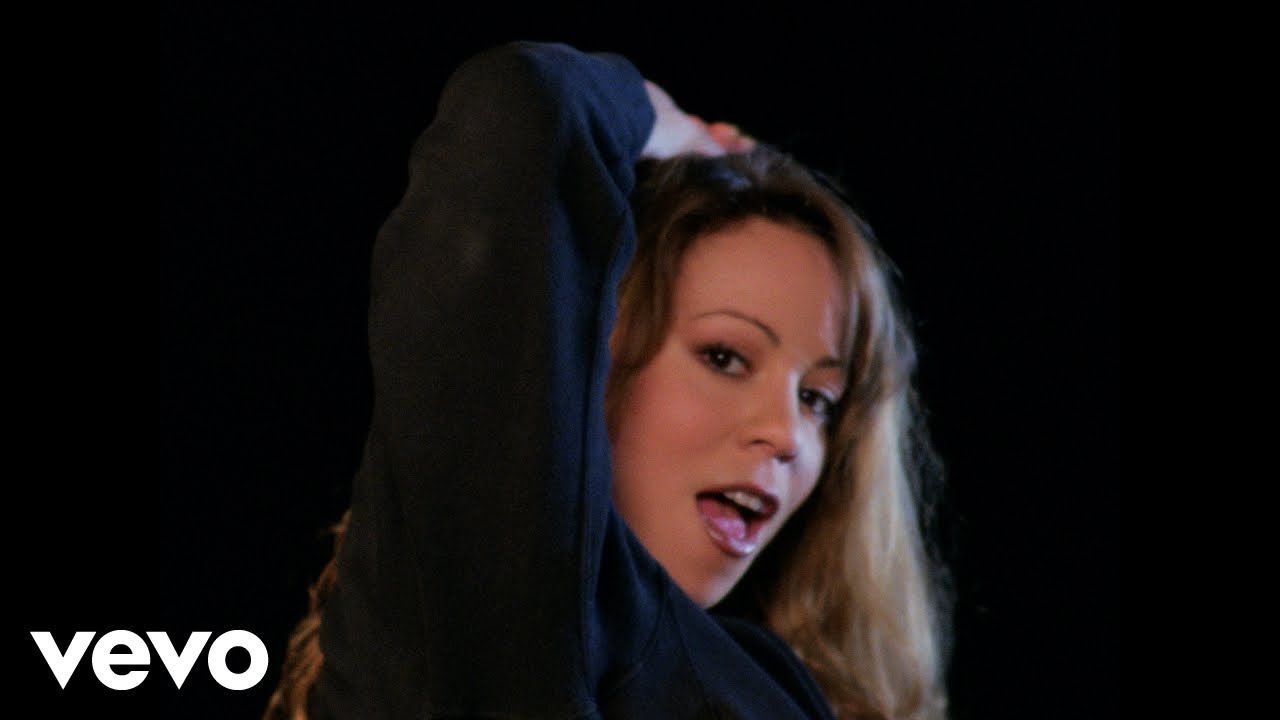
Watch the official music video for "Fantasy" (Remix) by Mariah Carey feat O.D.B.
Listen to Mariah Carey: https://mariahcarey.lnk.to/listenYD
Subscribe to the official Mariah Carey YouTube channel: https://MariahCarey.lnk.to/subscribeYD
Watch more Mariah Carey videos: https://MariahCarey.lnk.to/listen_YC/youtube
Follow Mariah Carey:
Facebook: https://MariahCarey.lnk.to/followFI
Instagram: https://MariahCarey.lnk.to/followII
Twitter: https://MariahCarey.lnk.to/followTI
Website: https://MariahCarey.lnk.to/followWI
Spotify: https://MariahCarey.lnk.to/followSI
YouTube: https://MariahCarey.lnk.to/subscribeYD
Chorus:
But it's just a sweet, sweet fantasy, baby
When I close my eyes, you come and take me
On and on and on, it's so deep in my daydreams
But it's just a sweet, sweet fantasy, baby (Fantasy)
(And I want you so bad)
#MariahCarey #Fantasy #Remix #HD #Remastered
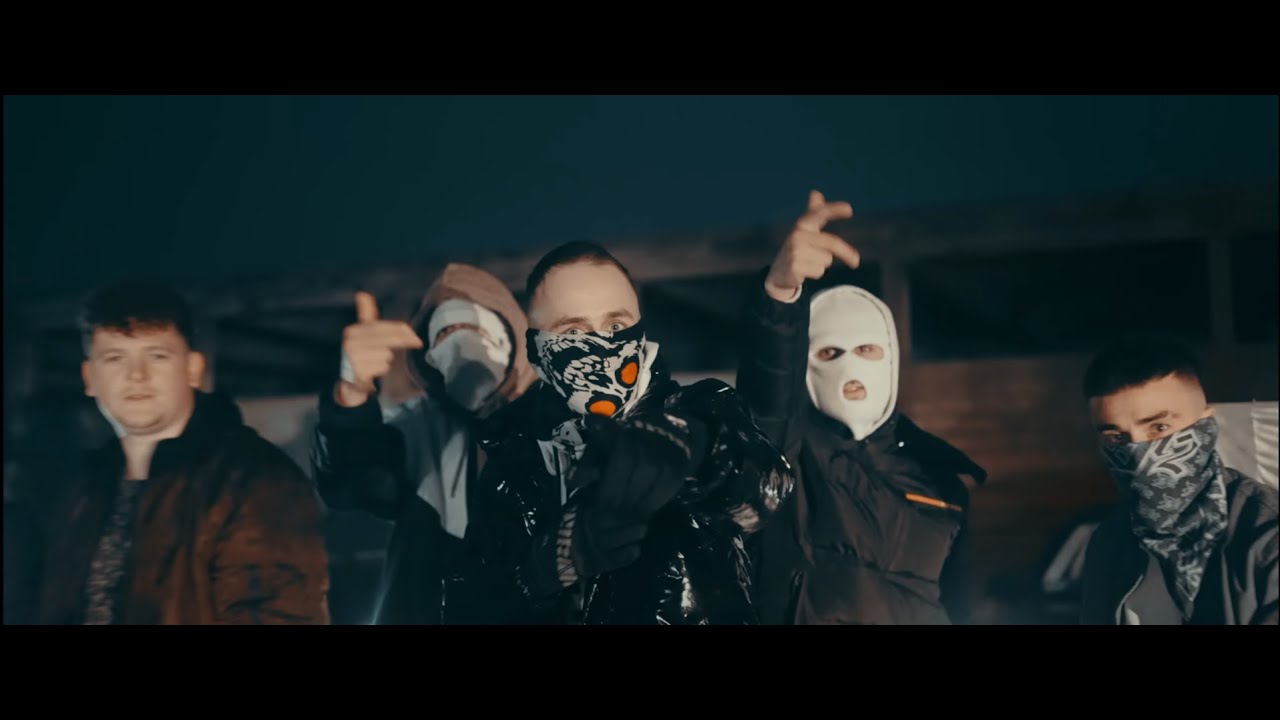
✔️ Did you subscribe to 𝗖𝗢𝗟𝗗 𝗘𝗠𝗜's Official channel? 👇🏼
► http://smarturl.it/SubscribeCOLDEMI
👉🏼 Turn on the 🔔 to be notified for all the new songs.
✔️Listen On 👇🏼!
𝐒𝐏𝐎𝐓𝐈𝐅𝐘, 𝐃𝐄𝐄𝐙𝐄𝐑, 𝐀𝐏𝐏𝐋𝐄𝐌𝐔𝐒𝐈𝐂 etc.
http://li.sten.to/COLDEMI
____________________________
🎵 Artist Managment
Muharrem Hasani +38349232900
🎵 Produced by: 𝐈𝐂𝐄𝐁𝐎𝐗
🎬 Directed by: 𝐃𝐀𝐍𝐈
🎬 DOP: 𝐀𝐑𝐃𝐈𝐓 𝐁𝐄𝐑𝐈𝐒𝐇𝐀
🎵 Music by: 𝐁𝐄𝐍𝐒𝐎𝐍 (𝗞𝗨𝗦𝗛 𝗞𝗔 𝗧𝗛𝗢𝗡)
🎵 Lyrics by: 𝐂𝐎𝐋𝐃 𝐄𝐌𝐈
✔️ Published by : 𝗙𝗢𝗟𝗘 𝗣𝗨𝗕𝗟𝗜𝗦𝗛𝗜𝗡𝗚
____________________________
🎤 Connect with 𝗘𝗠𝗜 :
Instagram ► https://www.instagram.com/cold.emi
🎵 Connect with 𝗠𝗨𝗛𝗔𝗥𝗥𝗘𝗠 𝗛𝗔𝗦𝗔𝗡𝗜 :
Instagram ► https://www.instagram.com/truemuharrem
✔️ Connect with 𝗙𝗢𝗟𝗘 𝗣𝗨𝗕𝗟𝗜𝗦𝗛𝗜𝗡𝗚 :
Instagram ► https://www.smarturl.it/FolePublishing
____________________________
℗ & © COLD EMI & FOLE PUBLISHING. All Rights Reserved.
#Emi #KamikazKushkathon #Folé

Italy is a country located on the Italian peninsula in southern Europe, and is one of the most populous countries in Europe. Italy has a very special geographical position, possessing diverse terrains, from stretching beaches to undulating mountain ranges, from small pristine villages to active volcanoes. Italy's population also includes many ethnic groups such as Arabs, Byzantines, Greeks, Normans... Italy shares a northern border with the Alpine Mountains with France, Switzerland, Austria and Slovenia.
Area: 301,338 km²
Population: 59,830,000 people (2013 census)
Famous destinations: Rome, Venice, Florence, Milan, Naples, Verona, Bologna, Perugia, Genoa, Turin,..
Italy has long been considered the most famous destination in the world, Italy is like a tourist treasure that gathers all the elements of a perfect journey of discovery with beautiful landscapes, long-standing culture, ancient architecture. , rich in art and culinary specialties.
🌞 PIANO RELAX, MUSIC FOR YOUR SOUL 💝
------------------------------
Music to sleep deeply and rest the mind, relaxing and calm music to sleep.
To stay calm and relieve stress after a hard day at work, turn on soothing music. By listening to relaxing music, you can reduce stress hormones in the body. It helps the body fight the symptoms of prolonged stress.
We are a music label that does everything possible to help you feel calmer and happier with music. Music has no barriers, so no matter who you are or where you come from, these beautiful beats are made for you. Join the journey to find your inner peace and brighten your day.
#relax#italy #4kvideo#relaxingpianomusic
------------------------------
🎹More soothing music on Spotify playlist: https://spoti.fi/38bwOia
🌿Follow Helios Record for new release every week:
➤ Spotify: https://spoti.fi/2OgiA6M
➤ SoundCloud: https://bit.ly/1V3lGKg
➤Youtube: https://bit.ly/2BQ5Y3D
➤ Instagram: https://bit.ly/2Zjztnc
➤ Facebook: https://bit.ly/2ZhUKgV
Music By:
🌿Follow Helios Record :
➤ Spotify: https://spoti.fi/2YNxyG6
➤ Soundcloud: https://soundcloud.com/heliosrecord
➤ Instagram: https://www.instagram.com/helios.record/
➤ Facebook: https://www.facebook.com/Helios-Recor...
🌿 Music by Vincent Carry
➤ Spotify:https://spoti.fi/2ZSgDCA
🌿♪ BigRicePiano ♪
https://spoti.fi/3ysT8zT
https://apple.co/3ww1HZu
https://bigrice.bandcamp.com
https://www.youtube.com/c/BigRicePiano
Linkthumb :
🌿 For long hours, beautiful relaxation music, meditation piano music, stress relief piano music, check out our Youtube playlist:
➤ https://bitly.com.vn/mRan8"
------------------------------
"🌞 For contact and submit music: [email protected]
►All rights belong to their respective owners.
✔ This video was given a special license directly from the artists and the right holders."
![Job | Gladys Muñoz | Video Oficial [4K]](https://i.ytimg.com/vi/jSzEXMrotkk/maxresdefault.jpg)
Facebook →http://bit.ly/FacebookGladysMunoz
Spotify → http://bit.ly/GladysMunoz
Web → http://www.gladysmunoz.com
Alabanza "Job" interpretada por Gladys Muñoz, perteneciente al sencillo "Job".
Autor y Compositor : Delino Marçal
Traducción al español: Gladys Muñoz
Producción Musical y Arreglos: Esteban Alvarado
Batería: Jimmy Zambrano
Bajo: Antonio Mondaca
Guitarras Eléctricas: Carlos Cabrera
Guitarras Acústicas: Esteban Alvarado
Teclados y Programing: Esteban Alvarado
Arreglos y Grabación de Coros: Cristian Morales
Producción General, Grabación y Mezcla : Rodrigo Carrasco
Mastering: Chalo Gonzalez en Estudios GMasters
Realización Audiovisual: Roy Vargas
Peinados y Asistencia : Isabel Orrego Toloza
℗ Solo por Gracia Producciones
#Job. #GladysMuñoz

Official music video for ”Ascension (Don't Ever Wonder)” by Maxwell
Listen to Maxwell: https://Maxwell.lnk.to/listenYD
Watch more Maxwell videos: https://Maxwell.lnk.to/listenYD/youtube
Subscribe to the Maxwell YouTube Channel: https://Maxwell.lnk.to/subscribeYD
Follow Maxwell:
Facebook: https://Maxwell.lnk.to/follow_FI
Twitter: https://Maxwell.lnk.to/follow_TI
Instagram: https://Maxwell.lnk.to/follow_II
Website: https://Maxwell.lnk.to/follow_WI
Spotify: https://Maxwell.lnk.to/follow_SI
Lyrics:
So shouldn't I realize
You're the highest of the high
If you don't know, then I'll say it
So don't ever wonder (don't ever wonder)
So shouldn't I realize (shouldn't I realize)
You're the highest of the high
If you don't know, then I'll say it
So don't ever wonder
#Maxwell #Ascension #MaxwellsUrbanHangSuite #Soul #4K #Remastered

Official 4K Video for ”Greatest Love Of All” by Whitney Houston
Listen to Whitney Houston: https://WhitneyHouston.lnk.to/listenYD
Watch more Whitney Houston videos: https://WhitneyHouston.lnk.to/listenYC/youtube
Subscribe to the official Whitney Houston YouTube channel: https://WhitneyHouston.lnk.to/subscribeYD
Follow Whitney Houston:
Facebook: https://WhitneyHouston.lnk.to/followFI
Instagram: https://WhitneyHouston.lnk.to/followII
Website: https://WhitneyHouston.lnk.to/followWI
Spotify: https://WhitneyHouston.lnk.to/followSI
YouTube: https://WhitneyHouston.lnk.to/subscribeYD
Ask your voice device to play Whitney Houston!
Lyrics:
Because the greatest love of all
Is happening to me
I found the greatest love of all
Inside of me
The greatest love of all
Is easy to achieve
Learning to love yourself
It is the greatest love of all
#WhitneyHouston #GreatestLoveOfAll #Official4KVideo #4K #Remastered